I have taught indoor cycling for 14 years, most of them in studios and the last several out of a converted garage in Boise. The question I get most often after class is not about cadence or resistance. It is about what to buy. So here is the honest version: shopping for budget exercise bikes for home is mostly a math problem about floor space, riding position, and how much fiddling you are willing to do with a wrench. The hardware matters, but the fit matters more, and a bike that does not fit you is a coat rack with pedals.
Related: Spin Bike vs Exercise Bike: Which One Belongs in Your Garage
The short answer: the Echelon Smart Fitness Bike is the one I would hand to a rider who wants the class experience at home. The magnetic upright bike is the value pick for someone who just wants to pedal. The pooboo folding model is for the smallest rooms, and the MERACH recumbent is for the rider whose back or hips have opinions. All four are legitimate tools. They were built for four different people, and picking the wrong one is why so many garage bikes end up on marketplace listings by February.
Here is how they line up.
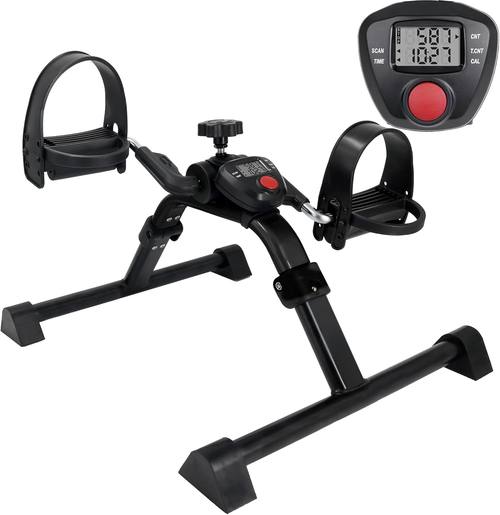
Exercise Bike,Stationary Bike for Home,Magnetic Indoor App Cycling Bike
Best value of the four, magnetic resistance, app readouts without a subscription contract
Seat is the weak point, plan on replacing it
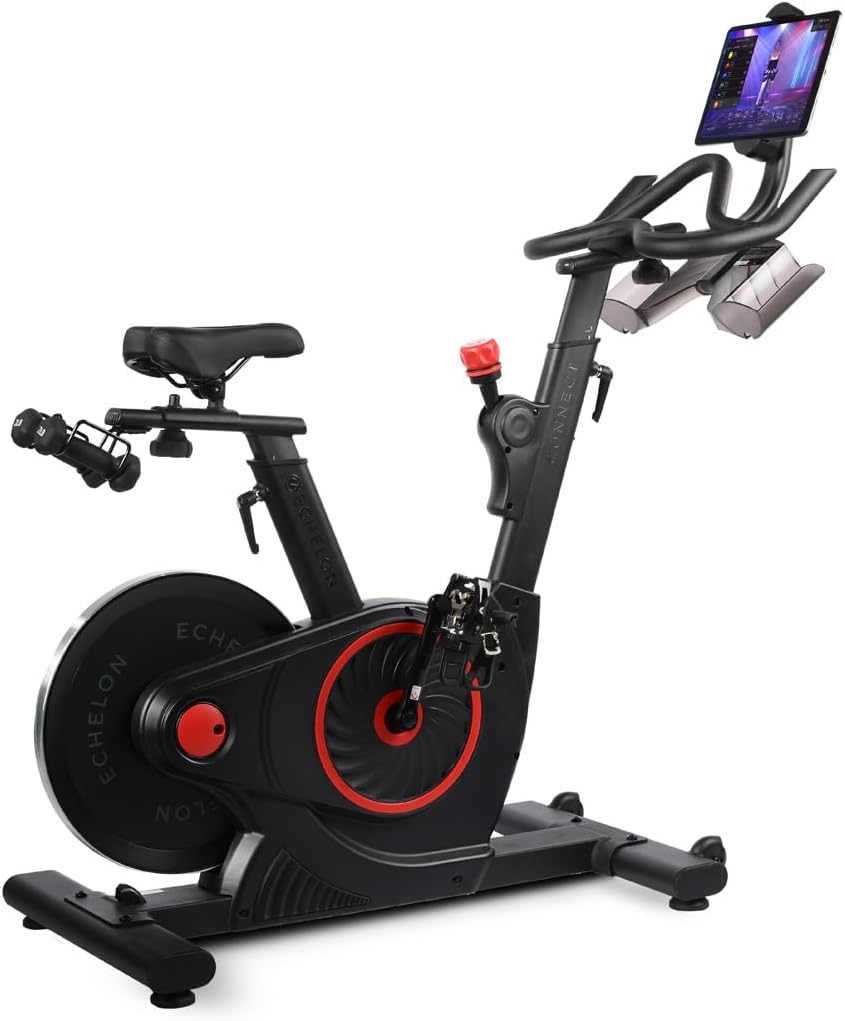
Echelon Smart Fitness Bike
Studio-style stability, the best class library in the group
Subscription is the real purchase, no folding, needs floor space
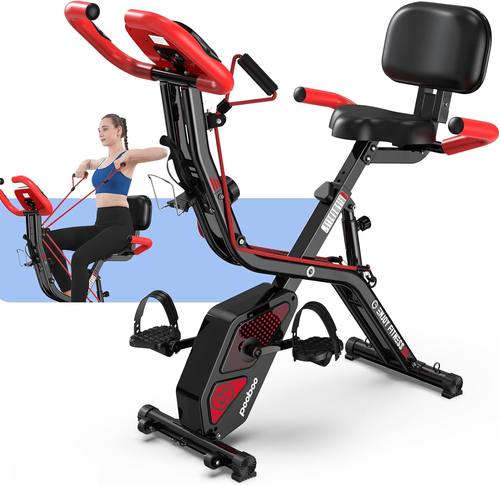
pooboo Folding Magnetic X-Bike, Upright Exercise Bike for Home Gym
Folds away, lightest and easiest to move, magnetic resistance
Folding hinge needs regular checking, not built for standing sprints
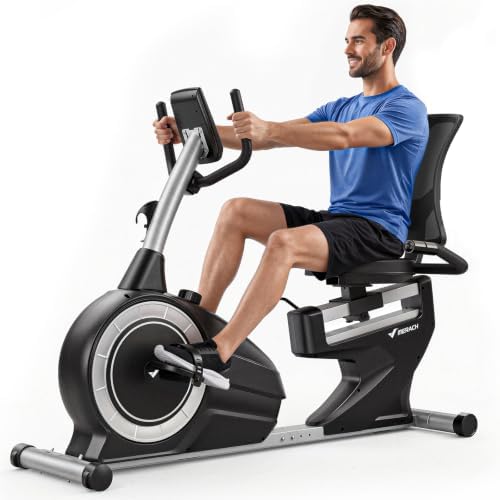
MERACH Recumbent Exercise Bikes for Home High-end
Back support, step-through access, built heavier for bigger riders
Longest footprint here, no standing or sprint work
Prices and availability were captured from Amazon Creators API and may change.
What actually matters on a budget bike
Four things, in order of how much they affect whether you keep riding.
Resistance type. Magnetic resistance is the modern default because the brake is a set of magnets that never touch the flywheel. Nothing wears, nothing sheds, and the feel stays consistent from month one to month twelve. Felt pads can work fine on a well built bike, but pads wear, they leave dust, and the resistance changes as they do. Magnetic resistance shows up across this group, which is a good sign at this price.
Frame stability. This is the one that separates a bike from a hazard. A frame that sways when you stand and push is not a minor annoyance, it is a safety problem. Look at the base: wide stabilizer feet, adjustable levelers, and a frame that does not flex under load. If a bike wobbles at low resistance, it will scare you at high resistance, and that is when people fall off.
The seat and the pedals. On budget bikes these are the first parts to go. Seats that feel fine for ten minutes turn into a problem at mile 20, and pedals with plastic cages crack. Budget for a replacement seat, and if the pedals take standard threads, a set of pedals with real straps. It is a small cost that changes everything about how long you stay on the bike.
Fit range. Seat height, seat fore and aft, and handlebar height. A bike that only adjusts in one direction fits one body. Check the stated rider height range before you buy, then be honest about your own numbers. A $300 bike that fits you beats a $1,500 bike that does not.
Magnetic resistance versus felt pads
If you are comparing listings and one bike says magnetic and another does not, that single word is worth more than a long list of extras.
Felt pads are a physical brake. A pad presses against the flywheel, and every revolution wears it down. You feel it first as a change in resistance at the same knob position, then as dust on the floor, then as a squeak that no amount of adjusting fully removes. Pads are replaceable, so this is not a death sentence, but it is a maintenance schedule you are signing up for.
Magnets do not touch anything. The resistance comes from eddy currents in the flywheel, which means there is no wear surface, no dust, and no change in feel over time. On a bike you plan to ride four or five times a week for years, that difference is the whole argument.
The value upright: magnetic resistance with an app
The Exercise Bike, Stationary Bike for Home, Magnetic Indoor App Cycling Bike is the plainest bike in this group, and that is a compliment. Magnetic resistance, an upright riding position, and app connectivity for riders who want a screen but do not want a subscription contract.
This is the bike I would recommend to a rider who wants to pedal for 30 minutes, four times a week, and does not care about leaderboards. The upright position is closer to a road bike than a studio bike, so your hips sit stacked over the pedals and your hands rest light on the bars. The app connection gives you cadence and resistance readouts without locking you into a monthly fee, which is a real distinction in this category.
What to check before you commit: the seat. On bikes at this level the saddle is usually the weak point, and a replacement is the single best upgrade you can make. Then check the pedals. If they ship with plastic cages, plan to swap them, because cages crack and a cracked cage under load is a bad moment.
The connected bike: Echelon Smart Fitness Bike
The Echelon Smart Fitness Bike is the only bike here that is really a platform. The hardware is solid, the resistance is magnetic, and the reason to buy it is the class library. If you have ever taken a studio class and missed the coach telling you to add resistance and sit up, this is the closest thing in the group to that room.
Here is the part the listing will not say loudly: the subscription is the real purchase, and the bike is the delivery mechanism. If you will actually use the classes, the cost per ride is reasonable, because a single studio class in most cities costs more than a month of streaming. If you will not use them, you are paying for a screen you will ignore by week three.
Hardware notes. The Echelon is built like a studio bike, which means it is heavier and more planted than the budget uprights, and the trade-off is floor space. It does not fold and it does not tuck behind a couch. Measure your room before you order, then measure it again. Also plan on cycling shoes or a pedal swap if you want the full class feel, because the stock pedals are the usual compromise.
The folding option: pooboo Folding Magnetic X-Bike
The pooboo Folding Magnetic X-Bike is the answer to a real problem. You live in a small space and you still want to ride. The X-frame folds, the resistance is magnetic, and the upright position is comfortable for steady seated work.
The honest trade-off with any folding bike is the hinge. A frame that folds is a frame with a joint in it, and joints move. That does not make it a bad bike, it makes it a bike you maintain. Check the hinge for play every few weeks and keep it tight. If you ride hard and stand out of the saddle to sprint, this is not the bike for you, because that is exactly the load a folding joint handles worst. If you ride seated and steady, it will serve you for years.
This is also the lightest and most portable option in the group, which matters if you move it between rooms or park it in front of a television. For apartment riders who need a bike to disappear when guests arrive, this is the pick.
The recumbent option: MERACH Recumbent Exercise Bike
The MERACH Recumbent Exercise Bikes for Home High-end is the odd one out here, and for some riders it is the only one that matters. A recumbent puts you in a chair with your legs out in front of you. Your back is supported, your hips are open, and your weight sits on a seat with a backrest instead of a saddle.
If you have a bad lower back, a cranky hip, or a knee that complains in a traditional riding position, a recumbent is not a compromise. It is the correct choice. The trade-off is that you cannot stand and sprint, and standing work is a big part of how I program classes. Recumbents are built for steady effort, and the position shifts the work toward the glutes and the back of the legs, which is a different ride, not a lesser one.
The MERACH sits at the higher end of this group, and the extra money goes into the frame and the seat, which is exactly where you want it to go on a recumbent. A recumbent that flexes is a miserable experience, and this one is built heavier for bigger riders and longer sessions. It also takes up the most floor space of the four, and it is the least portable, so it needs a permanent home.
The trade-offs nobody puts on the box
The seat is a consumable. On most of these, the saddle is the part I would replace first. A comfortable seat is the difference between a 20 minute ride and a 45 minute ride, and it costs less than two months of a class membership.
The pedals matter more than the flywheel. A heavy flywheel smooths your pedal stroke, which is nice. Pedals that slip or cages that crack are a safety issue. Check the thread standard before you buy replacements so you only order once.
Floor space is a spec. A folding bike that lives in a closet beats a studio bike that lives under a pile of laundry. Be honest about the room you actually have.
Subscriptions are part of the price. If a bike requires a membership for the features you want, add a year of that membership to the cost before you decide. Do the math on how many times a week you will really ride.
Support and warranty. Read the warranty before the reviews. Reviews tell you how the bike felt in week one. The warranty tells you what happens in month fourteen, which is when cheap bikes announce themselves.
Questions I get from riders
Do I need a subscription to get a good workout? No. Resistance, cadence, and time are the whole workout. A screen makes it more entertaining, and entertainment matters for consistency, but nobody ever got fit because of a leaderboard.
How much space do I need? Enough to mount the bike, pedal without your knees hitting anything, and get off safely. For an upright bike that is roughly the length of the bike plus a step in every direction. Recumbents need more length. Folding bikes need it only while you ride.
Will a budget bike hold up if I ride daily? With two habits, yes. Keep the frame bolts tight, especially on a folding model, and replace the seat and pedals early instead of fighting them for a year. The frame on a magnetic bike has very little to wear out.
Is a recumbent as good a workout as an upright? It is a different workout. You cannot stand and sprint, and you will not use the same muscles in the same proportions. But a rider who stays on a recumbent for 40 minutes beats a rider who quits an upright after 12.
How I would choose
If you want the class experience and you will genuinely use the classes, buy the Echelon. The hardware is good and the ecosystem is the point.
If you want to ride and not subscribe, the magnetic upright bike is the best value here. Spend the difference on a good seat and a pair of pedals.
If space is the constraint, the pooboo folding X-Bike is the one that fits in a closet, and for apartment riders that is the entire argument.
If your back decides your workouts for you, the MERACH recumbent is the pick, and it is worth the extra money over a frame you will not enjoy sitting on.
The short version
There is no single best bike in this group, and anyone who tells you otherwise is selling something. There is a best bike for your room, your back, and your Wednesday morning. Match the bike to the rider, budget for a seat, and check the hinge, the pedals, and the warranty. Then ride the thing, because a bike you do not sit on is a bike you do not ride, and that is the only spec that has ever mattered.