I have taught indoor cycling for 14 years, and I have watched a lot of riders spend real money on a bike they stopped touching by February. The reason is almost never fitness. It is a seat that hurts at mile 20, a frame that rocks when they stand up, or a resistance knob that slips halfway through a climb. That is why I keep a wrench set by the garage door and a spreadsheet of every bike that has come through it.
This comparison covers four budget exercise bikes for home that sit in roughly the same buying territory but solve completely different problems. One is a recumbent built for riders who want back support. One is a belt-drive magnetic bike rated to 400 pounds. One leans hard on a companion app. One is a smart bike tied to a class ecosystem. None of them is a studio bike, and I want to be clear about that before we go any further.
The best budget exercise bike for most people here is the belt-drive magnetic model with the 400 pound capacity, because it uses the resistance type that ages best and it is rated for the widest range of riders. The recumbent is the smarter buy if your back or hips are the ones making the decision.
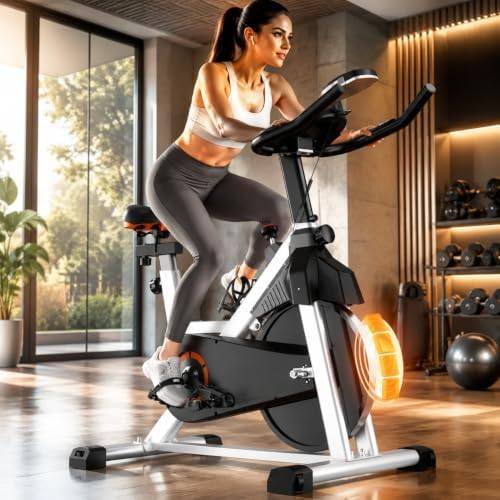
Exercise Bike, Magnetic Stationary Bikes for Home Cardio with Brake Pad Silent Belt Drive, 400LB Weight Capacity Indoor Cycling Bike with Adjustable Seat & Water Bottle Holders for Adults & Seniors
Belt drive, 400 pound capacity, adjustable seat, and a frame meant for upright cycling
The listing mixes magnetic and brake pad resistance language, so confirm which system ships
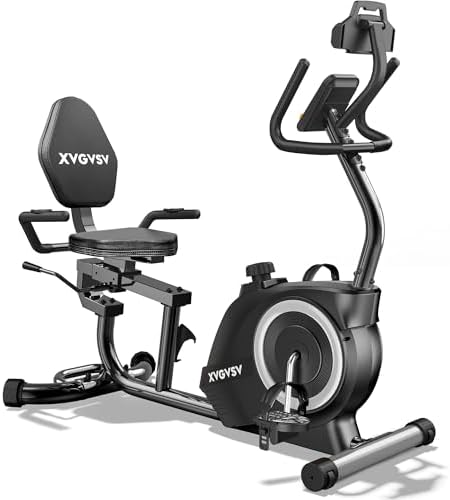
Recumbent Exercise Bike for Home, Recumbent Stationary Bikes for Seniors
Recumbent seating takes pressure off the lower back and hips, the easiest on-ramp in this group
Recumbent geometry is not built for standing efforts, so it is a comfort bike, not a class bike
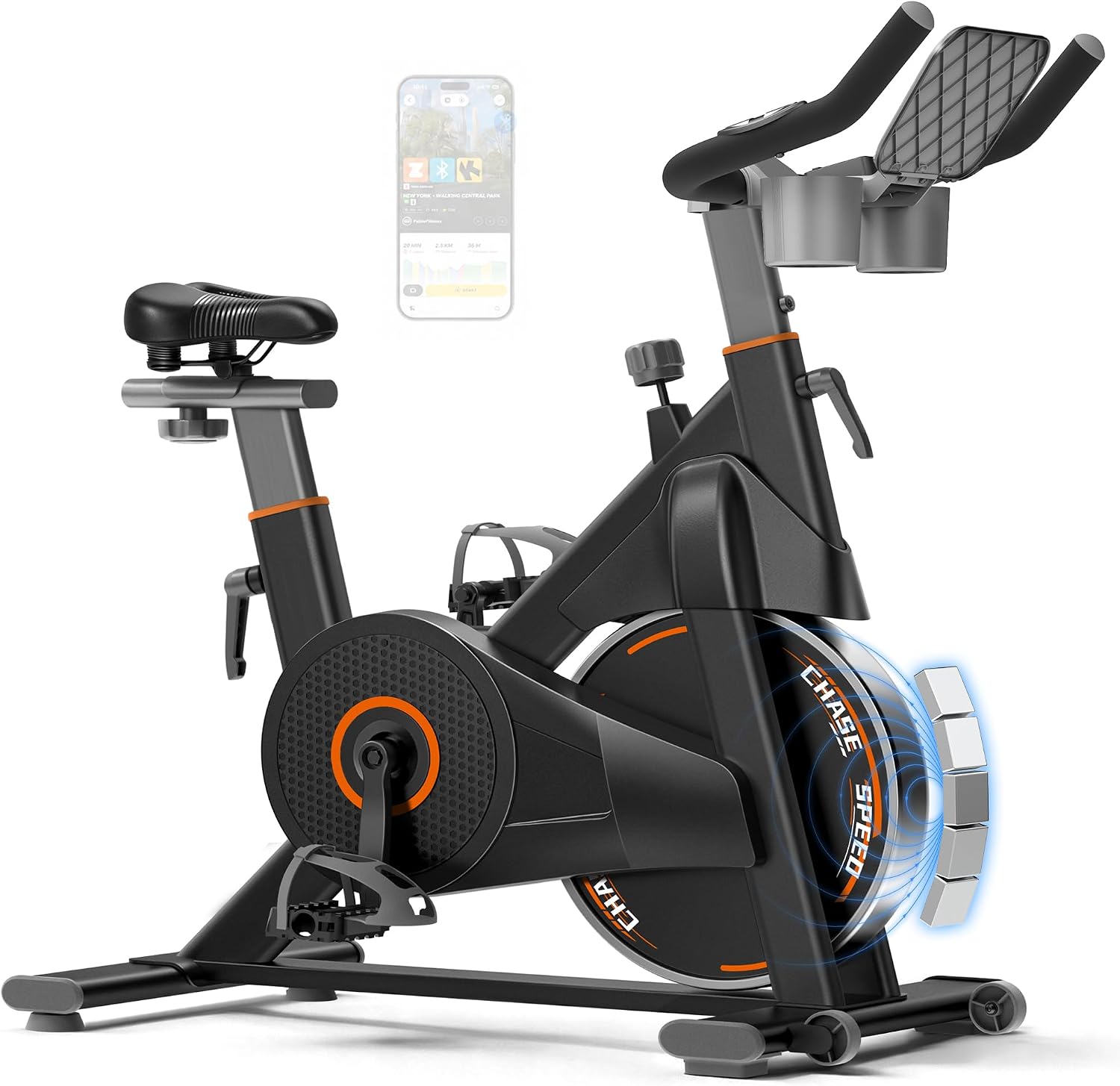
CURSOR Exercise Bike, Magnetic Friction Stationary Bikes for Home with APP
App integration and a spin-style frame at the lowest commitment level here
Magnetic friction is not the same as pure magnetic resistance, so test the feel across the full range
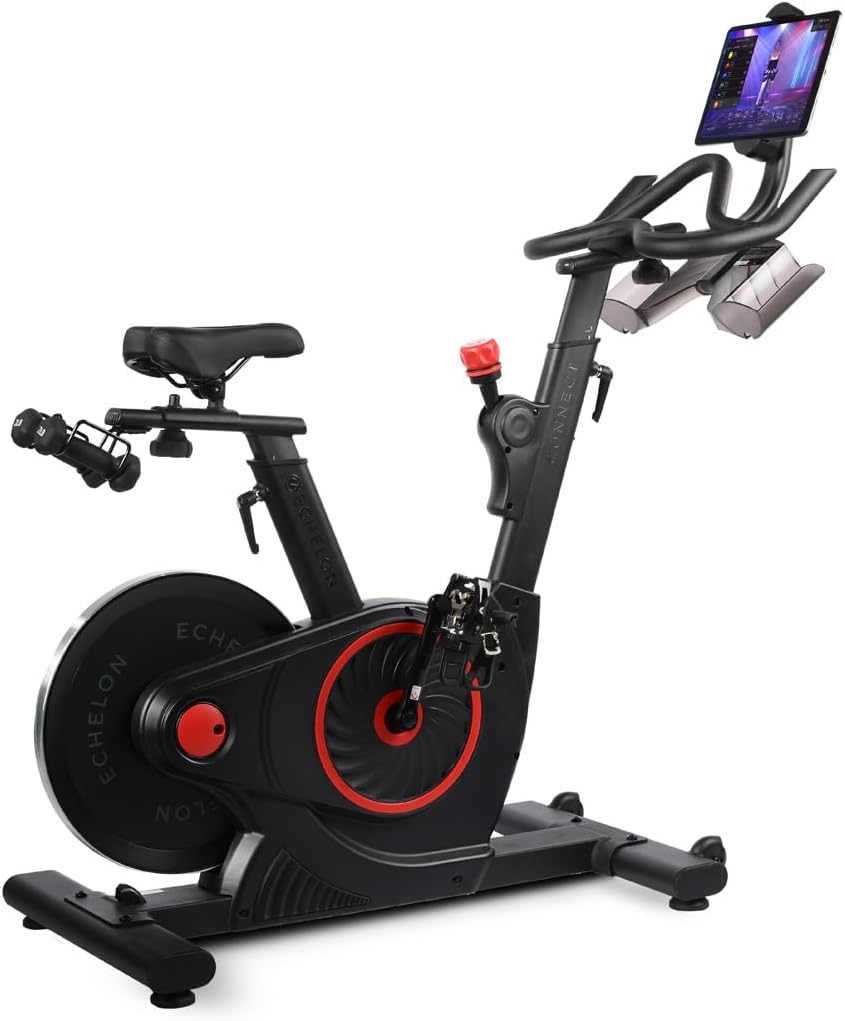
Echelon Smart Fitness Bike
The only connected smart bike in the group, with the class ecosystem that keeps riders coming back
You are buying into a subscription, and the bike makes a lot less sense without one
Prices and availability were captured from Amazon Creators API and may change.
How I judge a budget exercise bike
Every bike in this category lives or dies on six things, and almost none of them are in the marketing copy.
Stability under load. This is the safety issue, not the comfort issue. A bike that feels planted while you sit and pedal can still wander when you stand up at high resistance. Check the footprint, check whether the stabilizer feet are rubber or hard plastic, and check whether the frame has any flex at the bottom bracket. If you never stand, this matters less. If you plan to climb out of the saddle, it matters most.
Resistance type. Magnetic resistance is smoother and it does not wear out. Felt pads and brake pad systems are fine when the bike is built well, but they shed material, they need adjustment, and they get noisy. On a daily rider, that is a year two problem, not a week one problem.
Seat and pedals. This is the single most common upgrade on budget bikes. A stock saddle that feels acceptable in a showroom becomes a brick at mile 20. Plastic pedal cages are a warning sign. Factor a replacement saddle and possibly pedals into the total cost before you decide the bike is cheap.
Fit range. Seat height and handlebar adjustability decide whether two people can share one bike, and whether you can get your knee angle right. A bike that does not fit you is a bike you will not ride, no matter how good the specs look.
Drive noise and maintenance. Belt drives run quieter and need less attention than chain drives. If quiet matters because you ride at 5 a.m. in an apartment, the belt is worth prioritizing.
What the listing actually promises. Read the resistance description twice. "Magnetic friction" and "magnetic resistance" are not interchangeable, and a listing that mentions both magnetic and brake pad systems is telling you to verify before you buy.
The belt-drive bike rated to 400 pounds
This is the one I would put in front of most households. The 400 pound weight capacity puts it well above the typical budget frame, which usually signals a beefier build and a more stable ride when you stand. The silent belt drive is the right call for a home bike, and the adjustable seat plus water bottle holders are small conveniences that tell you someone thought about how the bike gets used rather than just how it looks in a photo.
The catch is in the resistance description. The listing references both magnetic resistance and a brake pad, which are two different systems with two different long term behaviors. Magnetic resistance does not wear. A brake pad does, and it will need periodic attention. Ask the seller directly which system ships, and if it is pad based, budget for a replacement pad and a little patience.
If the answer is a true magnetic system, this is the pick for a rider who wants a traditional upright bike, plans to stand and climb, and does not care about app connectivity. Check current Amazon price before you commit, and read the most recent reviews specifically for wobble complaints. That is where budget frames reveal themselves.
The recumbent built for seniors
Recumbent Exercise Bike for Home, Recumbent Stationary Bikes for Seniors
Recumbent bikes get dismissed by people who have never had a back injury, and that is a mistake. The reclined position spreads your weight across your hips and back instead of concentrating it on a narrow saddle, and it lets riders with limited mobility get 45 minutes of low impact cardio without paying for it the next day.
What you give up is the entire standing portion of riding. You cannot climb out of the saddle on a recumbent, and the geometry is not designed for it. If your idea of a workout is a seated, steady-state ride while you watch something on a screen, this is a better tool than any upright bike in this comparison. If you want to sprint, it is the wrong machine.
The fit question matters more here than on an upright bike. Recumbent leg extension is set by the distance to the pedals, and a bike that does not adjust far enough forward will leave you reaching. Measure your inseam, compare it against the listed adjustment range, and read reviews from riders near your height. Check current Amazon price and confirm the seat back adjustment before you buy.
The app-connected spin-style bike
CURSOR Exercise Bike, Magnetic Friction Stationary Bikes for Home with APP
This is the lowest commitment way to get a spin shaped bike in your house. The frame layout is familiar if you have taken a class, and the app integration gives you a reason to get on it beyond willpower, which for a lot of riders is the whole battle.
The honest caveat is the resistance. Magnetic friction is a hybrid description, and it does not promise the same feel as a pure magnetic system. What you want to know is whether resistance increases smoothly through the whole turn of the knob or whether it jumps from easy to hard in the last quarter. That is the difference between a bike you can pace on and a bike you fight.
Before you buy, decide whether the app is the point or a bonus. If you will actually use it, this bike makes sense as an inexpensive entry into structured riding. If you will not, you are paying for a feature you will ignore. Check current Amazon price and look for reviews that mention the resistance knob specifically, since a slipping knob is the most common failure in this price band.
The smart bike with the class ecosystem
The Echelon is the outlier here because you are not really buying a bike. You are buying into a connected training platform, and the bike is the hardware that delivers it. For riders who need a leaderboard, a scheduled class, and an instructor voice in the room, that ecosystem is worth more than any spec on a spec sheet. I have watched riders who never missed a class at my studio stay consistent at home because the platform replaced the accountability.
The trade-off is obvious and worth saying plainly: the bike is less compelling without the subscription, and the subscription is an ongoing cost that never shows up in the purchase comparison. Do that math before you buy. If the monthly fee is going to bother you, the belt-drive bike above is the better financial decision.
The other thing to check is parts and service. Connected bikes have more electronics to fail, and a screen or sensor problem is not something you fix with the wrench set by my door. Read recent reviews for hardware complaints, not just workout complaints. Check current Amazon price and confirm the current subscription terms, because those change more often than the bike does.
The trade-offs nobody puts on the box
The seat is a hidden cost on three of these four. Budget bikes ship with budget saddles. If you ride more than 30 minutes at a time, plan on replacing it, and plan on the replacement being a real line item.
Standing stability is the spec you cannot read. Weight capacity tells you about the frame. It does not tell you whether the bike rocks when you sprint. That information only exists in owner reviews and in person.
App bikes are subscriptions with a frame attached. Compare the total two year cost, not the sticker.
Resistance language is deliberately fuzzy. Magnetic, magnetic friction, brake pad, felt. These are four different long term experiences. Make the seller tell you which one you are getting.
Which one I would buy for which rider
Buy the belt-drive 400 pound bike if you want an upright bike, you plan to stand and climb, and you want the resistance system that will still feel the same in year three.
Buy the recumbent if back support or hip comfort is the deciding factor, or if you are shopping for a parent or grandparent who wants seated cardio without a learning curve.
Buy the CURSOR if you want a spin shaped bike and app guidance at the lowest possible commitment, and you accept that the resistance feel is the thing to verify.
Buy the Echelon if the classes are the reason you ride, and you are comfortable treating the subscription as part of the purchase.
What I am testing next
I have two budget frames on the garage floor right now, both under 600 dollars, both going through the same protocol: 50 miles a week, a standing sprint stability check at full resistance, and a bearing listen at the three month mark. The pattern I keep finding is that the gap between 300 dollar and 600 dollar bikes is closing, mostly because the 600 dollar bikes got worse rather than the 300 dollar bikes getting better.
If you are shopping in this range, the deciding question is not which bike has the best spec sheet. It is which bike you will actually sit on four times a week in February. Pick the one whose shape matches the way you ride, check current Amazon price, and spend the leftover money on a seat that does not hurt.