Related: How to Set Up a Spin Bike So Your Knees Stop Complaining
I have taught indoor cycling for 14 years, first on a commercial fleet in a studio, now out of a converted garage in Boise with a wrench set by the door because every bike I have owned has needed one. In that time I have watched a lot of riders fall in love with class and then buy the wrong bike for their house. The question I get most is not which bike is best. It is whether a home magnetic exercise bike at a budget price can survive a real training week: four rides, one standing sprint day, and a towel that never quite dries.
The honest answer is yes, with two conditions. The bike has to stay planted when you stand up at resistance, and the parts that touch you have to be worth keeping past month three. Everything else on the spec sheet is decoration.
So this is the four-piece setup I would actually put together for a rider starting from zero: a magnetic bike for daily riding, a folding bike for the people who need their floor space back, a foam roller for the recovery work nobody wants to do, and a posture program for the neck and shoulders that eight hours at a desk plus one hour on the bike will absolutely wreck. I will tell you what each one is for, who should skip it, and what I check before I would let a rider spend money on it.
Best Overall: CHAOKE Exercise Bike
This is the bike I would hand to a rider who wants to ride four or five days a week and does not want to think about maintenance. Magnetic resistance, an adjustable seat, a digital display, and app compatibility are all part of the package, and those four things cover almost everything a home rider actually needs.
Magnetic resistance is the reason I start here. There is no felt pad to glaze, squeak, or wear a groove into the flywheel. Felt pads are fine on a bike that is built right, but they are a wear item, and by month two you are turning the knob further for the same effort. Magnets do not do that. The resistance stays smooth across the whole range, which matters most when you are standing and asking for a big jump in load.
The 350-pound weight capacity is the number I read first on any budget bike. Higher capacity almost always means a heavier frame and a sturdier seat post, and a heavier frame is what keeps a bike planted when you come out of the saddle. A bike that wobbles only at sprint speed is not a small annoyance. It is the reason people stop sprinting, and then stop riding.
App compatibility is the feature people overrate. It is nice to have. It is not the reason to buy. The digital display giving you time and cadence is more useful day to day than a leaderboard, because a home rider's biggest problem is not motivation, it is pacing. Nobody in a garage holds 90 RPM for 45 minutes without something on the screen telling them the truth.
Two things I would plan for before it arrives. First, the seat. The seat is the first thing to replace on most budget bikes, so factor a replacement into your budget instead of being surprised at mile 20. Second, check the pedals when it shows up and make sure the cages and straps are snug, because a loose strap is a nuisance and a slipping one is a hazard.
Best for Small Spaces: XTERRA Fitness Folding Exercise Bike
The XTERRA folding bike solves a different problem. If the bike has to live behind a door, under a window, or in a closet between rides, a folding frame is the difference between riding and not riding. A bike you do not want to set up is a bike you will not ride, and no amount of good intentions fixes that.
The trade is rigidity. Every folding frame gives up some stiffness at the hinge, and the 225-pound weight capacity tells you who this bike is built for: lighter riders, moderate resistance, and a mix of seated work with short standing efforts. That is a completely legitimate way to train. Half my classes are built on seated climbs and cadence work, and you can get a serious sweat in without ever leaving the saddle.
What I would not do on it is a 20-minute standing climb at max resistance five days a week. Not because the bike is bad, but because that is not what a folding frame is for. Buy the tool for the job you actually do, not the job you plan to do in January.
The folding mechanism is also the part to maintain. Check the hinge and the locking pin every few weeks, keep the frame wiped down, and store it dry. A folding bike that lives in a damp garage and gets folded twice a week will tell you about it at the hinge first, every single time.
For small spaces and riders who want low-impact cardio they can put away, this is the pick. For a 250-pound rider who wants to sprint out of the saddle, it is not, and I would rather tell you that up front than have you find out.
Best Recovery Add-On: Amazon Basics High Density Foam Roller
Nobody buys a foam roller because they are excited about it. You buy one because your quads are angry at you and your hips are tight from a position you hold for 45 minutes at a time.
The Amazon Basics high density foam roller is 24 inches and black, which sounds like nothing and is actually the whole point. Length matters, because 24 inches lets you work a long line like the IT band without repositioning every 10 seconds. Density matters more. A soft roller feels nice and does almost nothing. High density foam gives you enough pressure to actually change how the tissue feels, which is the entire reason to own one.
Use it after you ride, not before. Rolling before a hard session on cold tissue is not a warm-up. Five minutes after the ride on quads, hamstrings, glutes, and calves, then a couple of minutes on the upper back, and you will notice it on the next day's ride far more than you notice it on the day you do it.
This is the least expensive thing in this setup and the one most likely to keep you riding in week six.
Best Off-Bike Fix: Forward Head Posture Fix
The last item has nothing to do with the bike and everything to do with why your neck hurts after a long ride.
Forward Head Posture Fix is a program built around trigger point work, mobility, and strengthening for the neck and shoulders. It targets the exact pattern I see in almost every rider who also works a desk job: head forward, shoulders rounded, upper back locked, and then you get on a bike and hold that same shape for an hour with your hands on the bars.
You can be in a perfect bike fit and still have a neck that complains, because the bike did not create the problem. It just repeats it for an hour at a time.
The work here is unglamorous. Trigger point release, range of motion, strengthening the muscles that hold your head where it belongs. Do it three times a week for a few weeks and the difference shows up in the last 15 minutes of a long ride, which is exactly where posture falls apart.
If you ride twice a month, skip it. If you ride four times a week and sit at a desk for eight hours a day, this is the missing piece.
How I test before I recommend anything
Every bike that gets recommended here goes through the same protocol, and the protocol is not negotiable.
Fifty miles. Not a spin around the block. Fifty miles of real riding, mixed seated climbs, intervals, and long steady efforts, because a bike that feels fine for 20 minutes can feel terrible at mile 40.
The standing sprint test. Resistance at or near full, out of the saddle, 30 seconds. This is the test that separates a bike from a hazard. If the frame flexes, if the handlebars twist, if the whole thing walks across the floor, I want to know before you do.
The sweat test. Forty-five minutes at max effort with no towel on the frame. Cheap paint and cheap hardware fail this one, and you find out in month three when the bolts start to rust.
The bearing check. Pedal bearings and bottom bracket at month three, listening for grinding and feeling for play. A bike that is quiet on day one and growling on day 90 was built to a price, not to a standard.
I apply the same standard to accessories, which is easier, because a foam roller either has density or it does not.
Analysis: what the specs actually tell you
When you compare budget bikes, four specs do most of the work and the rest is decoration.
Weight capacity. Higher capacity almost always means a heavier frame, a thicker seat post, and a more stable base. It is the single best predictor of whether a bike stays planted in a standing sprint. A 350-pound rating and a 225-pound rating are not the same bike with different stickers.
Resistance type. Magnetic resistance is smoother and it does not wear out the way a felt pad does. Felt is not automatically bad, but on a budget bike it is a consumable, and consumables are where budget bikes quietly get expensive.
Frame design. A fixed frame is stiffer. A folding frame is smaller. You cannot have both, and pretending otherwise is how people end up disappointed with a bike that was never meant for what they asked it to do.
Seat and pedals. These are the contact points that decide whether you actually ride. Budget seats are usually the first upgrade, and plastic pedal cages are the first thing to check for tightness.
Notice what is not on that list: the app, the screen, the color. A bike you do not want to sit on is a bike you will not ride, and no leaderboard fixes that.
The home exercise bike reference table
This is the table I keep for riders who ask what to buy. One row per piece, what it is for, and the number that matters most. Capacity and size come straight from the product listings. Confirm the current details on the product page before you buy.
| Product | Type | Best for | Key number | Where to buy |
|---|---|---|---|---|
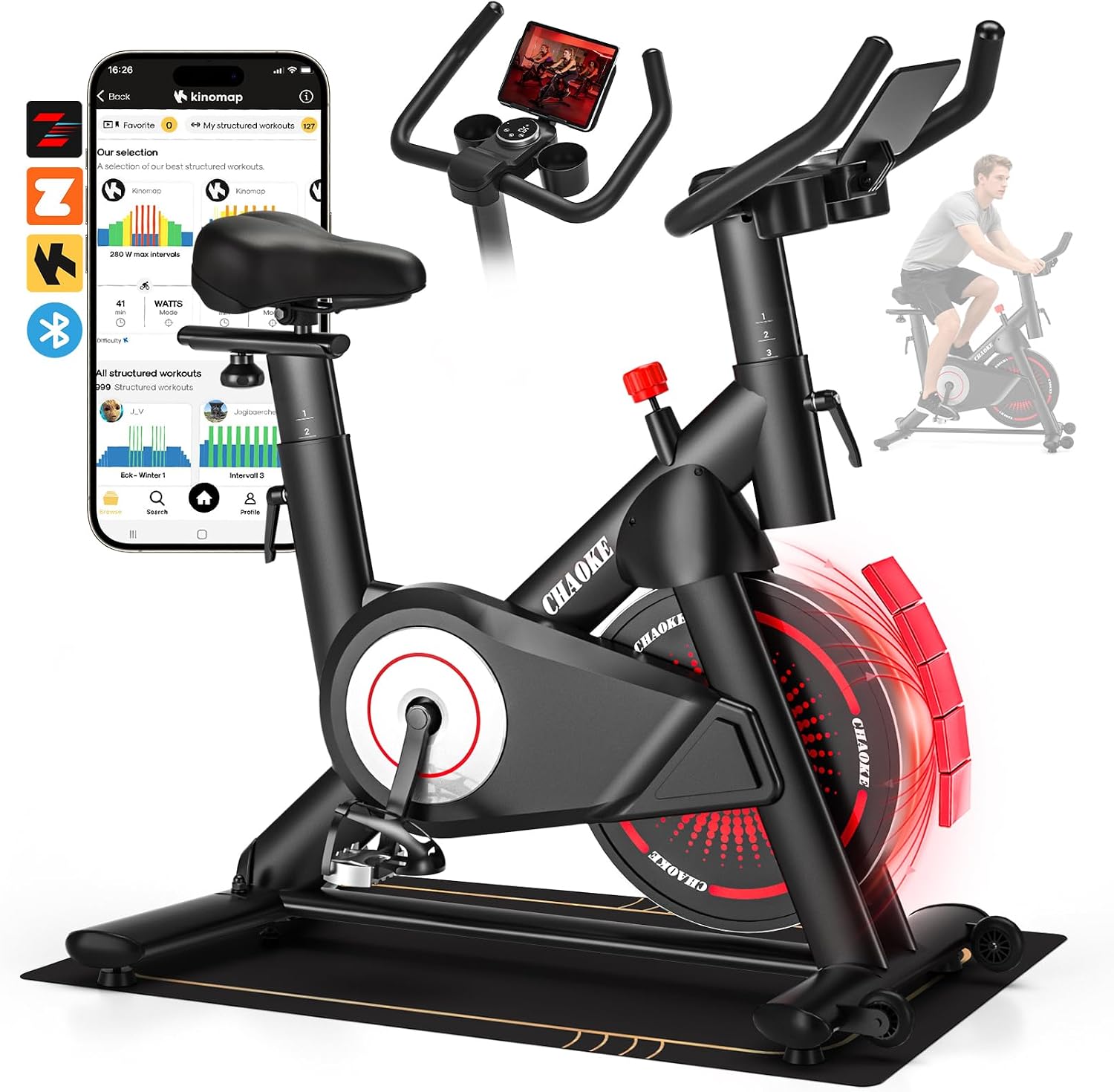 Visit on Amazon → CHAOKE Exercise Bike |
Magnetic resistance, fixed frame | Daily riding, mixed seated and standing work | 350 lb capacity | Visit on Amazon → |
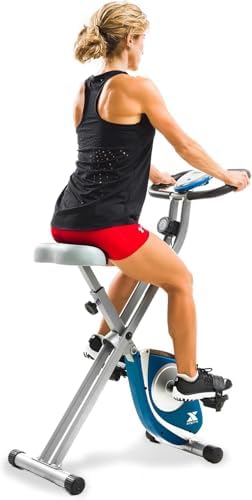 Visit on Amazon → XTERRA Fitness Folding Exercise Bike |
Folding frame | Small spaces, seated cardio, light standing work | 225 lb capacity | Visit on Amazon → |
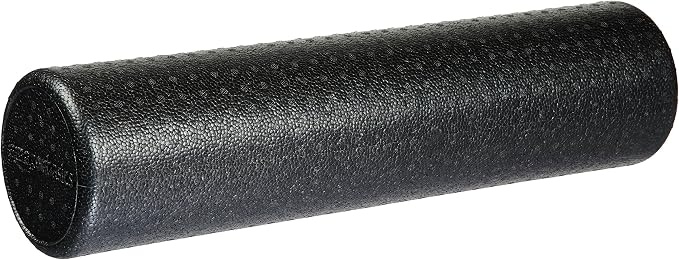 Visit on Amazon → Amazon Basics High Density Foam Roller |
High density foam, 24 inches | Post-ride recovery, quads and IT band | 24 inches | Visit on Amazon → |
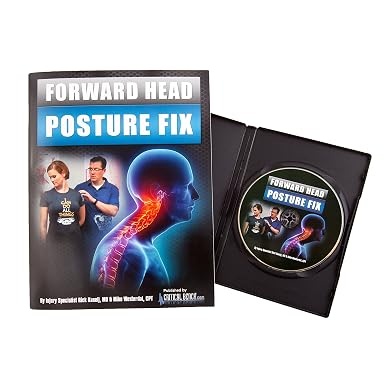 Visit on Amazon → Forward Head Posture Fix |
Trigger point and mobility program | Neck and shoulder tension from desk work | Program format | Visit on Amazon → |
The pattern in that table is simple. Two bikes for two different riders, and two accessories that keep you on whichever bike you choose. The bike is the expense. The roller and the posture work are what decide whether you are still using it in March.
Should you buy the CHAOKE exercise bike?
Yes, if you want to ride most days and you do not want to think about maintenance. Magnetic resistance means there is no felt pad to glaze or replace, the 350-pound weight capacity points to a frame that stays planted when you stand, and the digital display gives you the two numbers that matter at home, time and cadence.
It is the bike in this group I would hand to a rider who wants one machine to do everything. Just budget for a seat swap and check the pedal straps when it arrives. Visit on Amazon → and plan the seat into the total.
Should you buy the XTERRA folding exercise bike?
Yes, if floor space is the reason you are not riding yet. A folding frame is the difference between a bike you set up and a bike you walk past, and the 225-pound weight capacity is honest about who it is for.
No, if you are a heavier rider who wants to spend most of a 45-minute class out of the saddle at high resistance. That is a different bike, and the CHAOKE is that different bike. Buy the XTERRA for seated work, cadence intervals, and short standing efforts, keep the hinge clean and dry, and it will do exactly what it was built to do. Visit on Amazon →.
Should you add the foam roller and the posture program?
Yes to the roller, almost always. It is the least expensive item here and the one that keeps your legs from talking you out of tomorrow's ride. Yes to the posture program if you sit at a desk all day and ride several times a week, because that combination is what turns a good bike fit into a sore neck by the last 15 minutes of every long ride. Neither one replaces the bike. Both of them keep you on it.