I have taught indoor cycling for 14 years, most of it in studios and now out of a converted garage in Boise, and the question I get from riders is almost never "which bike is the best one." It is "which bike fits my life." Those are different questions, and that is why this home exercise bikes comparison puts four very different things on one page: a full indoor cycling bike, a folding upright bike, a mini pedaler that lives under a desk, and a pair of dumbbells that quietly does more for your riding than either of the small bikes.
Related: Spin Bike Setup Mistakes That Wreck Your Knees
The short answer: the Schwinn Fitness IC Indoor Cycling Bike Series is the pick if you want to stand up and ride, the pooboo Folding Magnetic X-Bike is the pick if floor space is the constraint, the himaly mini pedaler is the pick if you sit at a desk all day, and the Amazon Basics neoprene dumbbells are the cheapest thing you can add to any of the three. The long answer is about stability under load, how resistance feels across the whole range, and whether the seat will still be tolerable at minute 40.
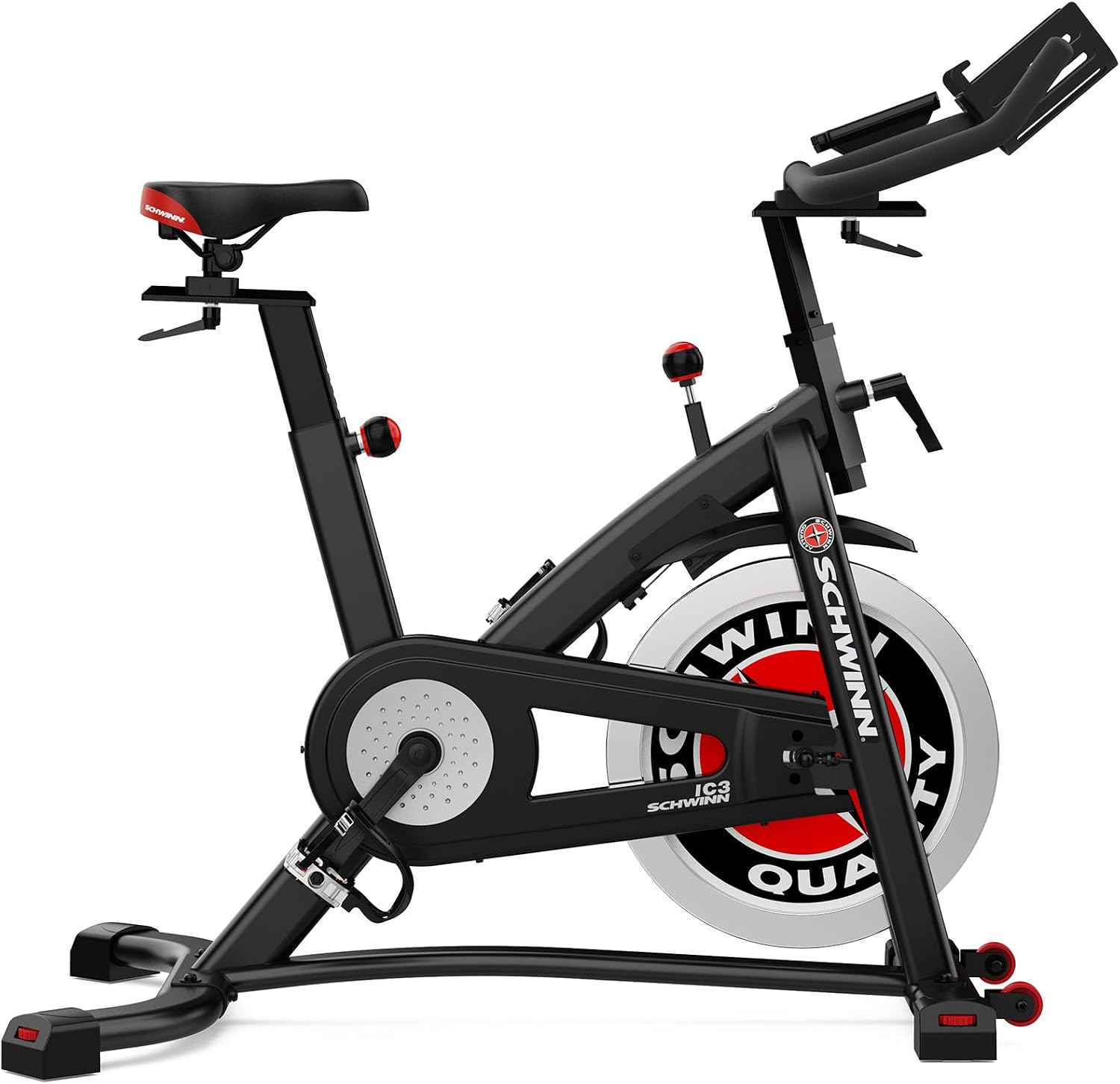
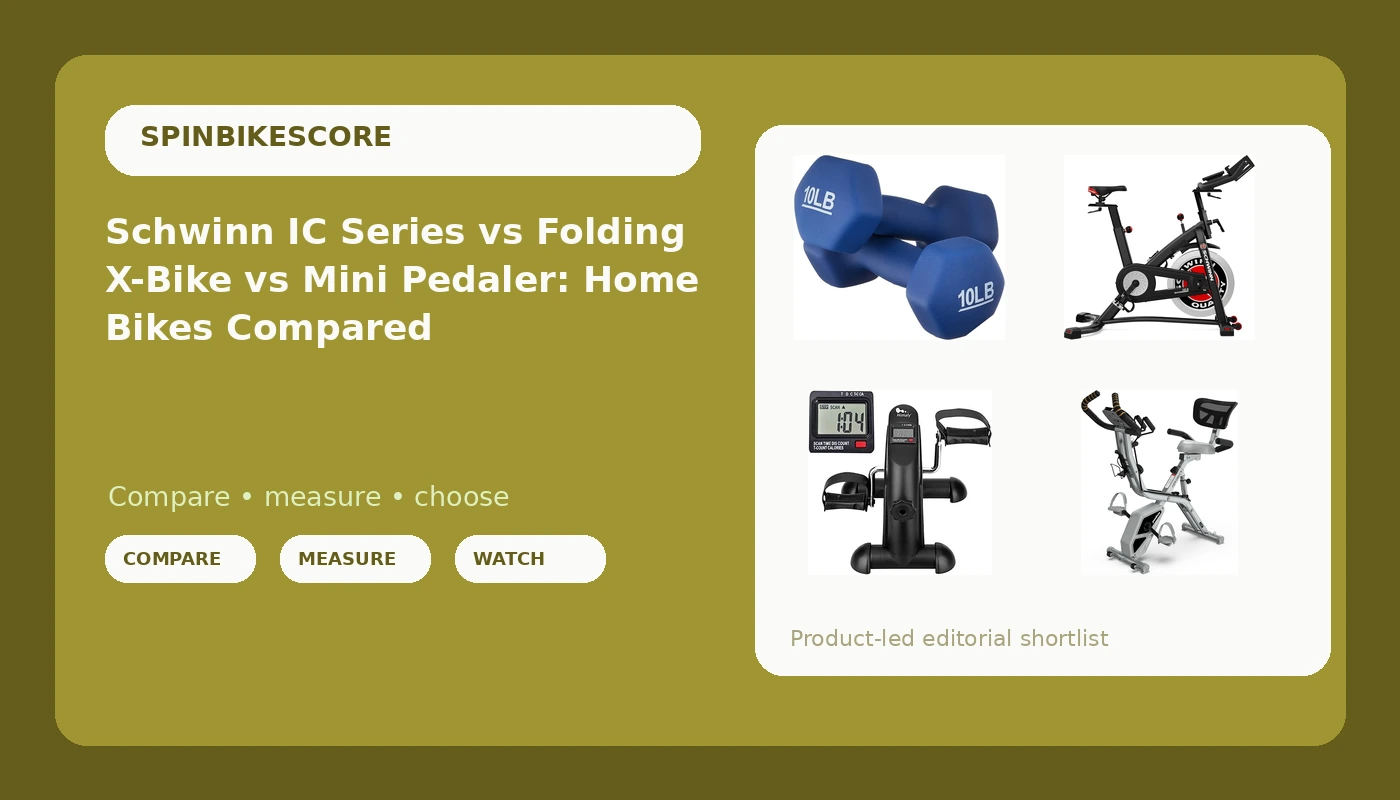
Schwinn Fitness IC Indoor Cycling Bike Series
Real spin bike geometry, so standing climbs and sprints are on the table instead of off it
The biggest footprint and the heaviest thing here to move once it is assembled
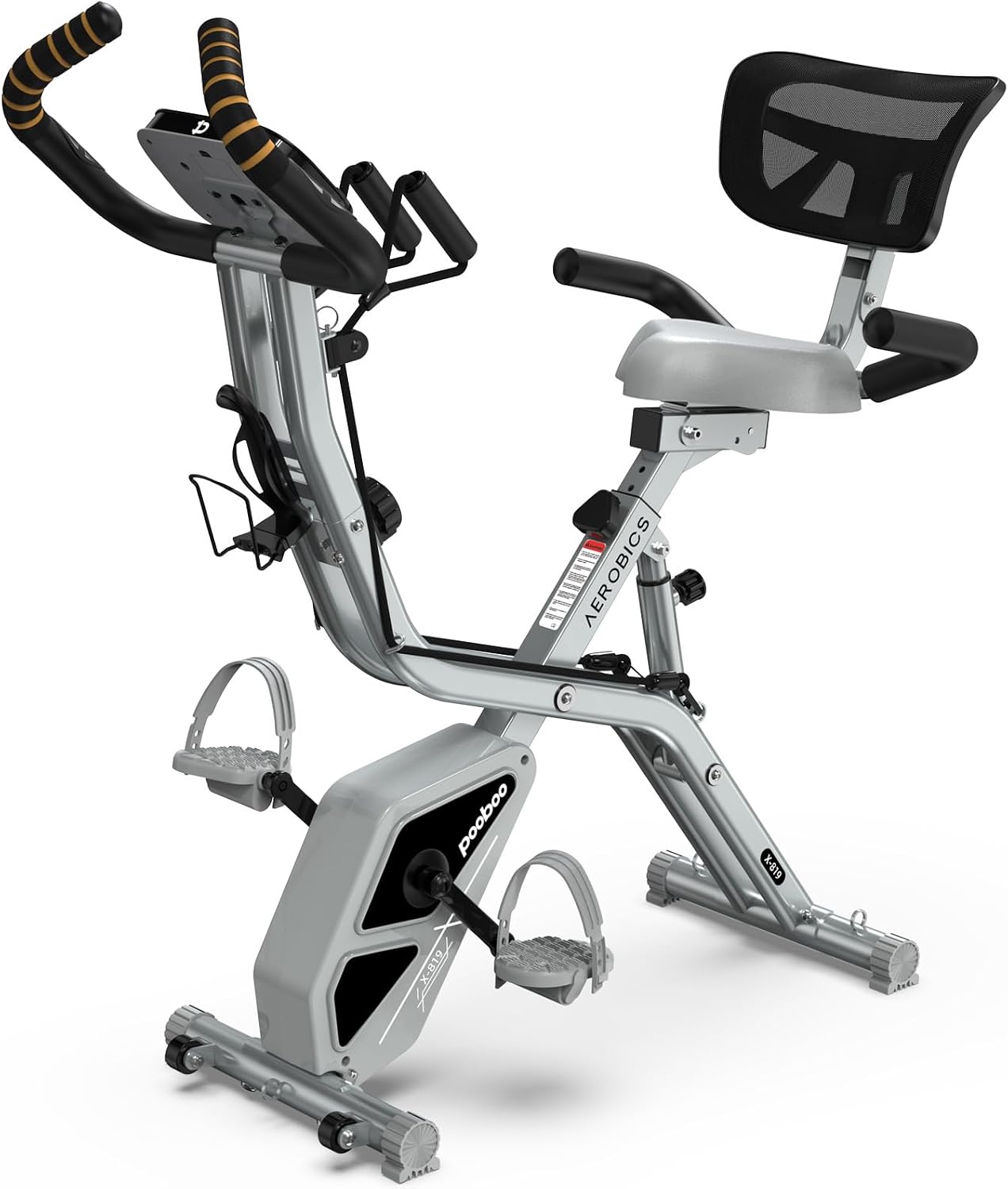
pooboo Folding Magnetic X-Bike, Upright Exercise Bike for Home Gym
Folds away, magnetic resistance, and a price that makes a spare-room gym realistic
Upright posture and a lighter frame mean seated steady-state riding, not sprint work
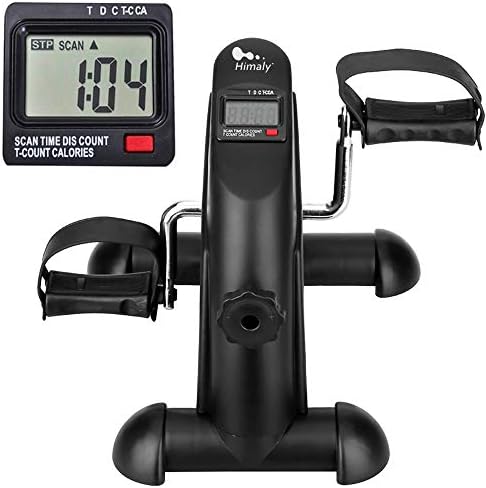
Mini Exercise Bike, himaly Under Desk Bike Pedal Exerciser Portable Foot Cycle Arm & Leg Peddler Machine with LCD Screen Displays
The smallest, most portable way to keep legs and arms moving during a workday
No flywheel momentum, no standing work, and no seat, so it is movement rather than training
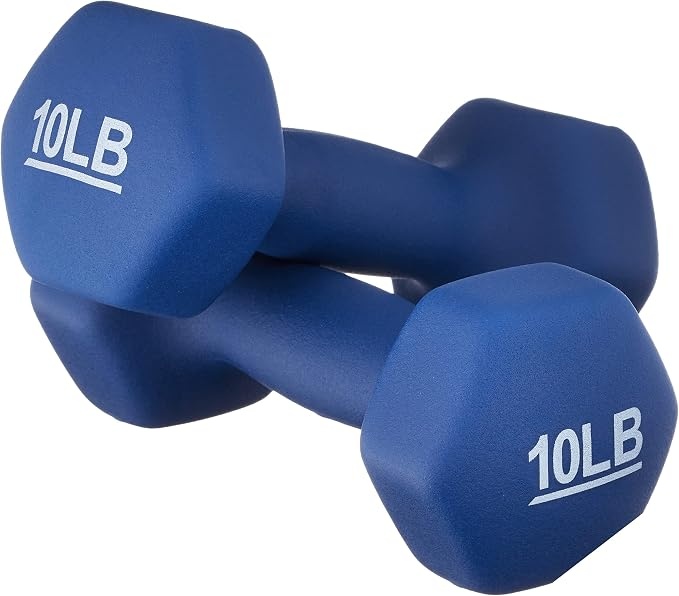
Amazon Basics Neoprene Dumbbell Hand Weights for Exercise and Muscle Toning
Pairs with any of the three bikes for off-bike strength work that holds your posture together
It is not cardio, and a neoprene coating picks up grit if you leave it on a garage floor
Prices and availability were captured from Amazon Creators API and may change.
How I judge a home bike
Four things, in this order.
First, does it stay planted when you stand up and push? A bike that rocks at sprint resistance is not a minor annoyance, it is a hazard. I have watched riders come out of the saddle on a flexing frame and grab the handlebars like a life raft. If the bike is designed for seated riding only, that is fine, as long as you know it before you buy it.
Second, is the resistance smooth across the entire range, not just at the easy end? Cheap resistance feels fine when you are warming up and slips or grabs when you actually ask for effort. A knob that creeps mid-ride is the single fastest way to ruin a workout.
Third, will the seat and pedals survive month three? This is where budget bikes quietly cost you more money. The saddle is the first thing to replace on most inexpensive bikes, and plastic pedal cages are the first thing to crack. Factor both into what you are actually spending.
Fourth, and this is the one that decides everything: would I teach a class on it? If the answer is no, it is a piece of furniture with pedals. Comfort beats specs every single time, because a bike you do not want to sit on is a bike you will not ride.
The full spin bike: Schwinn Fitness IC Indoor Cycling Bike Series
This is the only product in this group that is a genuine indoor cycling bike, and that distinction matters more than any spec sheet. Spin geometry is built around standing work: the handlebars, the saddle position, and the frame are designed so you can come out of the saddle, drive through the pedals, and stay stable while you do it. If your idea of a workout is intervals, climbs, and a standing sprint at the end, this is the category you are shopping in.
The IC series spans more than one trim level, so confirm which version you are looking at before you commit. That is not a knock, it is a warning: the same series name can mean different resistance systems and different console features, and the difference matters more than the badge on the frame.
Two practical notes from someone who keeps a wrench set by the door. Assembly is a real task, and a bike that is not torqued down properly will wobble no matter how good the frame is. And the stock saddle is the first upgrade I would plan for, not because it is unusual, but because it is normal across the entire category.
The folding upright: pooboo Folding Magnetic X-Bike
The pooboo solves the problem that kills most home gym plans: space. It folds, it rolls, and it disappears into a closet or behind a couch when you are done. Magnetic resistance is the right call at this level too. Magnets do not wear out the way felt pads do, they are quieter, and the resistance tends to feel more consistent across the range instead of grabbing at the top end.
What you give up is standing work. This is an upright bike, and upright bikes are seated machines. That is not a flaw, it is a design choice, and it suits steady-state riding, warm-ups, and longer low-intensity sessions very well. It does not suit a standing climb at heavy resistance, and no amount of marketing will change the physics of a lighter frame.
The saddle on any upright bike matters more than the saddle on a spin bike, because you are parked on it for the entire ride instead of lifting out of it. Budget for a replacement if the stock one does not suit you after the first week. If it fits you and you ride it four times a week, this is the best value in this article for apartment living.
Visit on Amazon → to see the current listing.
The mini pedaler: himaly under-desk bike
Let me be clear about what this is, because the category gets oversold. A mini exercise bike is not a substitute for a spin bike. There is no flywheel, so there is no momentum carrying your pedal stroke through the dead spot, and there is no seat, so there is no bike fit to dial in. You are creating motion, not training a power stroke.
What it does well is genuinely useful. It sits under a desk, it works your arms as well as your legs, the LCD screen gives you a reason to keep going, and it is portable enough to move between a home office and a living room. For circulation during long workdays, for low-impact movement on a recovery day, and for anyone whose knees prefer short easy ranges of motion, it earns its place.
What it does not do is replace a bike for anyone chasing fitness. If you are deciding between this and a real bike, be honest about which one you will actually use. I would rather see someone ride a mini pedaler daily than own a spin bike they walk past.
Visit on Amazon → to see the current listing.
The dumbbells: Amazon Basics neoprene hand weights
Every cardio corner I have ever set up needed weight, and this is the least glamorous and most reliable piece of it. Neoprene coated hand weights are easy on the hands, quiet if you set them down mid-set, and they do not scratch a wood floor. They also do not break. There is no resistance mechanism, no knob to slip, no bearing to check at month three.
Why dumbbells belong in a bike article: cycling is a lower-body, seated, repetitive motion, and it does nothing for your upper body or your posture. Fifteen minutes of rows, presses, and shoulder work a few times a week keeps your back from hunching over the handlebars and gives you something to brace against when you stand on the pedals. Light weights used consistently beat heavy weights used twice.
The one caveat is storage. Neoprene picks up grit and pet hair if you leave it on a garage floor, so keep them on a shelf or in a bin. Buy a weight you can control for a full set of reps, not the heaviest one you can lift once.
Visit on Amazon → to see the current listing.
The trade-offs nobody mentions
The saddle is a wear item, not a feature. On almost every bike in the budget and mid range, the seat is the first thing to go, and the replacement cost belongs in your budget from day one. If a bike arrives with a seat that feels like a brick at mile 20, that is not a defect, it is the category.
Plastic pedal cages are a warning sign. They crack, they flex, and they are usually paired with a resistance knob that feels cheap in the hand. If the knob is plastic on a bike that claims to be quiet, walk away. You will feel that decision in year two.
Folding bikes have a hinge, and hinges need attention. Check the fold mechanism periodically, keep it clean, and do not treat it like a permanent fixture that never gets looked at. A loose hinge is the number one source of wobble on an otherwise solid folding frame.
Noise claims are marketing until you ride. Every budget bike is described as quiet. Quiet at resistance level two is easy. Quiet at resistance level eight, twenty minutes in, is the real question, and the answer usually comes down to the resistance mechanism and how well the frame is bolted together.
And the one nobody puts on a spec sheet: the bike you will sit on. I have watched riders buy on specs and quit in three weeks, and I have watched riders on modest bikes ride five days a week because the setup was comfortable. The second group gets fitter.
What matters more than the spec sheet
Flywheel weight is the most oversold number in this category. A heavy flywheel smooths your pedal stroke, which is real and noticeable, but it is also the easiest number to print on a box. The questions that predict whether you will still be riding in six months are duller: does the frame flex when you stand, does the resistance hold where you set it, and does the bike fit a rider between five feet and six foot four without you fighting the adjusters.
That is why I ask riders to think about the room before the bike. A folding bike that fits in your apartment beats a spin bike that lives in a storage unit. A mini pedaler under a desk you sit at for nine hours beats a bike in a garage you visit twice a month. Buy the one that fits the space and the habit, then upgrade later.
Should you buy the cheapest one first?
If your goal is to build a cardio habit from zero and you are not sure it will stick, start small. A mini pedaler or a folding upright gets you moving without committing a wall of your home to it. Neither one will train you for a standing climb, and that is fine, because neither one is pretending to.
If you already know you like structured riding, do not buy twice. A folding bike that you outgrow in two months is a more expensive mistake than buying the spin bike first. The Schwinn IC series is the only product here that will still be doing its job when you are ready for intervals, and the dumbbells and a replacement saddle are the only extras you need.
What I am testing next
I am partway through a run of budget spin bikes, five units, with a standing sprint stability test and a resistance check on each one, because the gap between the cheap tier and the mid tier keeps changing and mostly not in the direction you would hope. The pattern so far is that frames have gotten better and the components bolted to them have gotten worse. I will publish the results when the month-three bearing checks are done, because that is the point where the marketing stops mattering.
In the meantime, the four products here cover the realistic range of home setups: ride hard on a real spin bike, ride steady on a folding upright, keep moving at a desk, and lift something a few times a week so your posture survives all of it.