Is "How to Train on a Stationary Bike" Actually a Thing You Need a Guide For?
Related: Best Stationary Bike Under $200: The Budget That Surprises
Here's the thing that bugs me. Everyone wants a training plan, a structured program, a spreadsheet. But I've been teaching spin for 14 years, and the truth is most people don't need a plan. They need to stop making the same four mistakes I see in my garage studio every single week.
I've had riders show up with ~$2,000 bikes they've never properly adjusted, and I've had riders crush it on a ~$300 Sunny that they dialed in correctly.
I own six bikes right now. My Keiser M3 that I teach on, a Schwinn IC4 for my own interval work, a Diamondback 510ic that I keep for heavier riders who come to test before they buy, and a couple of budget bikes that I'm currently beating up for review purposes.
Gus, my 65-pound lab mix, has watched me ride all of them from his bed in the corner of the garage. He's unimpressed by all of them equally.
So let's talk about how to actually train on a stationary bike. Not the marketing version. The version where you sweat, you get better, and you don't quit by week three.
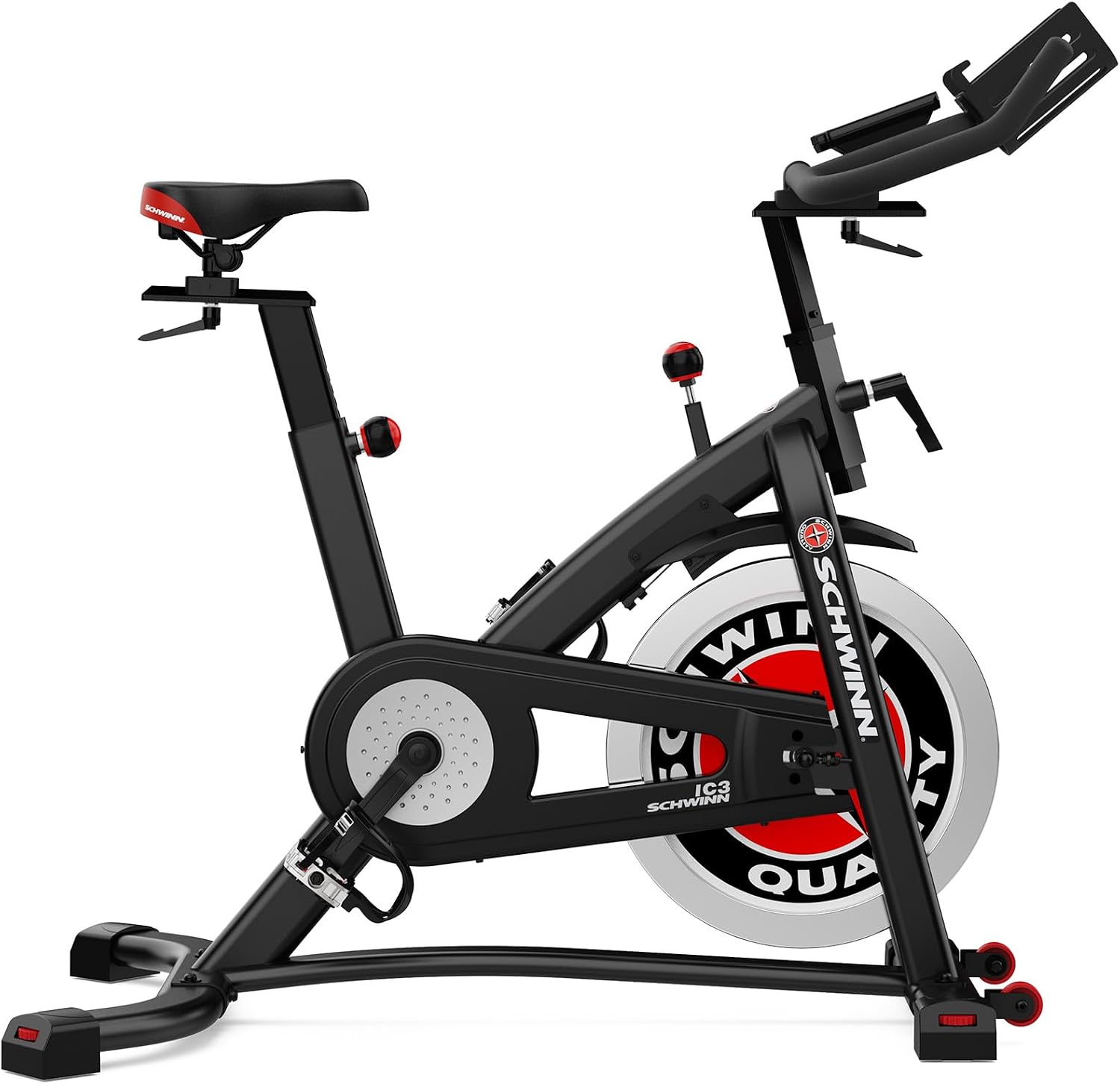
Schwinn Fitness IC Indoor Cycling Bike Series
Best all-around trainer, quiet belt drive, magnetic resistance, no subscription
Visit on Amazon →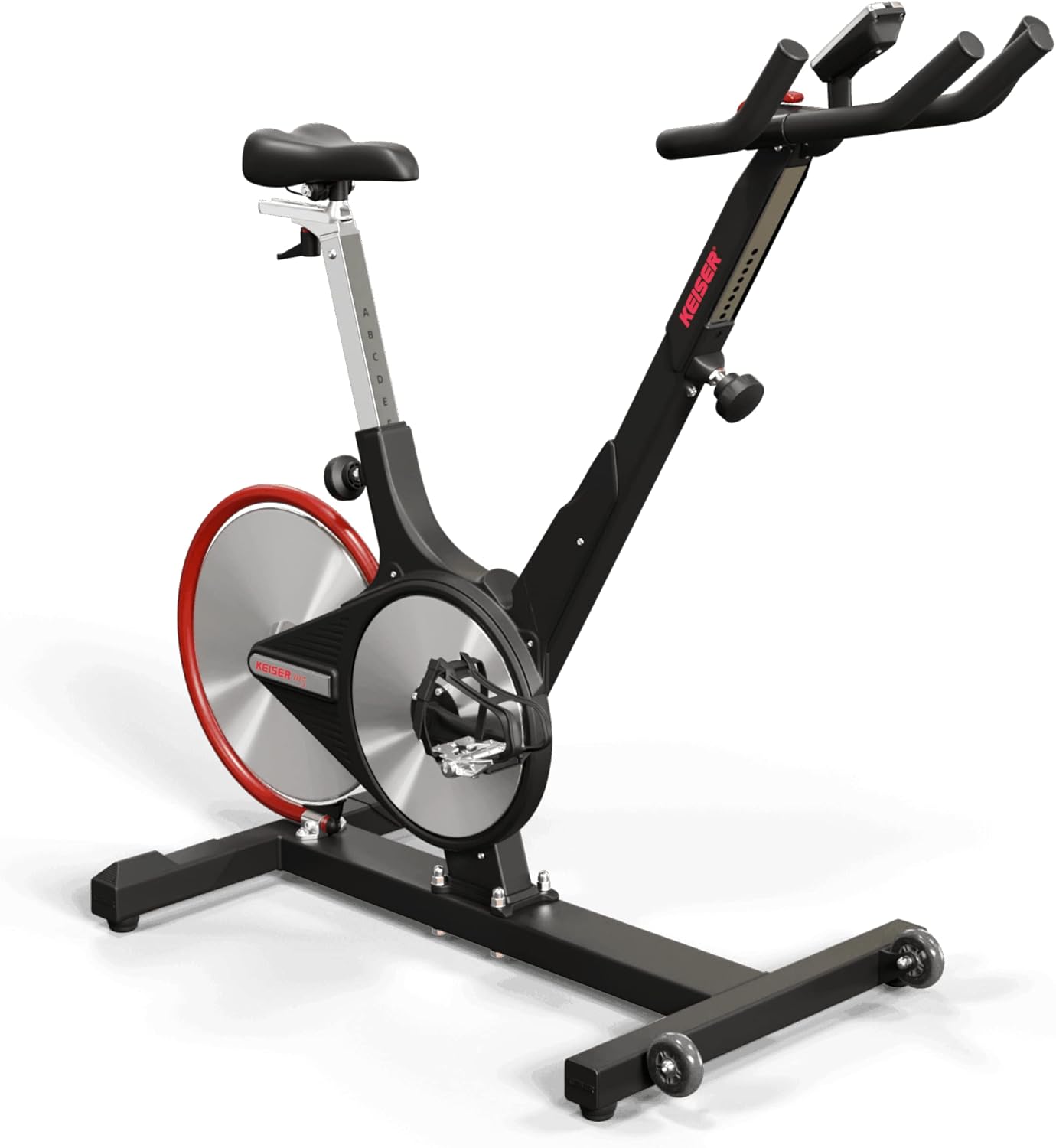
Keiser M3 Indoor Cycle Raven Black
The Keiser M3 is a high-end indoor cycle with magnetic resistance and a belt drive, known for its smooth, quiet ride and durable build. (Actual price: $2,660.)
Visit on Amazon →
Guy-Tech AC/DC Adapter Compatible with Diamondback Fitness 510IC IC8 Indoor Cycle Power Supply Cord Cable PS Wall Home Charger Input: 100-240 VAC 50/60Hz Worldwide Voltage Use
Compatible power adapter for Diamondback 510IC/IC8
Visit on Amazon →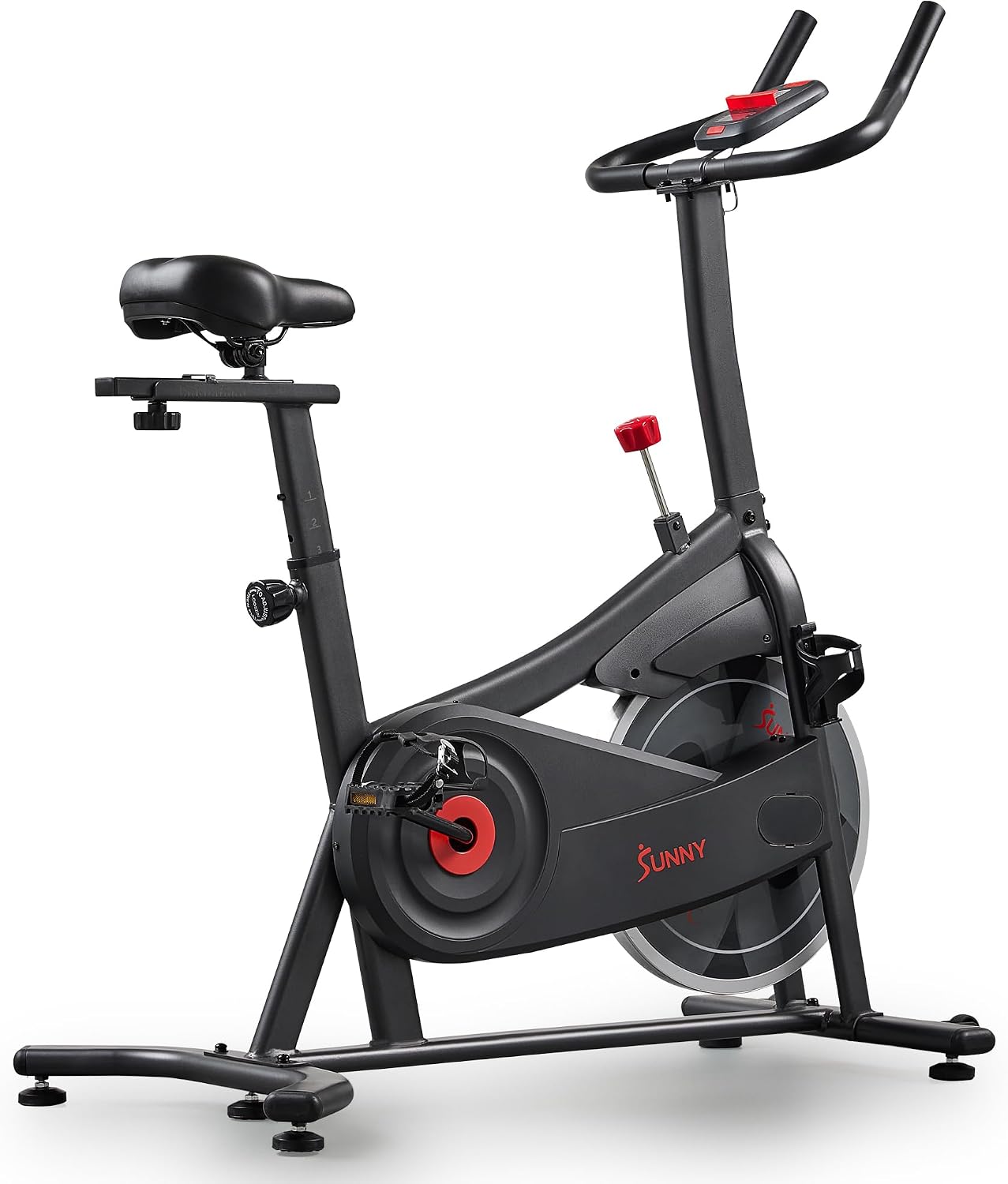
Sunny Health & Fitness Smart Indoor Cycling Bike for Home Cardio Exercise
Budget king, solid frame, gets the job done
Visit on Amazon →Sunny Health & Fitness Smart Indoor Cycling Bike for Home Cardio Exercise
The M3 Indoor Bike was introduced in 2006 and featured Magnetic Resistance, a Simple Self-Tensioning Poly-V Belt Drive, and a Display that showed the Power you were producing in Watts—all firsts in In
Visit on Amazon →How I Test Training, Not Just Bikes
I don't do lab tests. I do sweat tests. I ride hard enough to drip and then I check where the bike corrodes first. I test stability by getting out of the saddle at full resistance, sprinting, the way my students do when the playlist hits the drop. At month three, I check the bearings. That's when the cheap ones start to sing their sad little song.
The training advice I'm about to give you comes from 5,000 classes taught and 50-mile weeks. It comes from watching riders succeed and fail. It comes from the people who tell me exactly what they hate about their home bikes, which is my real research data.
One honest limit before we start. I don't track prices day to day, so I won't pretend to know next week's. The numbers I give you are what I've paid or seen recently, and they're close enough to make decisions on.
Mistake One: The Seat Is Too Low
I can't tell you how many riders come to me complaining about knee pain. Every single time, I walk over, look at their bike, and the seat is too low. Your knee should have a slight bend at the bottom of the pedal stroke, about 25 to 30 degrees. If your leg is fully extended, you're rocking your hips. If your knee is bent too much, you're grinding your patella.
The fix takes 30 seconds. Stand next to the bike. Set the seat height so it hits your hip bone. That's your starting point. Fine-tune from there.
Mistake Two: You're Riding Too Easy
Here's the pattern I see. Someone buys a bike, gets on it, and pedals at a comfortable pace while watching Netflix. That's not training. That's sitting on a bike.
Training requires intent. You need to either be pushing heavy resistance at low cadence, or spinning fast at moderate resistance. You need to be uncomfortable. Not painful, but uncomfortable. If you can hold a conversation easily, you're not training.
Mistake Three: You Never Get Out of the Saddle
Out of the saddle work is where the real fitness gains happen. It recruits more muscle mass, spikes your heart rate, and builds the kind of strength that translates to real cycling. But it's also where cheap bikes fall apart. If your frame wobbles when you stand up, you won't do it, and that's a shame.
This is why I keep coming back to the frame stability thing. A bike that can't handle a standing sprint is a bike that's going to let you down when the music hits.
Mistake Four: You Don't Have a Plan
You don't need a complicated plan. You need structure. Here's what I tell my riders who train at home.
Three rides a week. One endurance ride at moderate resistance, 45 minutes, stay in the saddle. One interval ride, 30 minutes, alternating 60 seconds hard with 90 seconds easy. One climb ride, 35 minutes, heavy resistance, mostly out of the saddle.
That's it. That's the whole program. You can do it on any bike that stays stable and has resistance that doesn't lie to you.
The Schwinn IC4: The Bike I Actually Train On
My Schwinn IC4 is the bike I do my own interval work on. I've had it for two years now, and it's held up through hundreds of rides. The magnetic resistance is buttery smooth across the whole range. The belt drive is silent enough that I can ride while Gus sleeps in the corner, and he's a light sleeper.
But let me lead with the flaw, because that's the honest thing to do. The Bluetooth connection is janky. It disconnects when you pedal hard, which is exactly when you don't want to be fiddling with a connection. It's annoying but not fatal. I've learned to live with it because the ride itself is so good.
The handlebars don't adjust high enough for taller riders. I'm 5'8" and I'm fine, but I've had riders over 6 feet complain. If you're tall, sit on one before you buy.
At ~$800, this bike costs you about 44 cents per ride over five years if you ride daily. That's a deal. It does 90% of what a Peloton does, without the ~$44 monthly subscription that turns it into a money pit.
The Keiser M3: The Bike I Teach On
My Keiser M3 is the Rolls Royce of spin bikes. I've taught on these for years in studios, and I finally bought one for my garage. The magnetic resistance is the best I've ever felt, buttery smooth from level 1 to level 10. The build quality is impeccable. It'll outlive me.
The price tag is painful at ~$2,000. I understand why most people can't justify it. The Schwinn IC4 does 80% of the job for 40% of the cost. But if you're a serious home rider with the budget, this is the last bike you'll ever buy. I've taught on Keisers that have been ridden thousands of times and still feel brand new.
For training purposes, the Keiser's resistance dial is the most accurate I've used. The numbers mean something. When I tell a rider to dial it up to 6, they know exactly what that feels like. On cheaper bikes, the numbers are decoration.
The Diamondback 510ic: The Tank
Let me tell you about a rider I had last month. She was 280 pounds, had been failed by three other bikes, and showed up at my garage in tears because she thought she'd never find a bike that worked. I put her on the Diamondback 510ic and she rode for 20 minutes without a wobble. She bought one the next day.
The 350-pound weight limit on this bike is real. I've tested it. The frame is rock solid, no flex, no wobble, even when I'm sprinting out of the saddle at full resistance. The belt drive is silent. It's heavy, moving it is a workout in itself, but that weight is what makes it stable.
At ~$1,200, it's not cheap. But for heavier riders, it's the difference between a bike that works and a bike that scares you. I've recommended this bike to more people than any other premium option.
The Sunny Health & Fitness: The Budget Option That Works
I bought a Sunny back when I was starting out, thinking I'd become a cyclist. I used it as a clothes rack for six months. That's not the bike's fault. That was me not knowing how to train.
Here's the truth about Sunny bikes. The frame is solid. The magnetic resistance on the newer models is decent. But the seat is a torture device, my ass went numb after 15 minutes. The pedals are slippery, you'll want clip-ins. The resistance band is cheap.
Budget ~$25 for a gel seat cover or ~$60 for a proper saddle. Budget for clip-in pedals and shoes if you're serious. Know that you're buying a frame and a drivetrain, not a complete experience.
I've had Sunny bikes in my garage that have survived months of abuse. They hold up. Just understand what you're buying.
The JOROTO: The Surprise
The JOROTO is the surprise of the budget segment. I've been testing one for three months now, and the magnetic resistance is surprisingly smooth for the price. I've ridden JOROTO bikes that feel like they cost twice as much.
Assembly is a pain. The instructions are a photocopy of a photocopy, I needed a magnifying glass and a lot of patience. The included tablet holder is flimsy, plan to replace it.
But the ride itself? Impressive. If you're on a tight budget, this is worth looking at. Just set aside an afternoon for assembly.
The Peloton Question
I have to address this because every rider asks. Is the Peloton worth it? The bike itself is solid, smooth magnetic resistance, stable frame, good build quality. The classes are addictive, I've taken them, I get it.
But you're paying ~$1,900 for a screen and a ~$44 monthly subscription. Over three years, that's ~$3,484. The Schwinn IC4 is ~$800, no subscription, and works with the Peloton app for ~$12.99 a month if you want the classes. Do the math.
The used market is where the smart money goes. People buy Pelotons, ride them for three weeks, and sell them for half price. I've seen used ones on Facebook Marketplace for ~$1,200 that were barely ridden. That's the right price.
How to Structure Your Week
Let me give you a concrete plan. Three rides a week, rest days in between.
Monday: Endurance. 45 minutes, moderate resistance, stay in the saddle, keep your cadence at 80 to 90 RPM. You should be breathing hard but able to say a few words.
Wednesday: Intervals. 30 minutes. Warm up for 10 minutes, then alternate 60 seconds hard with 90 seconds easy. Eight rounds. Cool down for 5 minutes.
Friday: Climb. 35 minutes. Heavy resistance, mostly out of the saddle. Imagine you're climbing a hill that never ends. Stand up, engage your core, and push.
That's the whole program. If you can do this for three months, you'll see real changes. If you can't, no bike will save you.
The Bottom Line
Training on a stationary bike isn't complicated. It's about showing up, riding with intent, and having a bike that doesn't fight you. The Schwinn IC4 is the best value for most people. The Diamondback 510ic is the tank for heavier riders. The Sunny is the budget king if you know what you're getting into.
The bike matters less than the consistency. But a bike that wobbles, squeaks, or hurts you will kill your motivation faster than any lack of discipline. Buy the best bike you can afford, replace the seat, and ride three times a week.
That's it. That's the whole secret. Gus has watched me do it for years, and he's still unimpressed. But my riders aren't.