I have taught indoor cycling for 14 years, first in studios and now out of a converted garage in Boise, and the questions my riders ask are almost never about the bike itself. They are about everything around it. Where does the phone go during a 45 minute class. Why does the seat hurt at mile 20 when it felt fine at mile 2. Are the bolts actually tight enough to survive a standing sprint. That is the gap this spin bike setup essentials comparison fills.
Four products, four jobs. The YPOO Exercise Bike Adjustable Magnetic Resistance 330LBS, APP Courses is the centerpiece, the machine you actually pedal. The other three are the pieces that decide whether you are still riding in month three: the WILD MAN Bike Phone Mount Bag for sweat protection and phone storage, the ANZOME Bike Seat Cushion for the seat problem almost every budget bike ships with, and the PRO BIKE TOOL Bike Torque Wrench Set for the assembly step most people guess at.
The short answer: buy the bike first and budget for the seat on day one, because the stock saddle is the part that sends most new riders back to the couch. The phone bag and the torque wrench are the two cheap additions that solve problems you will run into in the first week.
Related: Exercise Bike Resistance Types Explained
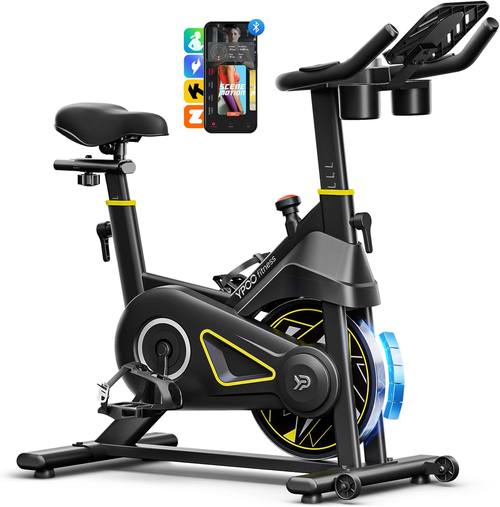
YPOO Exercise Bike Adjustable Magnetic Resistance 330LBS, APP Courses
Magnetic resistance with no wear part, a 330 lb weight capacity, and app courses that give structure to a solo ride
App integration is only as good as the app, and the stock seat and pedals still need a look before daily use
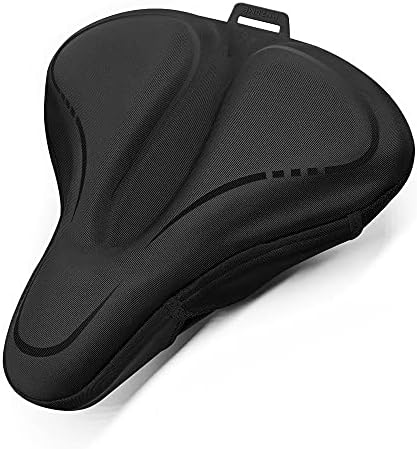
ANZOME Bike Seat Cushion, Wide Foam & Extra Soft Gel Exercise Bike Seat Cushion
Wide foam plus gel takes pressure off the sit bones, fits 8.5 to 10 inch saddles, rain cover included
Wide and soft is the wrong shape for an aggressive forward-leaning spin position
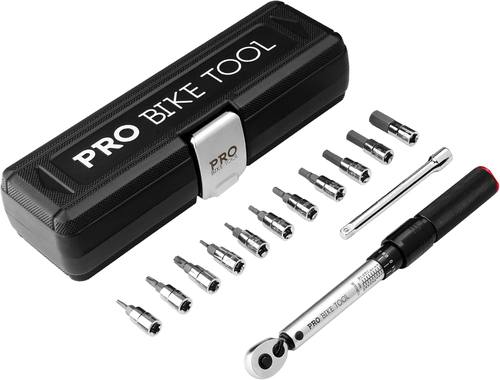
PRO BIKE TOOL Bike Torque Wrench Set, 1/4 Inch Drive, 2.2-16.9 Nm
Covers the assembly and fit bolts that matter most, in a range that suits bike hardware rather than car hardware
The top of the range will not cover crank bolts or anything that wants a bigger drive
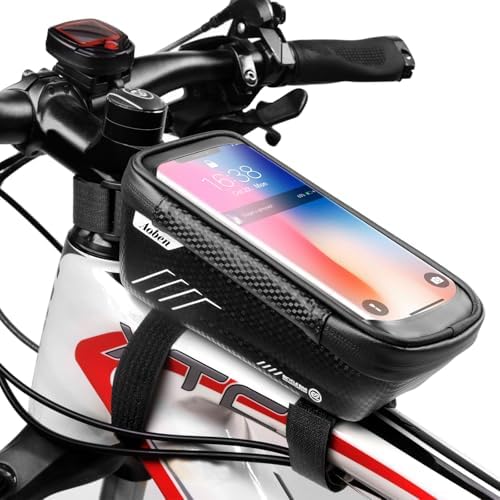
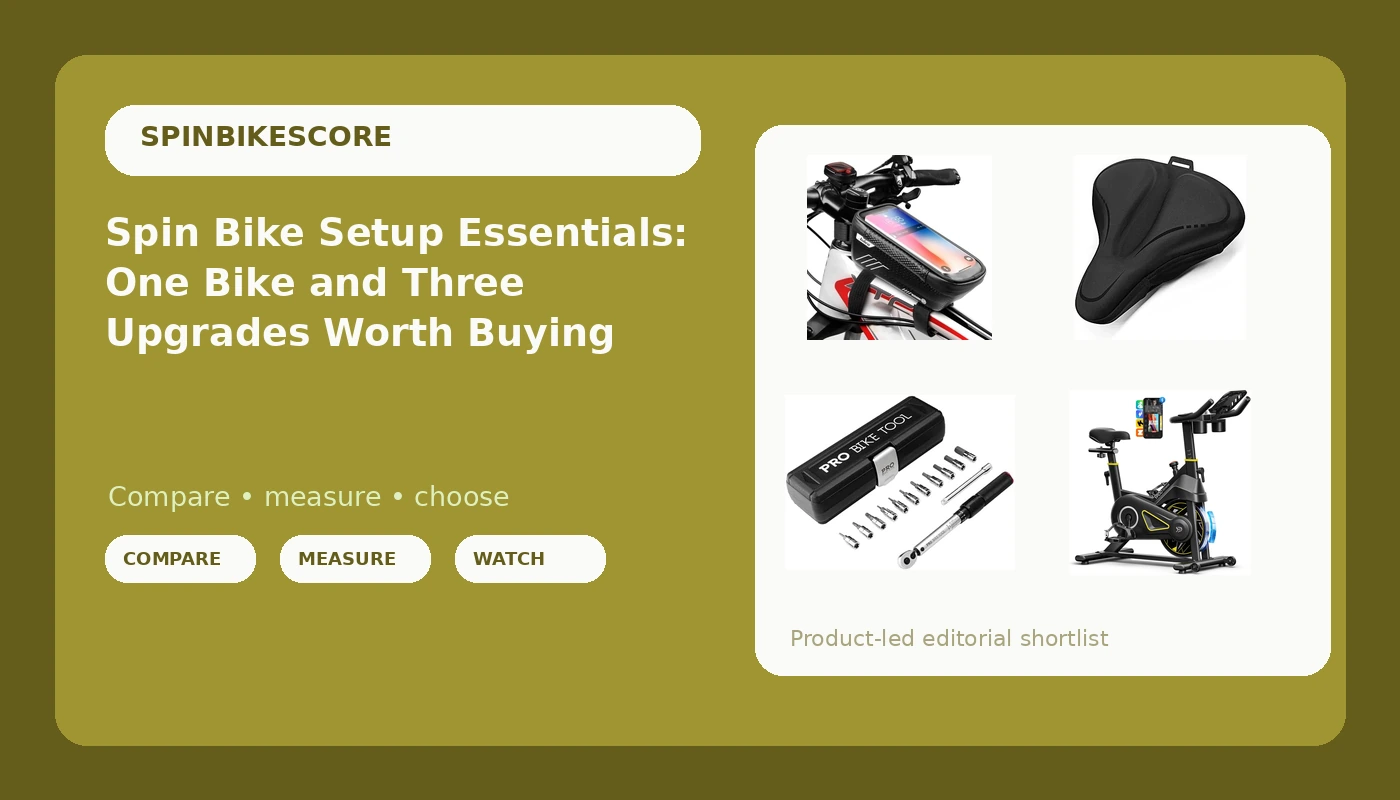
WILD MAN Bike Phone Mount Bag, Waterproof with 3D Hard EVA and TPU Touch Screen
Keeps sweat and weather off the phone, hard shell protects the screen, touch panel works through the case
Sized for phones under 6.5 inches, and touch-through TPU is never as sharp as bare glass
Prices and availability were captured from Amazon Creators API and may change.
How I judge spin bike setup gear
Three questions decide everything for me: does it stay planted during a standing sprint at full resistance, does it survive a 45 minute sweat test, and does it still feel right at month three when bolts and bearings have had time to settle. Those are the questions I ask about every piece of home fitness gear that comes through my garage. Marketing copy does not answer any of them. Whether the frame wobbles when you stand up does.
A note on how to read this comparison. I am working from manufacturer specs and from more than a decade of replacing parts on my own bikes and my riders' bikes. I have not put 50 miles on every unit listed here, and I am not going to pretend I have. What I can tell you is which specs matter, which ones are noise, and which product in each category earns its place in a home setup.
The bike: YPOO Exercise Bike Adjustable Magnetic Resistance 330LBS, APP Courses
Magnetic resistance is the first spec I check on any spin bike, and it is the reason this YPOO belongs at the top of a setup list. Magnets brake the flywheel without touching it, so there is no felt pad to wear down, no friction dust on your floor, and no grinding noise that shows up around month four when a pad starts to glaze. A felt pad bike is not automatically bad, but on a bike that gets ridden daily the pad becomes a consumable, and most people never replace it. They just ride a bike with inconsistent resistance and assume that is how it feels.
The 330 lb weight capacity is the second thing worth noting, and it is not about the number on the box. Weight capacity is a rough proxy for how much steel is in the frame, and frame stiffness is what keeps a bike from rocking side to side when you come out of the saddle at sprint resistance. A wobbly bike at sprint resistance is a safety hazard, not an inconvenience. I have watched riders nearly put a handlebar through a wall on a frame that flexed under load.
The app courses are the third piece, and this is where I want you to be honest with yourself. Structured classes are the reason a lot of people stick with indoor cycling, and having courses built into the bike removes the friction of casting a workout to a screen. But you are paying for software as well as hardware, and the software side of any connected bike is the part that ages fastest. If the classes are the thing that gets you on the bike four days a week, that is a real feature. If you are going to ride to your own music and a timer, you are paying for something you will not use.
Two things to check before you commit to daily riding on any bike in this category. Look at the pedals. Plastic cages are a pet peeve of mine because they crack, and a cracked cage is a foot that slips at speed. Look at the Q-factor, the width between the pedals. Too wide and your knees will complain after 20 minutes, and no amount of adjustment to the seat height fixes it.
The seat pad: ANZOME Bike Seat Cushion
The seat is the first thing to replace or cover on most budget bikes. I have said this for years and I will keep saying it: factor the seat into the price of the bike, because a bike you do not want to sit on is a bike you will not ride. The ANZOME cushion is the low-commitment fix. Wide foam over gel, sized for saddles between 8.5 and 10 inches, with a rain cover in the box, and it is listed for cruisers, stationary bikes, and exercise bikes alike.
Here is the trade-off nobody puts in the listing. Wide and soft is a shape decision, not just a comfort decision. A wide gel pad spreads your weight across the sit bones, which is exactly what you want if you sit upright with your hands light on the bars. It is the wrong shape if you ride in a forward-leaning spin position, because a wide pad pushes into the inner thigh on every pedal stroke and you will feel it around mile 15. Spin bikes ask for a narrower saddle than a cruiser does.
My honest guidance: use a pad like this to get through your first month, when your sit bones are still adapting and every ride feels like a bruise. If you are still riding at week six, consider a proper saddle in the right width instead. But a pad that keeps you pedaling beats a perfect saddle you never bought.
The torque wrench: PRO BIKE TOOL Bike Torque Wrench Set
Every bike in my garage has needed a wrench, which is why I keep one by the door. The PRO BIKE TOOL set is a 1/4 inch drive wrench covering 2.2 to 16.9 Nm, and that range is aimed squarely at bike hardware: seat post clamps, handlebar and stem bolts, saddle rails, pedal threads, and the small fasteners that hold a console or a bottle cage in place.
Why this matters on an exercise bike that never sees a road. Two reasons. First, assembly. Almost every home spin bike arrives in a box and gets built by someone who is not a mechanic, and the difference between snug and overtightened is the difference between a clamp that holds and a bolt that strips its threads in aluminum. Second, adjustment. You will move the seat post and handlebars a dozen times in the first month while you dial in your fit. A torque wrench turns that from guesswork into a number you can repeat.
The limitation is honest and worth stating plainly. The top of this range will not cover crank bolts or anything that wants a larger drive, so this is a bike tool, not a general purpose garage tool. And a torque wrench is only as good as the spec you are targeting, so read the manual for your bike and use the number it gives you rather than the number that feels tight.
The phone bag: WILD MAN Bike Phone Mount Bag
The sweat test is the reason I care about this category. Forty-five minutes at max effort produces a surprising amount of moisture, and it lands on the frame, the console, and whatever you have strapped to the handlebars. A phone mounted bare on a spin bike is a phone sitting in a puddle of salt water. The WILD MAN bag addresses that with a 3D hard EVA shell, a TPU touch panel, and a waterproof construction, sized for phones under 6.5 inches.
What it does well is protection and storage at the same time. The hard shell means the bag holds its shape instead of sagging against the bars, and the touch panel means you can still pause a track or check a timer without pulling the phone out with wet hands. On a spin bike where you are not steering, the mount position matters less than it does on a mountain bike, which is the audience the listing is written for.
The trade-offs are the usual ones for touch-through windows. TPU over a screen is never as responsive or as sharp as bare glass, and if you use a thick case or a phone near the top of that 6.5 inch limit, fit gets tight. If your setup is a tablet on a floor stand rather than a phone on the bars, this is not the product for you.
The trade-offs the listings do not mention
Comfort versus position. A wide gel pad and a forward-leaning spin posture fight each other. If you sit upright, the pad wins. If you ride in the saddle with your chest low, a narrower saddle wins and the pad rubs.
Connected versus simple. App courses add structure and add a dependency. When the app stops being updated, the bike is still a bike, but the feature you paid for is gone. Decide which one you actually use.
Resistance mechanism. Magnetic resistance is smoother and quieter than felt and it does not wear out. Felt pads are fine if the bike is built right and you replace the pad. What you should avoid is a plastic resistance knob on a bike you plan to ride daily, because you will feel that in year two.
Torque range. A 2.2 to 16.9 Nm wrench covers the fit and assembly bolts, which is most of what a home spin bike needs. It will not cover everything on the bike, and no single small wrench will.
What I would buy first, second, third
If I were setting up a garage from zero, the order would be the bike, then the seat, then the wrench, then the phone bag. The bike is the only item you cannot work around. The seat is the item that determines whether you ride next week. The wrench is the item that keeps the bike safe and your fit repeatable. The phone bag is the item that protects the device you already own, and it is the easiest of the four to postpone.
If you already own a spin bike and you are unhappy with it, work backwards through that list before you buy a new machine. A sore seat and a slipping seat post are fixable for far less than a new bike, and most riders who think they need an upgrade actually need a saddle and a wrench.
What I am testing next
I am midway through a budget spin bike comparison, five units under $600, 50 miles each, with a standing sprint stability test at full resistance and a bearing check at month three. The early read is that the gap between the cheapest bikes and the mid-range ones is shrinking, and not entirely for good reasons. The mid-range bikes got worse on the parts you touch, particularly seats and pedals, which is why the upgrade list in this article looks the way it does. Full results when the third month check is done.
Until then, the rule stands: a bike that fits you and stays planted beats a more expensive bike that does not, and a seat you can sit on beats every spec on the box.