Related: Exercise Bike Fit Guide: Seat Height, Reach, and Knee Angle
Most people shopping for budget exercise bikes for home cardio get sold the same three promises: whisper quiet operation, a comfortable seat, and a frame that never wobbles. In my experience, two of those three are gone by month three. I have taught indoor cycling for 14 years and run my own spin program out of a converted garage in Boise, and I have ridden everything from commercial studio bikes to bargain Amazon specials.
Here is the thing I tell every rider who asks me what to buy. The number on the box does not matter nearly as much as whether the bike stays planted when you stand up at full resistance. A wobbly bike at sprint speed is a safety hazard, not an inconvenience. That single question eliminates more bikes than any spec sheet ever will.
The four bikes below are the ones I would actually point a rider toward right now. Between them they cover the whole spread of what people ask me for: a full-size home bike, a value pick that holds a heavier rider, an app-driven option, and a foldable bike for riders who need something smaller or easier to get onto. I am not ranking them by who has the biggest number on the box. I am ranking them by who they fit.
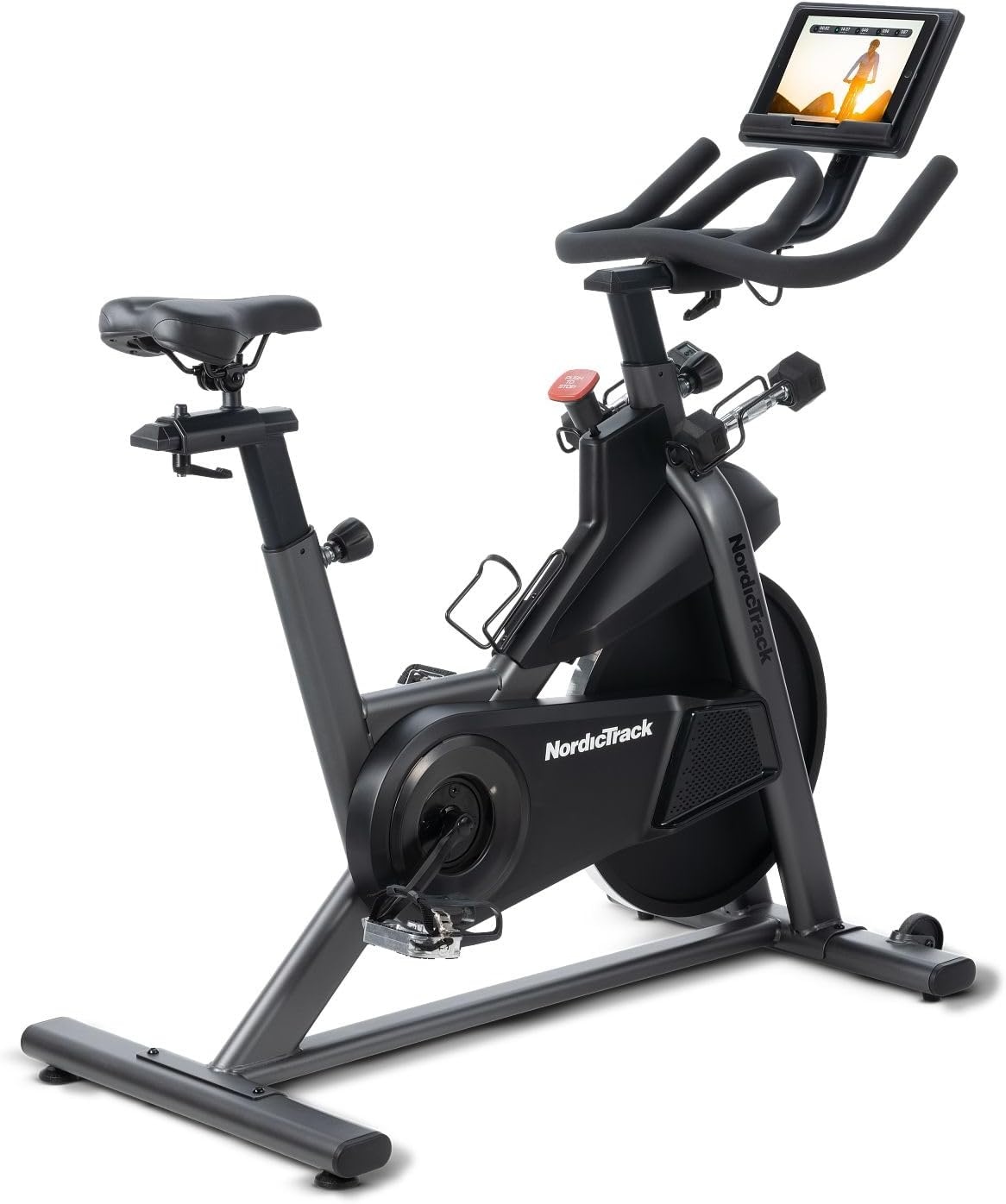
Best Overall: NordicTrack T Series 9 Exercise Bike
This is the pick when you want a bike that behaves like equipment instead of a gadget. It is the spend-up option in this group, and it is the one designed as a full indoor cycling bike rather than a folding or convenience-first machine. If you have ridden in a studio, this is the shape and stance you already know.
What matters most to me about a bike in this class is the frame. A heavier, planted frame is what lets you stand up out of the saddle and push without feeling the bike walk across the floor. That is the test I care about more than any console feature, and it is the reason I put this one at the top of the list.
The other thing I want you to do before you buy any bike in this group: measure your inseam and check the seat height range against it. I have watched riders buy a bike that was two inches too tall for them and quit inside a month. Fit beats specs every single time, and it beats price too. A bike that fits you will get ridden. A bike that does not will become a clothes rack with pedals.
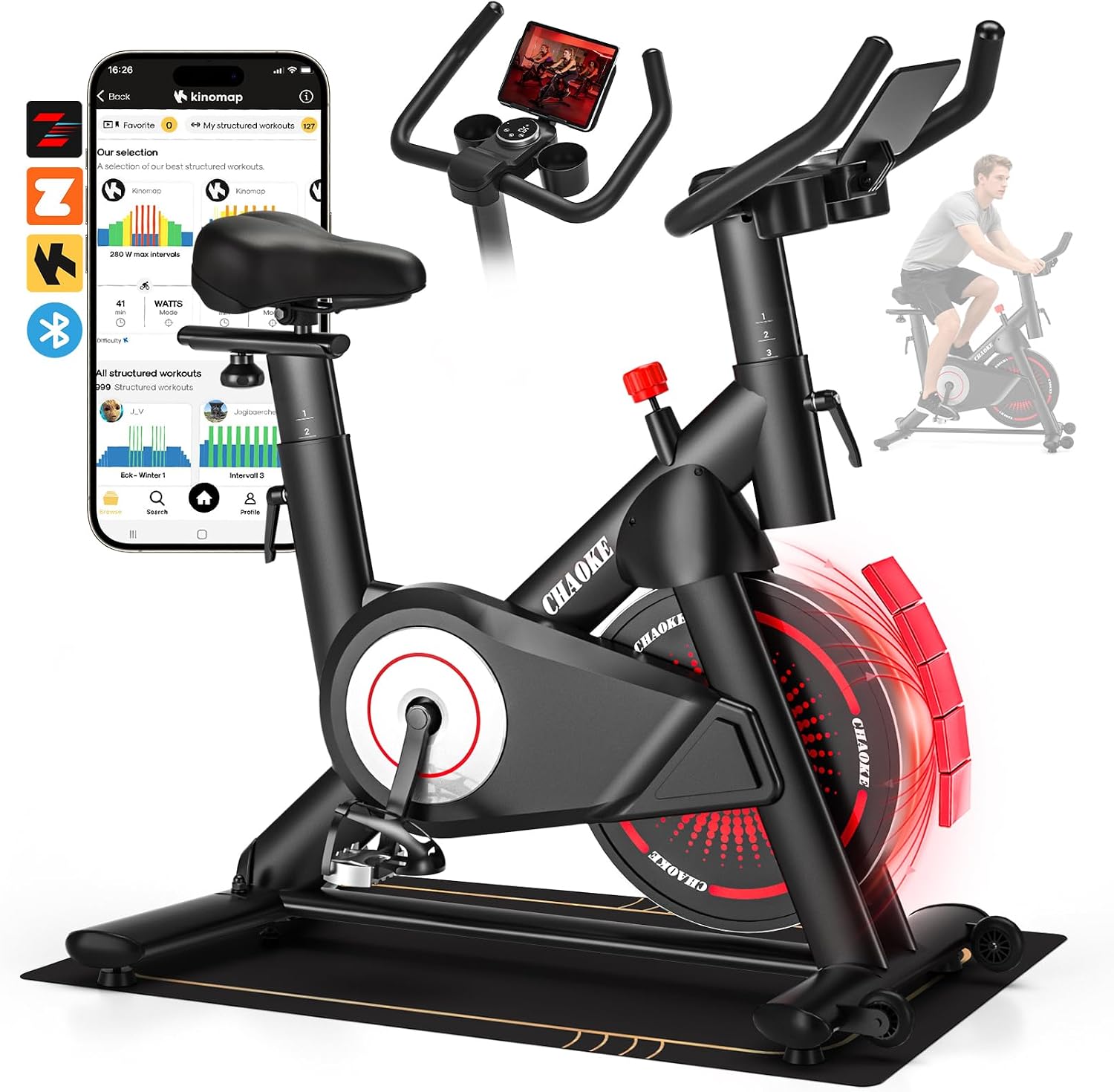
Best Value: CHAOKE Exercise Bike
The CHAOKE is the value pick, and it is the one I would hand to a heavier rider first. The weight capacity is the highest of the four, and the resistance is magnetic, which is the mechanism I prefer. Magnetic resistance does not wear out the way felt pads do, and it stays smooth across the whole range instead of getting grabby at the top end.
It also comes with app compatibility and a digital display, which covers the two things most people actually use: a timer and something to follow. The seat is described as comfortable, and I will be honest with you about that word. On nearly every budget bike I have ridden, the seat is the first part I would replace. Factor a saddle swap into your budget before you buy, not after your first long ride.
One warning that applies here more than anywhere else. Skip any bike where the resistance knob feels like plastic with no weight behind it. You will feel that in year two, when the knob slips mid ride and your resistance disappears while you are standing. If you can, put your hand on the knob before you commit.
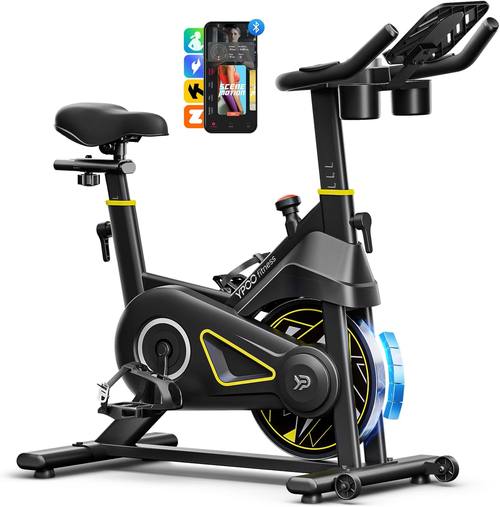
Best for App Riders: YPOO Exercise Bike
The YPOO is the one for the rider who knows they need a class to show up. It has adjustable magnetic resistance and it is built around app courses, which means the bike is the hardware and the programming comes from your phone or tablet. If you have ever quit a home workout plan because you ran out of ideas by week two, this is the configuration that fixes it.
The 330 pound weight capacity puts it in the same range as the foldable bike below, and the magnetic resistance means you are not fighting a pad that grabs and releases. Smooth resistance matters more than people think. When the resistance jumps instead of ramping, you cannot hold a steady cadence, and steady cadence is the whole point of a spin workout.
My rule for app-driven bikes is simple. The app is a bonus, never the reason. Buy the bike for the frame and the resistance, then enjoy the classes. If the app disappeared tomorrow, would you still want to sit on this bike three times a week? If the answer is no, keep looking.
Best for Seniors and Small Spaces: Foldable 5-in-1 Exercise Bike
This is the one I recommend to riders who are not chasing a standing sprint and never will be. It folds, it has a backrest, and it uses 16 levels of adjustable magnetic resistance. The X-bike shape and the backrest are the whole story here. For a lot of riders, especially older riders or anyone coming back from an injury, a backrest is the difference between a 20 minute ride and no ride at all.
The 330 pound capacity means it is not a flimsy toy, and folding matters more than people admit. A bike that lives in the middle of the living room and never moves is a bike that gets resented. A bike that tucks into a closet is a bike that stays in the house.
What I would check on a folding bike is the hinge. Every folding frame has one, and it is the part that either feels solid or does not. Give the bike a shake at the hinge before you trust it with a hard ride, and if it flexes under your hand, keep it in the easy gear range and treat it as a comfort bike, because that is what it is.
How I judge a budget bike
I do not write about a bike until it survives real miles. My standard is 50 miles a week, a sweat test, a standing sprint at full resistance, and a bearing check at month three. The sweat test is exactly what it sounds like: a 45 minute max effort ride to see how much sweat hits the frame, because cheap paint fails that test.
The stability check is the one that separates bikes. Stand up, put the resistance where a class would put it, and sprint. If the bike walks, wobbles, or creaks, it fails. That is not me being precious about equipment. A bike that shifts under you at speed is a bike that can put you on the floor.
I also keep a wrench set by the door, because every bike in my garage has needed it. Expect to tighten the seat post, the pedals, and the stabilizers in the first month. That is normal on budget bikes. What is not normal is a bolt that will not hold torque no matter how many times you tighten it.
One boundary I hold: no quiet claims without a decibel measurement during a real ride. I am not going to call any of these bikes silent from a spec sheet. Magnetic resistance is inherently quieter than felt pads, and that is as far as I will go without a meter.
What the specs tell you, and what they do not
Every bike here uses magnetic resistance, which is the right call at this level. Magnetic resistance is smoother and quieter than felt, and it does not wear out the way a pad does. If you ride daily, that difference is the difference between a bike that feels the same in year two and a bike that feels like it is grinding.
Weight capacity is a design signal, not just a number for heavier riders. The CHAOKE lists the highest capacity of the four, which usually means a beefier frame and a more planted ride. The YPOO and the foldable bike both list 330 pounds. The NordicTrack is the one I would trust most under a standing climb, because that is the kind of riding it is built for.
What specs do not tell you is the two things that actually decide whether you keep riding. The first is the seat. The second is the resistance knob. A comfortable seat and a knob with real weight behind it beat a bigger flywheel every time. If you can only judge two things in person, judge those.
Pedals matter too. Plastic cages are a pet peeve of mine, because they flex, they squeak, and they break. If your bike arrives with them, swap to a pair of SPD compatible pedals or at least a metal cage, and your knees will thank you.
The four bikes side by side
| Bike | Resistance | Weight capacity | Best for | Where to buy |
|---|---|---|---|---|
 Visit on Amazon → NordicTrack T Series 9 Exercise Bike |
See the product listing for resistance details | See the product listing | Riders who want a full size home bike that feels like studio equipment | Visit on Amazon → |
 Visit on Amazon → CHAOKE Exercise Bike |
Adjustable magnetic | 350 lb | Heavier riders and anyone who wants the strongest capacity of the four | Visit on Amazon → |
 Visit on Amazon → YPOO Exercise Bike |
Adjustable magnetic | 330 lb | Riders who need a class to follow and want app courses | Visit on Amazon → |
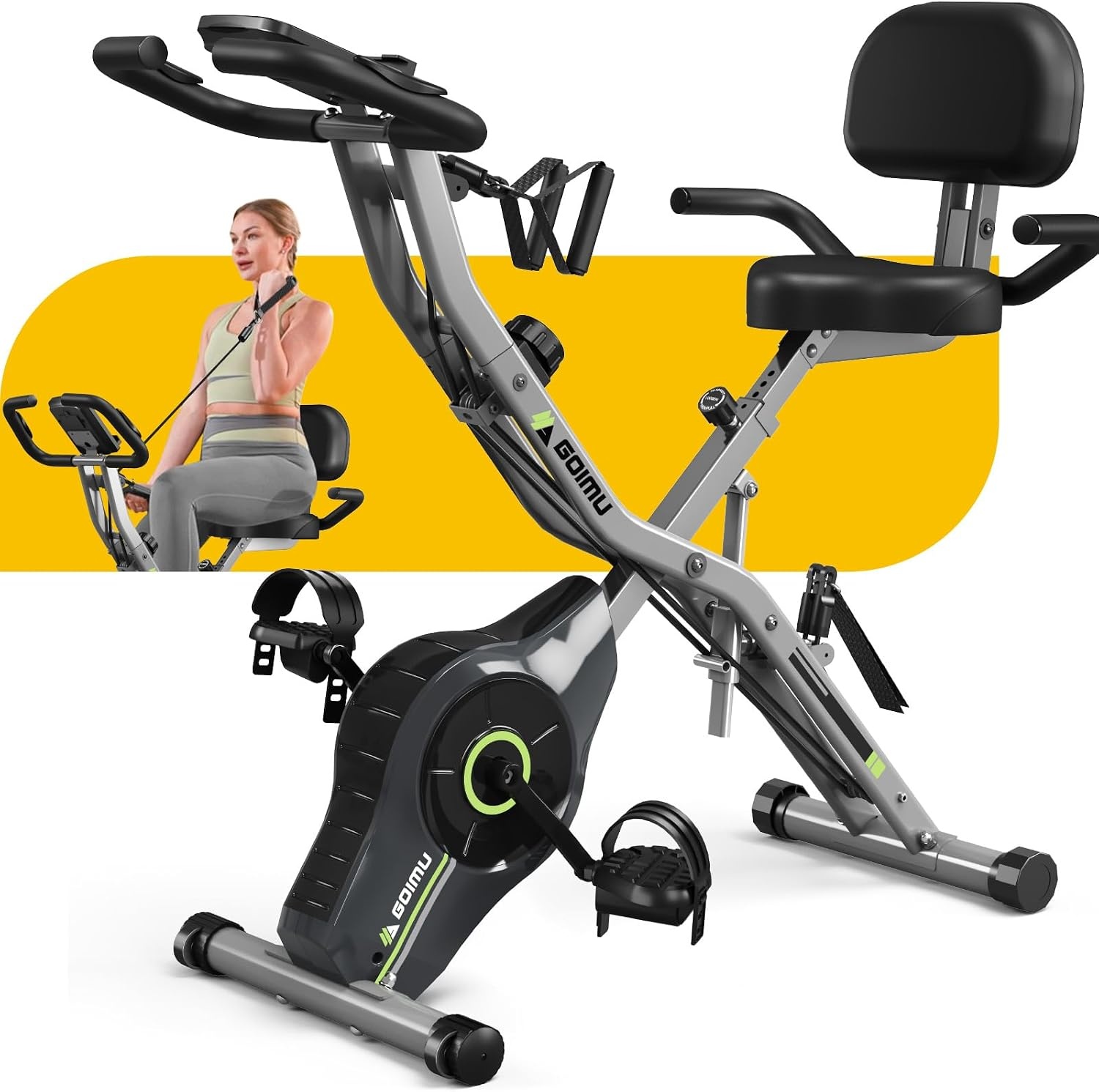 Visit on Amazon → Foldable 5 in 1 Stationary Bike for Seniors |
16 level adjustable magnetic | 330 lb | Older riders, riders with back issues, and small apartments | Visit on Amazon → |
If you are stuck between two of these, pick the one that fits your body and your room. Every bike in this table will make you sweat. Only one of them will be the one you actually sit on in February.
Should you buy the NordicTrack T Series 9 Exercise Bike?
Yes, if you want one bike that feels like real equipment and you are willing to spend up for it. It is the pick I would make for a rider who stands and climbs, because that is where a planted frame earns its money. Measure your inseam first, set the seat properly, and give the pedals a look before your first hard ride. Do that and this is the bike in the group I would expect to still feel right in year three.
Should you buy the CHAOKE Exercise Bike?
Yes, if you are a heavier rider or you want the strongest capacity of the four with magnetic resistance and app compatibility. It covers the basics without the premium price, and the digital display gives you the numbers you need. Budget for a seat swap and check the resistance knob before you commit. Do those two things and it will serve you well.
Should you buy the YPOO Exercise Bike?
Yes, if the thing that keeps you off the bike is not knowing what to do once you are on it. The app courses solve that, and the magnetic resistance keeps the ride smooth enough to hold a cadence. Just remember my rule: buy it for the frame, enjoy the classes as a bonus.
Should you buy the foldable 5 in 1 bike?
Yes, if a backrest is what gets you riding and floor space is what you do not have. It is not a sprint bike and it is not pretending to be. Treat it as a comfortable, upright, easy to store ride, check the hinge for flex, and it will do exactly the job you bought it for.