
Related: Best Spin Bike Seats for Long Rides: Comfort Without the Break-In Period
I have taught indoor cycling for 14 years and somewhere north of 5,000 classes. I now run my own spin program out of a converted garage in Boise, and there is a wrench set sitting by the door because every single bike in that garage has needed it. That is the honest frame for shopping for a magnetic exercise bike: you are buying a machine, and machines need attention.
Here is what I hear from riders who bought a home bike and then stopped using it. The resistance knob slipped mid-ride. The seat turned into a brick at mile 20. The frame wobbled the first time they stood up at sprint resistance. None of those problems show up in a product listing, and all of them are why a bike ends up holding laundry.
So this is not a spec sheet recital. It is the short list of things that decide whether a budget magnetic exercise bike survives month three in a real garage, applied to three bikes selling in the same price neighborhood, plus the one maintenance item I would buy the same day.
Best Overall: MJWW Magnetic Exercise Bike with Smart App
The reason this one takes the top slot is the resistance system. Thirty-two levels of magnetic resistance on a belt drive is the combination I want on a home bike, because there is no felt pad dragging against the flywheel. Felt pads are fine if the bike is built right, but they wear, they shed, and they change feel as they glaze over. Magnetic resistance does not wear out in any way you will notice, and a belt drive takes away the chain noise and the grease that comes with it.
The 300-pound capacity is the second number that matters, and it is the one most listings bury. A frame rated for a heavier rider is usually a stiffer frame, and a stiff frame is what keeps the bike planted when you come out of the saddle. A wobbly bike at sprint resistance is a safety hazard, not an inconvenience.
The fully adjustable seat is the third thing, and honestly it is the feature I would pay for before anything else. The seat is the first thing I replace on most budget bikes, and the post has to give you enough range to set it properly. A bike that fits you beats a more expensive bike that does not.
One caution on the "quiet" claim in the name. Quiet is a claim you verify with your own ears on your own floor, and belt drives are generally the quieter design because nothing is dragging on the flywheel. Hard flooring and a thin mat will undo a lot of that.
Best Value: 400LB Magnetic Stationary Bike for Home Cardio
This is the lowest-priced of the three, and the headline number is the 400-pound weight capacity, which is the highest here. If you are a heavier rider, or you share the bike with a partner who is, that capacity is not marketing. It is the difference between a frame that stays square and a frame that starts creaking at the welds.
It runs magnetic resistance on a belt drive with a brake pad, and it lists an adjustable seat plus water bottle holders. The bottle holders sound like a throwaway, but on a 45-minute ride they are not. Reaching for a bottle on the floor mid-interval is how people lose form.
The seat is described as suited to adults and seniors, which tells me the padding is on the softer side. Softer is friendlier for a casual rider and less friendly for someone doing standing climbs, so know which rider you are.
The trade-off against the MJWW is resistance range. Fewer levels means bigger jumps between them, and bigger jumps are felt most when you are trying to hold a specific effort at high resistance. For steady riding and light intervals, that is fine. For sprint work, it is the reason to spend more.
Also Worth a Look: pooboo Magnetic Exercise Bike with App
The pooboo sits between the other two, and it is the one I would hand to a rider who knows they will follow an app-based class rather than program their own intervals. Magnetic resistance, belt drive, and an app pairing are the whole pitch, and for a lot of people that is enough.
What it does not give you is a weight capacity in the product name, so that is the first thing to confirm on the listing before you buy, especially if you are a heavier rider or you plan to share. I want a capacity number on any bike that is going to take standing efforts, because standing is where a frame tells you the truth.
The four checks every bike has to pass
This is the protocol I run on anything that earns a recommendation from me. It is the same protocol whether the bike costs a few hundred or a few thousand.
The standing sprint test. Saddle up, resistance near the top of the range, come out of the saddle, and drive. If the frame rocks, the stabilizer feet are too small or the frame is flexing, and no amount of tightening fixes flex. This is the single fastest way to sort a real bike from a decoration.
The resistance sweep. Turn the knob from bottom to top and back, slowly. You want smooth, predictable changes the whole way, not a dead zone at the bottom and a cliff at the top. A knob that slips mid-ride is the most common failure I see, and it usually shows up around month two.
The seat and pedal survival check. The stock seat is the first upgrade on most budget bikes, so budget for a replacement and factor it into what you are spending. Pedals with plastic cages are the second thing to go. Check that the threads are standard so you can swap them.
The bearing check at month three. Spin the flywheel by hand and listen. A healthy bike is a hum. A grinding or clicking sound at month three means the bearings were the cheap part. This is why I keep a wrench by the door.
What the specs actually tell you
Magnetic resistance versus felt pads: magnetic is smoother and it does not wear, which is why all three bikes here use it. Felt pads are acceptable on a well-built bike, but they are a wear item and you will replace them.
Belt drive versus chain: a belt is quieter and needs no lubrication. On a home bike in a spare room, that matters more than any other drivetrain spec.
Flywheel weight: heavier smooths the pedal stroke, but a heavy flywheel on a flexy frame is worse than a lighter flywheel on a stiff one. Flywheel weight is marketing until you are standing on the pedals, and then it is physics.
Weight capacity: treat it as a frame stiffness rating, not a limit to squeeze under. More headroom is better, always.
The app: nice to have, never the reason to buy. A bike you do not want to sit on is a bike you will not ride, no matter how good the app is.
The home spin bike reference table
This is the table I keep on my phone when riders text me asking what to buy. Resistance and drive type come first because they decide how the bike feels in year two. Capacity comes second because it decides who can ride it safely. Everything else is a preference.
| Bike or item | Resistance and drive | Weight capacity | Best for | Price check |
|---|---|---|---|---|
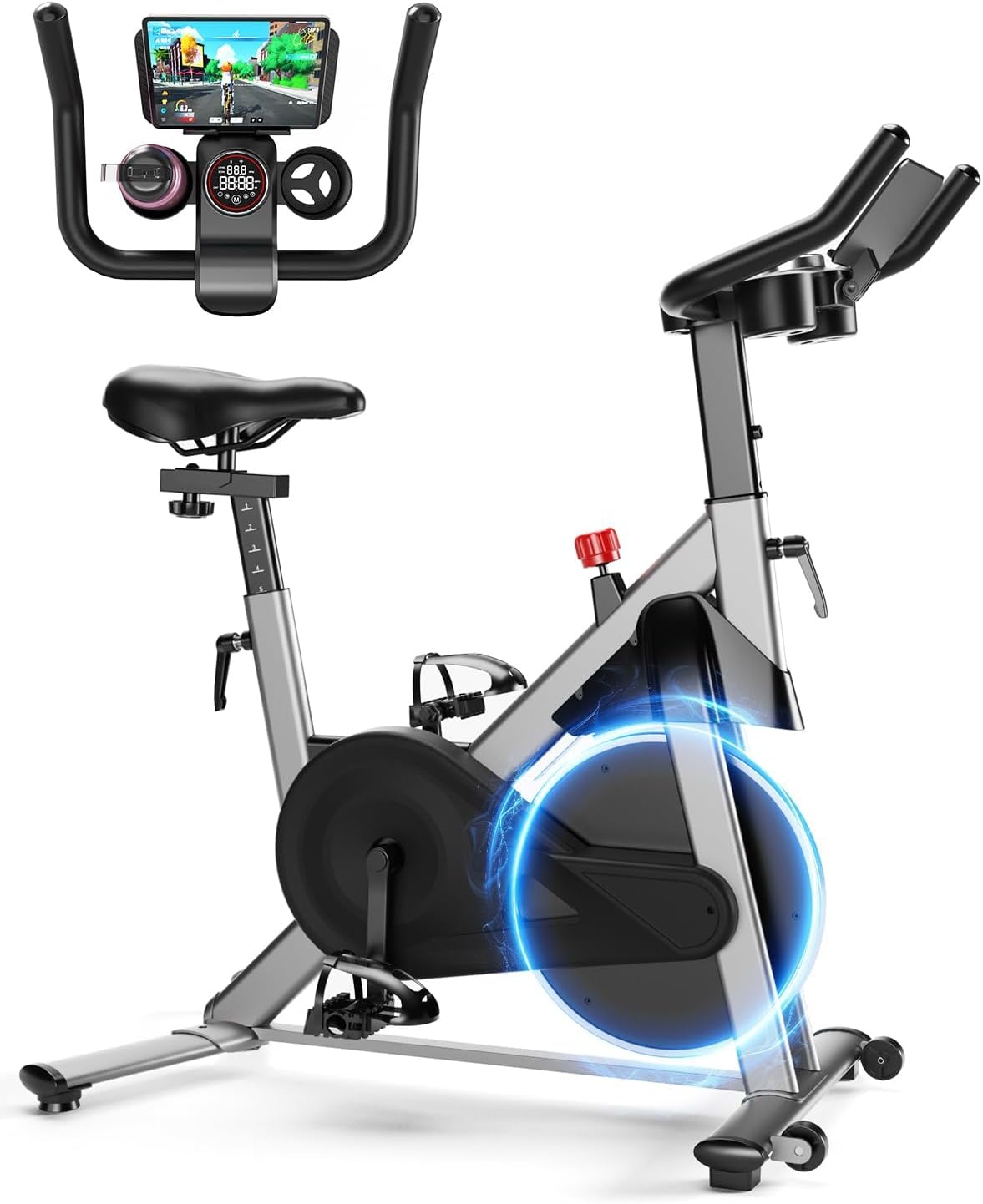 Visit on Amazon → Visit on Amazon →MJWW Magnetic Exercise Bike with Smart App |
32-level magnetic, belt drive | 300 lbs | The widest resistance range of the three | Visit on Amazon → |
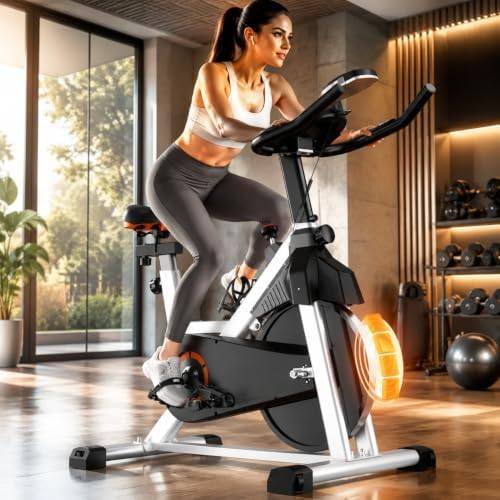 Visit on Amazon → Visit on Amazon →400LB Magnetic Stationary Bike for Home Cardio |
Magnetic, belt drive with brake pad | 400 lbs | Heavier riders and shared households | Visit on Amazon → |
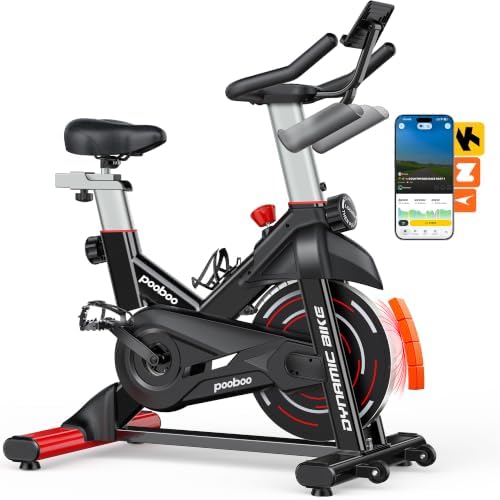 Visit on Amazon → Visit on Amazon →pooboo Magnetic Exercise Bike with App |
Magnetic, belt drive | Confirm on the listing | App-driven riders who follow classes | Visit on Amazon → |
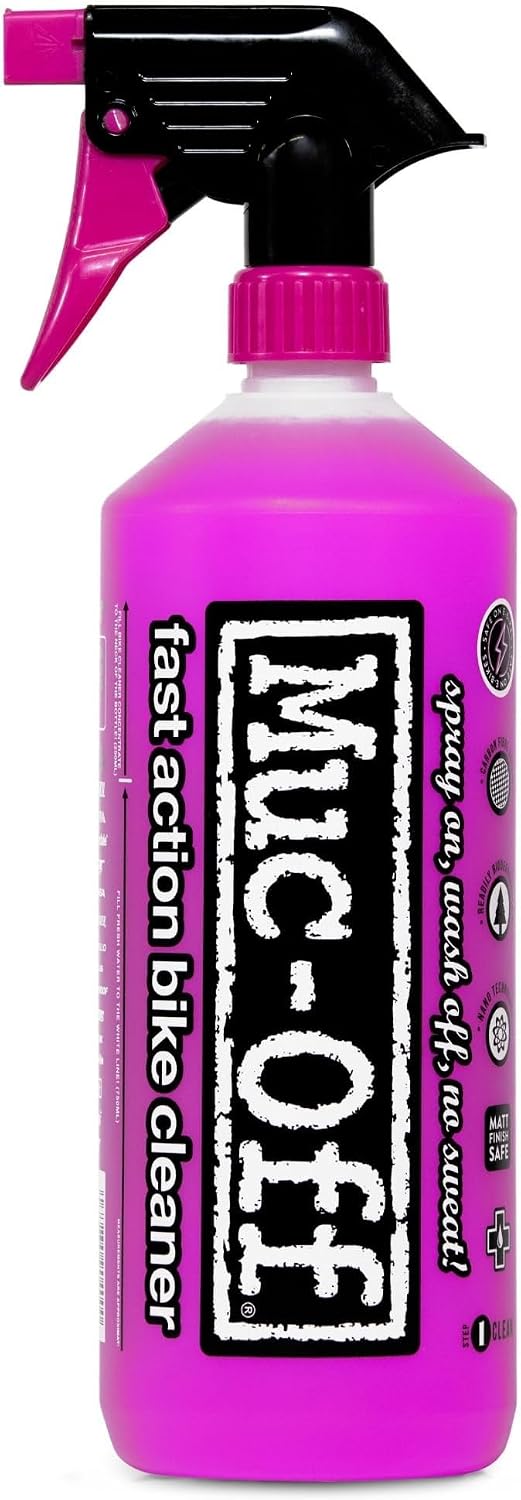 Visit on Amazon → Visit on Amazon →Muc-Off Bike degreaser Bike Cleaner 1L |
Not applicable | Not applicable | Cleaning the frame and drivetrain area after sweaty rides | Visit on Amazon → |
The one accessory I keep next to the bikes
Sweat is the most destructive thing that happens to a home bike. It is salty, it is acidic, and it lands on the frame, the resistance housing, and the flywheel guard every single ride. Paint that fails the sweat test fails in a season.
That is why the Muc-Off Bike degreaser Bike Cleaner 1L is on this list. It is a cleaner and degreaser for bikes, and on an indoor bike it is what I use on the frame, the guard, and the area around the resistance mechanism. Wipe the bike down after your hardest rides, not once a month. A two-minute wipe is cheaper than a new frame.
Should you buy the MJWW Magnetic Exercise Bike with Smart App?
If you want one bike that covers steady riding and sprint work without a resistance jump you can feel, yes. Thirty-two levels of magnetic resistance on a belt drive is the setup that holds up, the 300-pound capacity means a stiff frame, and a fully adjustable seat means you can actually set your position instead of tolerating it.
The app is a bonus. Buy it for the resistance range and the adjustability, and verify the quiet claim on your own floor. Then budget for a better seat, because that is true of almost every bike at this level.
Should you buy the 400LB Magnetic Stationary Bike?
Yes, if capacity is your priority or you share the bike. Four hundred pounds is the highest rating of the three, and that headroom is really a stiffness rating. The adjustable seat and the water bottle holders make it easy to live with, and for adults and seniors who want steady cardio rather than max-effort intervals, it is the friendliest of the group.
The compromise is a narrower resistance range. If your idea of a good session is a standing climb at the top of the dial, put that money toward the MJWW instead.
Should you buy the pooboo Magnetic Exercise Bike with App?
Buy it if you know you will follow app classes and you want magnetic resistance and a belt drive without paying for the widest resistance range. Confirm the weight capacity on the listing first, especially if you ride out of the saddle or share the bike. If the capacity works for your household, it is a sensible middle option. If it does not, step up.