I have taught indoor cycling for fourteen years, the last several of them out of a converted garage in Boise with a wrench set parked by the door, because every bike that comes through here eventually needs one. When riders ask me what to buy for a spare room, they are almost never asking about watts. They are asking whether the thing will still feel solid at month three, whether the seat will make them quit, and whether they can get a replacement part without buying a whole new bike. This comparison covers two budget magnetic spin bikes that land in the same search results, plus two items that honestly live in the same corner of my garage: a foam roller I use after every hard ride, and a grill cleaner that has nothing to do with pedaling and everything to do with the fact that my gym shares a wall with an outdoor kitchen. If you are shopping budget magnetic spin bikes, the headline specs are the least interesting part of the decision.
The short answer: choose the HARISON if you want a tablet mount and a companion app, and choose the 400 lb capacity bike if you want a belt drive and the lower entry price of the two. Neither one is a bike I would build a studio class around, and both are a clear step up from the $200 specials riders bring to me with plastic resistance knobs that slip at the worst possible moment.
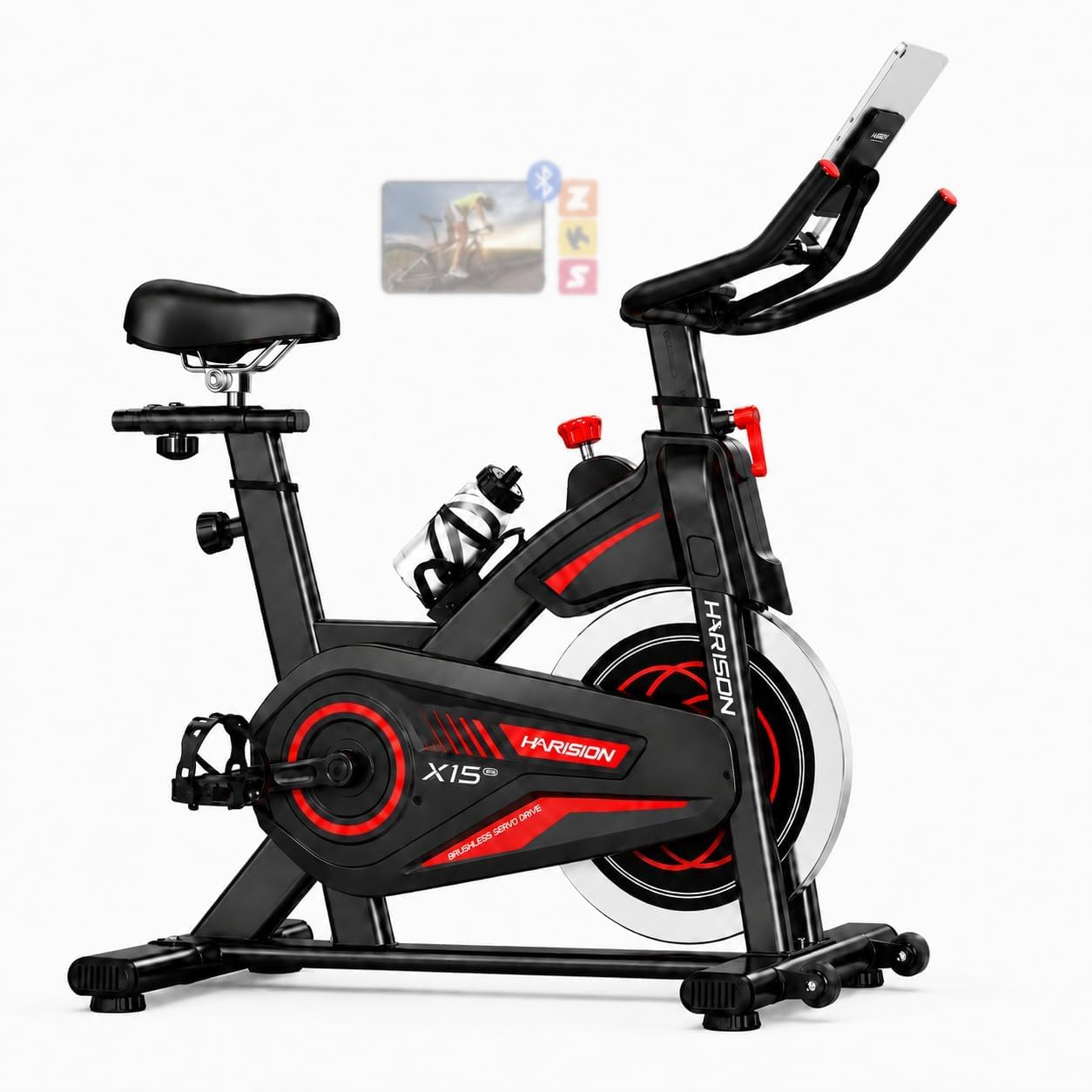
HARISON Exercise Bike, 350 lb Capacity, Magnetic with Bluetooth App
The only one of the two with a tablet mount and an app, so it fits riders who follow along with classes
The higher price of the pair, and the listing says less about the drivetrain
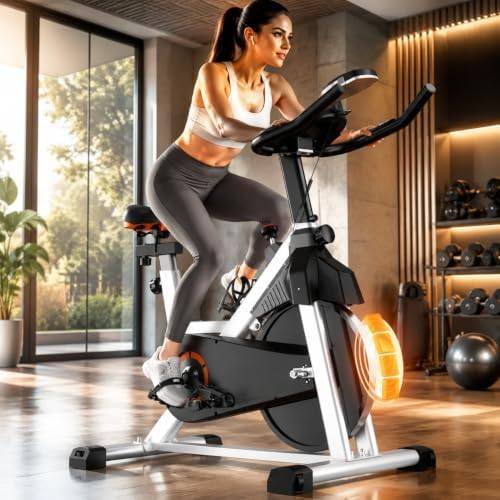
Exercise Bike, Magnetic with Silent Belt Drive, 400 lb Capacity
Belt drive, 400 lb rating, adjustable seat, water bottle holders, and the friendlier price
No app and no tablet mount, and "silent" is a claim I always want to verify in person
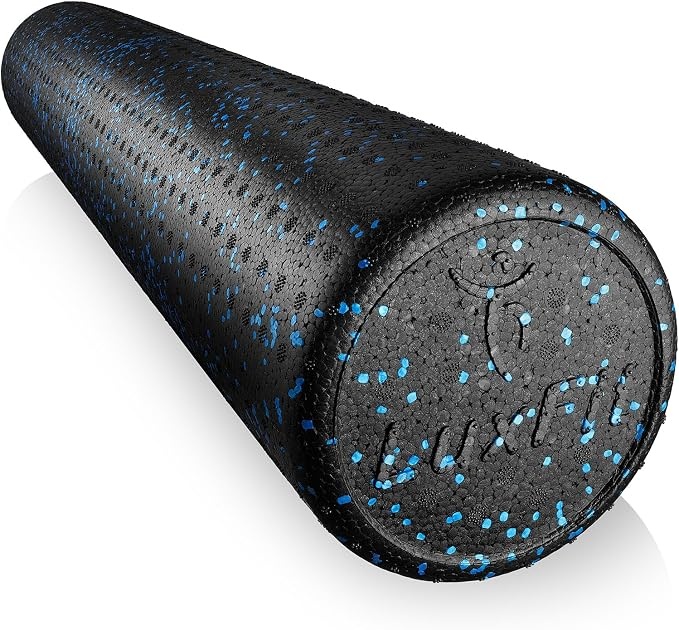
LuxFit Foam Roller, Speckled High Density, 24 Inch
Does one job without drama, and the 24 inch length covers quads, calves and back
It is not a bike part and it will never fix a bad bike fit
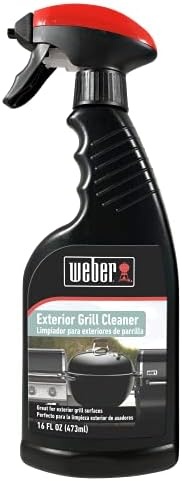
Weber Exterior Grill Cleaner Spray
Cuts baked on grease on the grill that shares the wall with my bikes
It is the outlier here, with zero effect on your pedal stroke
Prices and availability were captured from Amazon Creators API and may change.
What the spec sheets actually tell you
The HARISON listing reads like a connected bike: 350 lb weight capacity, magnetic resistance, a brake pad, Bluetooth app support, a tablet mount, and a comfortable seat cushion called out by name. The second bike reads like a value bike: magnetic resistance, a brake pad, a silent belt drive, a 400 lb weight capacity, an adjustable seat, water bottle holders, and marketing aimed at adults and seniors.
Both use magnets for resistance with a brake pad as a secondary stop. That combination is the right one for a budget bike, and it is worth saying out loud, because a lot of cheap bikes still use felt pads only. Magnets do not wear out, they do not shed dust, and the resistance stays consistent as the bike ages. A brake pad on top of that gives you a hard stop when you need to kill the flywheel fast, which is a safety feature, not a spec sheet filler.
The real difference is not resistance. It is the drivetrain and the electronics. The second bike specifies a belt drive, which typically means less maintenance and less noise than a chain. The HARISON specifies an app and a tablet mount, which means it is built for riders who want a screen in front of them. Everything else is fit and finish.
Weight capacity is a static number, not a sprint number
A 350 lb rating does not mean the bike feels planted when a 190 lb rider stands up at full resistance and drives through the pedals. It means the frame survived a static load test at that number. Those are different questions, and the gap between them is where cheap bikes fail.
Here is what I tell riders: if you are under 200 lb and you mostly ride seated, either bike has enough capacity headroom. If you are heavier, or if you ride standing sprints, the 400 lb rating on the second bike is meaningful. Heavier frames also tend to have wider, heavier base tubes, and base stability is the single most important safety characteristic of a home spin bike. A bike that wobbles at sprint speed is not an inconvenience. It is a hazard, and it is the one thing I will not compromise on.
Neither listing gives me the frame weight or the base footprint, which is exactly the kind of detail you learn by reading buyer reviews and by standing on the bike in your own living room during the return window.
Resistance feel and the noise claim
Both bikes are magnetic, so both should feel smooth across the range. Smoothness comes from the flywheel and the resistance mechanism working together, and from a knob that engages properly instead of slipping.
The second bike leans hard on the word silent in its own name. I have a rule about that word: it means nothing until someone measures decibels during a real ride, at sprint resistance, with a rider on the bike. Belt drives are genuinely quieter than chains, and that is a real advantage if your bike lives above a downstairs neighbor or next to a sleeping kid. But a belt drive does not fix a bad bearing, and it does not fix a knob that grinds.
My other rule: look at the resistance knob material. A metal knob with a threaded post holds tension for years. A plastic knob on a plastic shaft is the first thing to fail, usually in year two, usually mid ride. Neither listing tells me which one these bikes use, so that goes on the list of things to check in the reviews before you buy.
Fit is the spec nobody prints
A bike that fits you beats a bike with better components, every time. Seat height, seat fore and aft position, handlebar reach, and the width between the pedals all decide whether you are comfortable at mile 20 or miserable at mile 5.
Both bikes offer an adjustable seat. The HARISON listing describes a comfortable seat cushion, and the second bike lists an adjustable seat among its features. What I want to know is the range. A bike that only goes down to a 28 inch inseam will not work for a 5 foot 2 inch rider no matter how good the frame is, and a bike that tops out too low will put a 6 foot 4 inch rider's knees in the wrong place. If you are at either end of the height spectrum, check the published seat range before anything else.
The other thing I say to everyone: the seat is the first part to replace on most budget bikes, so factor the cost of a decent saddle into the price you are comparing. A bike you do not want to sit on is a bike you will not ride, and no spec sheet fixes that.
The foam roller earns its floor space
The LuxFit roller is the least expensive thing in this comparison and the one I touch most often. It is a 24 inch speckled high density roller with a three year warranty, and it is built for exactly what a spin rider needs: myofascial release, deep tissue work, physical therapy style mobility, and getting the knots out of quads and calves after a hard interval session.
Why 24 inches matters: a shorter roller is fine for calves, but it is awkward for your back and for a two leg quad roll, because you are constantly repositioning. The longer surface lets you work both legs at once and lie lengthwise along your spine, which is the version of this that actually gets done after a ride when you are tired.
Where it loses: a foam roller will not fix saddle height, it will not fix a stem that is too far away, and it will not make a bike that hurts your knees suddenly comfortable. It is recovery support, not bike fit. Buy it because tight hips and quads are the tax you pay for riding indoors, not because you think it will solve a positioning problem.
The grill cleaner is the honest outlier
I will be straight with you: the Weber Exterior Grill Cleaner Spray is not a spin bike accessory. It is a spray for cleaning outdoor grills, and it is in this roundup because a lot of home gyms share a garage wall with a grill, and because my own setup does. If your indoor cycling corner is next to an outdoor kitchen, you already know how grease and dust migrate.
Where it wins: it is purpose built for baked on grease on exterior grill surfaces, it is a spray rather than a scrub, and it saves you from dragging the bike cover across a dirty grill shelf. Where it loses: nothing about it makes you a better rider, and if you are shopping for a bike, this is not a line item you need.
Trade-offs, and who should buy which
Pick the HARISON if you follow classes, if you want a screen mounted in front of you, and if a 350 lb capacity covers your household. The app and tablet mount are the features that separate it, and for riders who need structure to stay consistent, that structure is worth more than any component upgrade.
Pick the 400 lb capacity bike if you want a belt drive, you want the higher weight rating, you want water bottle holders within reach, and you want the lower entry price of the two. It is the more conventional choice, and for a rider who just wants to get on and pedal without an app, that is the better value.
Buy the foam roller regardless of which bike you choose. Buy the grill cleaner if, and only if, your gym is adjacent to a grill.
Before you check out
- Confirm the seat height range against your inseam.
- Look for reviews that mention wobble during standing efforts, not just during seated pedaling.
- Check whether the resistance knob is metal or plastic.
- Confirm the weight capacity against your body weight plus your riding style.
- Budget for a replacement saddle in the first month.
- Measure your floor space, including the reach of the handlebars.
What I tell my riders
The gap between a $300 bike and a $600 bike has been shrinking, mostly because the $600 bikes got worse. That is good news for anyone shopping at the lower end. A magnetic bike with a brake pad, a frame that stays planted, and a seat you can tolerate will carry you through years of riding, app or no app.
The HARISON is the one I would hand to a rider who needs a screen and a plan. The 400 lb capacity bike is the one I would hand to a rider who wants a quiet belt drive and a lower price. The roller goes home with both of them, because recovery is part of the training, not an optional extra. And the grill cleaner stays in the garage where it belongs.
Visit on Amazon → for the HARISON. Visit on Amazon → for the 400 lb capacity bike. Visit on Amazon → for the LuxFit foam roller. Visit on Amazon → for the Weber grill cleaner.