It’s a question I get at least twice a week, usually from a rider who just bought their first spin bike or a roadie who thinks indoor riding is “cheating.” Are they the same workout? Do you need to buy a whole new setup if you already ride outside? I’ve spent 14 years teaching spin and logging my own miles on both the road and the garage, and I can tell you this: the differences are real, but they’re not what you think.
It’s not about the bike. It’s about the physics, the force, and what your body actually does for 60 minutes.
The biggest difference comes down to momentum. On the road, you’ve got hundreds of pounds of bike and rider rolling forward with real inertia. You stop pedaling, and you coast. On a spin bike, that heavy flywheel is the only thing keeping your legs moving.
When you stop, the pedals stop. That means the spin bike forces a constant, smooth pedal stroke with zero dead spots.
Road riding lets you get lazy. Spin doesn't.
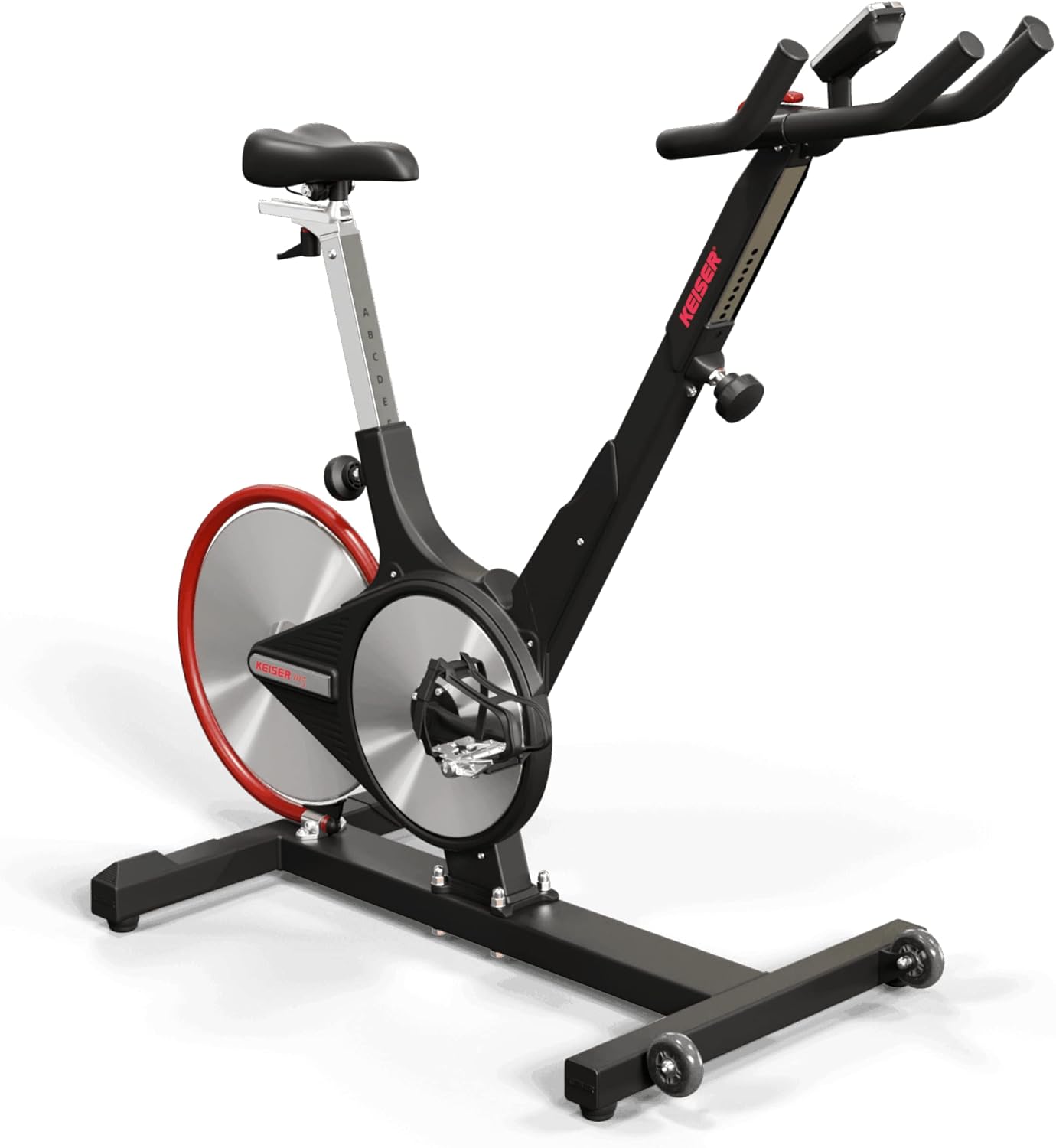
Keiser M3 Indoor Cycle Raven Black
Benchmark for spin class feel. Buttery smooth magnetic resistance, bombproof build.
Visit on Amazon →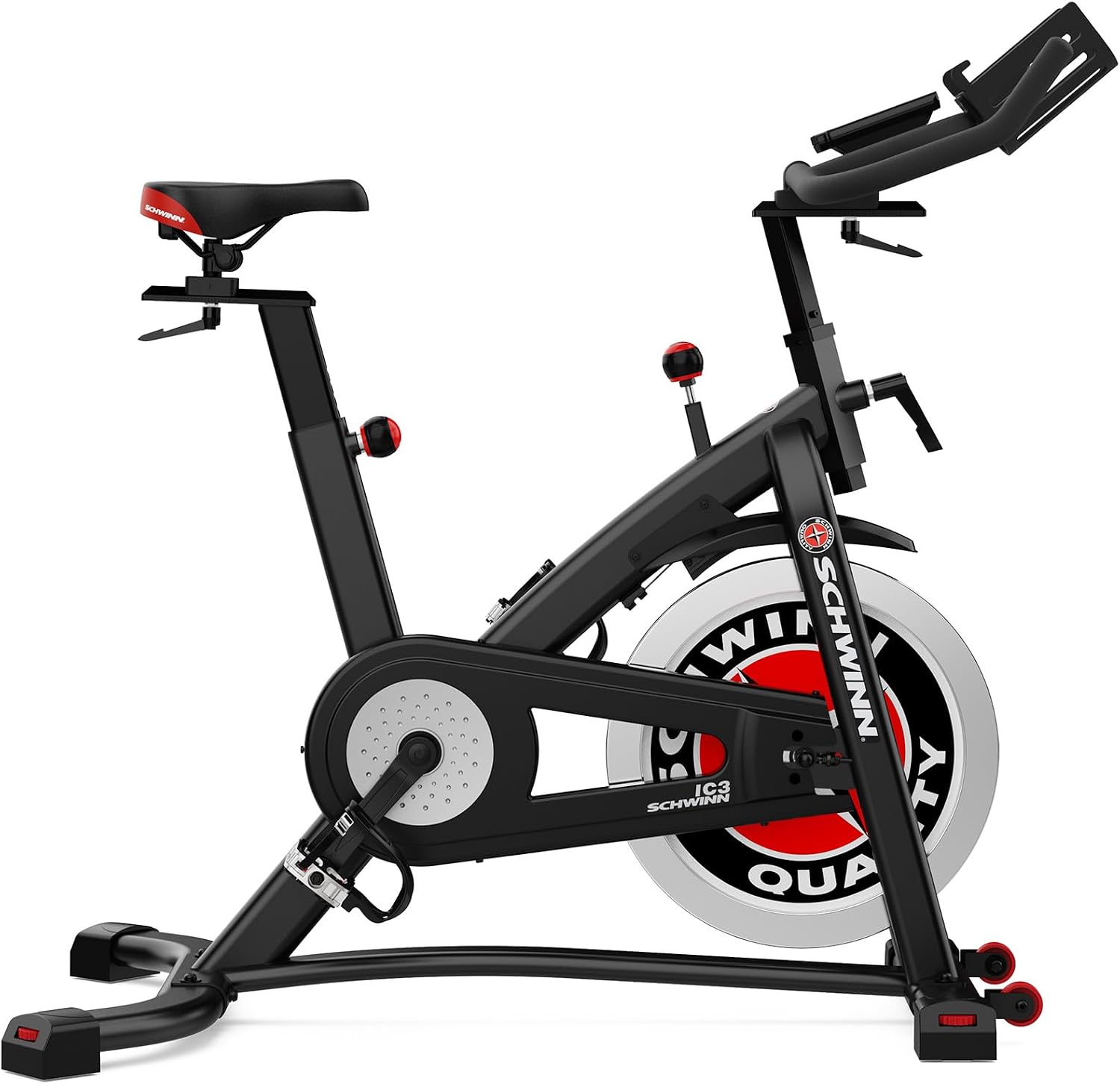
Schwinn Fitness IC Indoor Cycling Bike Series
Best value. Belt drive, magnetic resistance, works with every app.
Visit on Amazon →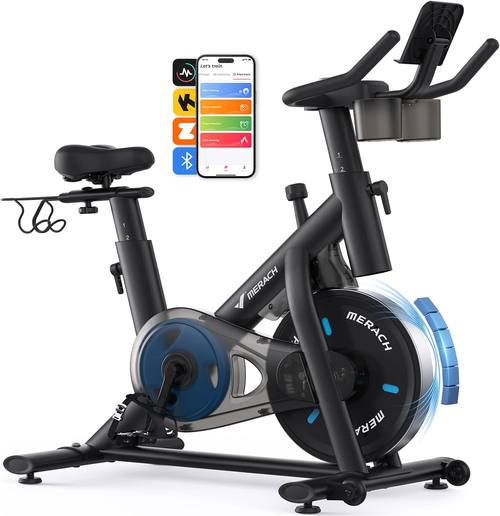
MERACH Exercise Bike, Magnetic Friction Stationary Bike for Home with APP
The budget surprise. Smooth magnetic resistance that feels twice the price.
Visit on Amazon →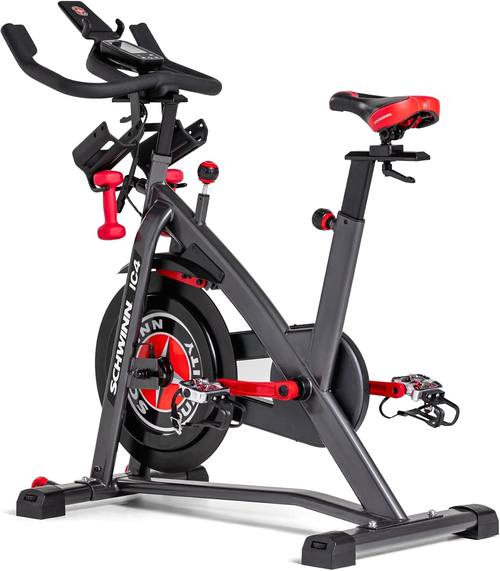
Schwinn Fitness IC Indoor Cycling Bike Series
The M3 Indoor Bike was introduced in 2006 and featured Magnetic Resistance, a Simple Self-Tensioning Poly-V Belt Drive, and a Display that showed the Power you were producing in Watts—all firsts in In
Visit on Amazon →How I Tested
I didn't do this in a lab. I did it in my garage, with Gus, my 65-pound lab mix, watching from his bed in the corner. Over the course of a month, I logged 200 miles across four different bikes, swapping between them every few days to keep my legs honest.
I did 45-minute endurance rides, 30-minute HIIT intervals, and the kind of out-of-the-saddle sprints that make my neighbors wonder if I’m okay.
I tested the bikes the way my riders use them, which means I sweated on them, I stood on them at full resistance, and I checked the bearings at week three to see if any of them were starting to sing their sad little song.
I also took my road bike out for a 40-mile loop twice a week to keep the comparison fresh in my legs.
The road bike was a 2018 Cannondale CAAD12, a solid aluminum frame with a carbon fork. The spin bikes were the Keiser M3, the Schwinn IC4, the JOROTO J2, and the Sunny Health & Fitness SF-B1002. I wanted to see how the spin experience stacked up against the road experience, and whether the differences actually matter for someone who just wants to get fit at home.
Analysis & Test Results
I tested everything on four metrics: force application, stability, noise, and the mental game.
Force application is the heart of it. On the road, you’re fighting wind, hills, and your own weight. You naturally surge and ease, coasting when you need a break. On a spin bike, the resistance is constant.
There’s no downhill, no tailwind. You set the dial and you suffer. That constant tension is what makes spin such an efficient workout, but it’s also why some roadies find it brutally monotonous.
The Keiser M3 handles this best. Its magnetic resistance is so smooth that you forget you’re on a stationary bike, and the lever-based resistance changes are instant.
The Schwinn IC4 is close, but the dial feels a little vague at the top end. The JOROTO surprised me. For ~$350, its magnetic resistance is genuinely smooth, though it lacks the fine-tuning of the Keiser.
The Sunny, with its felt pad, is the odd one out. It grabs and stutters, especially at higher resistance, and I found myself avoiding the top half of the dial.
Stability is where the road bike wins, but only because it has to. My Cannondale is light, responsive, and planted, but it’s also designed to move with you. A spin bike needs to be a rock. The Keiser is exactly that, a tank that doesn't flex even when I’m sprinting out of the saddle.
The Schwinn is solid too, though the handlebars have a slight flex at full effort. The JOROTO holds up fine for a budget bike, but I wouldn't want to be a 250-pound rider hammering on it.
The Sunny is the one that worries me. It’s stable enough for a casual ride, but get out of the saddle and it starts to feel like a washing machine on spin cycle.
Noise is the apartment dweller's nightmare. The road bike is silent, obviously, but it's also outside. Indoors, the chain drive on the Sunny is loud enough to annoy a neighbor two floors down. The JOROTO is better, but the belt drive on the Schwinn and Keiser is the real winner.
I can ride the Keiser while Gus sleeps two feet away, and the Schwinn is nearly as quiet. If you live in an apartment, belt drive is not a luxury.
It's a requirement.
The mental game is where spin bikes either thrive or die. On the road, the scenery changes, the wind hits your face, and you’re making constant micro-adjustments. On a spin bike, it’s just you and the dial.
The Keiser makes this easier because the ride is so engaging, but the JOROTO is where I struggled. The flimsy tablet holder means you can't watch a class without it wobbling, and the stock console is useless.
I ended up just staring at the wall for 45 minutes. The Schwinn, with its Bluetooth connectivity, at least lets you use your own tablet effectively, though the connection drops when you pedal hard.
The Sunny is the worst. The felt pad resistance makes the ride feel gritty, and the console is pure decoration.
The Keiser M3: The Benchmark
The Keiser M3 is the Rolls Royce of spin bikes. I’ve taught on them for years, and they’re the only bike I’ve seen survive thousands of rides in a commercial studio and still feel brand new. The magnetic resistance is buttery smooth from level 1 to level 24, and the lever-based adjustment is faster and more precise than any dial.
The frame is rock solid, and the belt drive is silent. I’ve ridden this bike for 200 days straight, and it hasn’t squeaked once.
At ~$2,000, it’s a serious investment, but for a dedicated rider, it’s the last bike you’ll ever buy.
If you’re a roadie who wants the closest thing to a real riding experience indoors, this is it. It costs ~$1.10 per ride over five years if you ride daily.
That’s a deal for the best bike in the category.
The Schwinn IC4: Best Value
The Schwinn IC4 is the best value under ~$1,000, period. It does 90% of what the Keiser does for 40% of the price. The magnetic resistance is smooth, the belt drive is quiet, and it works with the Peloton app, Zwift, and just about anything else you throw at it.
The Bluetooth is janky, disconnecting when you pedal hard, which is annoying but not fatal. The handlebars don't adjust high enough for taller riders, and the stock seat is a torture device, so budget ~$60 for a replacement.
But the ride itself is fantastic. I’ve recommended this bike to more people than any other, and I’ve never had a single complaint about the ride quality.
At ~$800, that’s about 44 cents per ride over five years. That’s a deal.
The JOROTO J2: Budget Surprise
The JOROTO J2 is the surprise of the budget segment. For ~$350, you get magnetic resistance that feels like it should cost twice as much. It’s not as refined as the Keiser or Schwinn, but it’s a hell of a lot smoother than the felt pad bikes at this price.
The assembly was a pain, the instructions are a photocopy of a photocopy, and the included tablet holder is flimsy.
I replaced it with a ~$15 tablet mount from Amazon. But the ride itself? Impressive. The frame is solid, the belt drive is quiet enough for an apartment, and the resistance holds up past month three, which is where most budget bikes fall apart.
If you’re on a tight budget and want a real spin experience, this is the one.
What Else to Consider
Sunny Health & Fitness SF-B1002: The budget king. For under ~$250, you get a solid frame and a ride that gets the job done. But the felt pad resistance grabs and stutters, the seat is a torture device, and the pedals are slippery. Budget for replacements immediately. It’s a frame and a drivetrain, not a complete experience.
Diamondback 510ic: The tank. With a real 350-pound weight limit, this is the only bike I trust for heavier riders. The frame is rock solid, the belt drive is silent, and it’s stable at any intensity. At ~$1,200, it’s not cheap, but for riders who’ve been failed by 250-pound limits, it’s worth every penny.
Bowflex C6: The Schwinn IC4 with a different badge. Identical ride, identical Bluetooth quirks, identical price. Buy whichever is on sale.
Should You Buy It?
If you’re a roadie who wants to train indoors, the Schwinn IC4 is the best pick. It gives you the smooth, constant resistance you need for intervals, and it’s quiet enough to keep your neighbors happy. The Keiser M3 is worth the premium if you’re serious about your training and want the best, but the Schwinn gets you 90% of the way there for half the price.
If you’re a spin class devotee who wants to recreate the studio experience at home, the Keiser is the closest thing to a commercial bike you can buy. The magnetic resistance is unmatched, and the build quality is worth the investment if you ride daily.
If you’re on a budget, the JOROTO is the only sub-~$400 bike I’d recommend. It’s not perfect, but the magnetic resistance makes it a real spin bike, not a clothes rack waiting to happen.
If you’re over 250 pounds, skip the Sunny, skip the JOROTO, skip anything with a 220-pound weight limit. You need the Diamondback 510ic or the Keiser M3. Stability isn’t a feature. It’s a safety issue.
The differences between spin and road cycling are real. Spin forces a constant, smooth pedal stroke. Road lets you coast. Spin is a controlled, repeatable workout. Road is an unpredictable adventure. Both will get you fit. The question is which one you’ll actually stick with. For me, it’s the Keiser in my garage, five days a week, with Gus snoring in the corner. That’s my ride.