Related: Best Exercise Bike for Small Apartments
Most people build a home spin bike setup backwards. They buy the bike on specs, park it in a corner, and then spend month three wondering why their knees ache and why the seat feels like a brick at mile 20. I have taught indoor cycling for 14 years, and I have watched that exact cycle play out in my own garage more times than I can count.
So here is the order that actually works. One bike that fits the rider, a second, heavier duty option for bigger riders and shared households, and two pieces of gear that keep your body in the game long enough for the habit to stick. That is a home spin bike setup you will still be riding in month twelve.
I keep a wrench set by the door because every bike in my garage has needed one. Before I recommend anything to a rider, I check three things, and none of them are the ones the marketing copy leads with.
The resistance mechanism comes first. Magnetic resistance is smoother than felt pads and it does not wear out, which matters if you ride daily. The number of levels matters just as much. A 32 level magnetic system gives you fine enough steps to find a gear between spinning easy and standing and grinding, and that middle range is where the actual training happens.
Stability under load comes second. A bike can feel planted while you sit and wobble like a shopping cart the moment you stand up at full resistance. A wobbly bike at sprint resistance is a safety hazard, not an inconvenience. I have seen riders bail off a bike mid sprint because the frame shifted under them, and that is the kind of thing that ends a home program permanently.
Third, the seat and the pedals. On most budget bikes the saddle is the first thing to replace, so factor that into the price before you decide a bike is a bargain. Plastic pedal cages are usually the second thing to go.
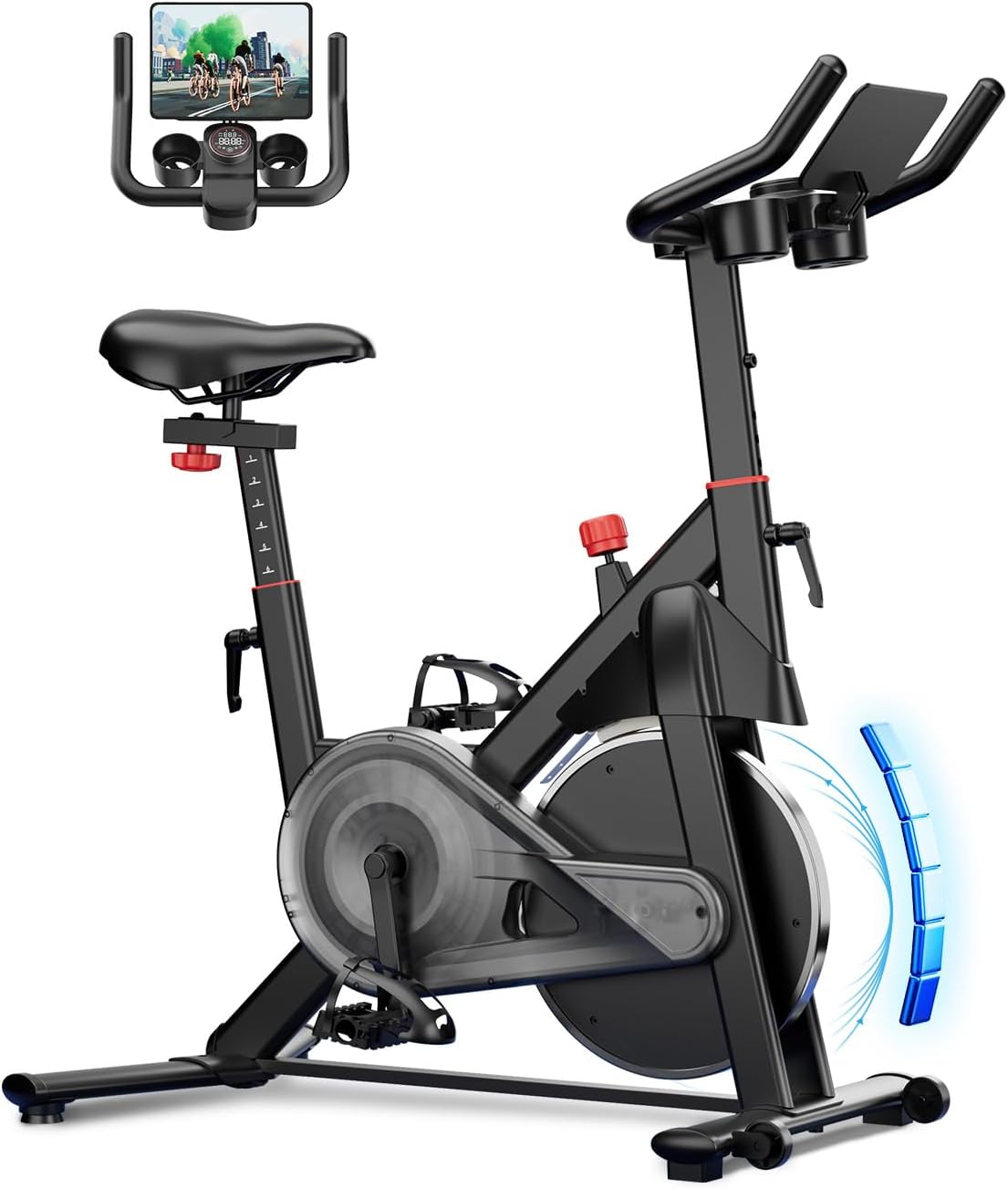
The Bike Most Home Riders Should Start With: Superun Exercise Bike
The Superun Exercise Bike answers those three questions in the right order, which is why it is the one I would point a first time home rider toward. It runs 32 levels of magnetic resistance, and that is a real range rather than the five position knob a lot of bikes at this end of the market ship with. More steps means you can warm up in a genuinely easy gear and still have somewhere to go when a class cues a standing climb.
Magnetic resistance also means there is no felt pad grinding against a spinning flywheel. No pad to replace, no black dust on the floor, and no change in the resistance feel as the pad wears down. That last part is the one people underestimate. Felt pads change the way a bike feels as they age, and you end up chasing a resistance that used to be there six months ago.
Before your first ride, set the seat height so your knee is almost straight at the bottom of the pedal stroke, then check your reach to the bars. If you have to lock your elbows out to get there, the bike is too long for you regardless of what the spec sheet says about the frame. Small adjustments to seat height and fore and aft position fix more knee complaints than any other change you can make in the first month.
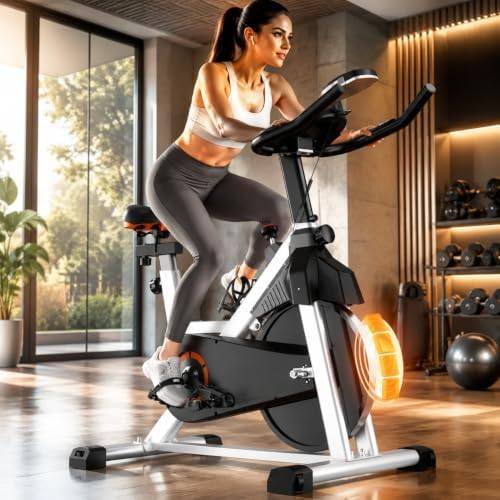
The Heavier Option: 400LB Capacity Magnetic Stationary Bike
This one is the pick for shared households and for riders who want a heavier platform underneath them. The headline number is the 400 pound weight capacity, and it matters for two reasons. It means bigger riders get a bike that is actually rated for them instead of one they have to hope holds up, and a capacity like that usually signals a heavier frame, and a heavier frame is what keeps a bike planted when you stand up.
The belt drive is the second thing I would point at. A belt is quieter than a chain, it needs less maintenance, and it does not have the metallic whirr that makes a garage session audible through the whole house at 6am. This bike also lists a brake pad, which is worth understanding rather than ignoring. On a belt driven bike with a heavy flywheel, a brake pad is a stop button, and having a real one is a safety feature, especially if there are kids or pets in the house.
The adjustable seat and the water bottle holders are small things that matter on a 45 minute ride. Being able to move the seat fore and aft, not just up and down, is the difference between a bike that fits you and a bike you tolerate. This one is described as built for adults and seniors, and honestly, that is the right framing. A stable, quiet, easy to mount bike is not a beginner compromise. It is what most people actually need in a spare bedroom.
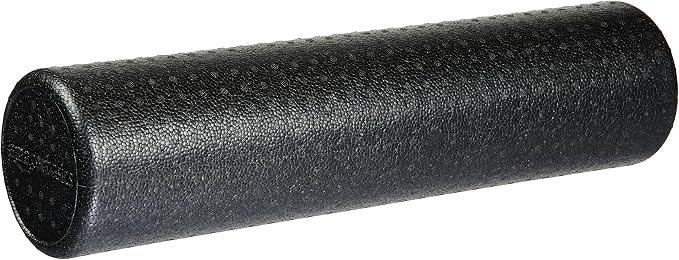
The Recovery Piece Everyone Skips: Amazon Basics High Density Foam Roller
Nobody wants to hear this, but the bike is only half of a home spin bike setup. The other half is what you do after you get off it.
The Amazon Basics High Density Foam Roller is the boring, correct answer. It is 24 inches long, which is enough to lie on lengthwise for your spine and enough to cover both quads in one pass without repositioning. High density matters here, because a soft roller that squashes flat under your weight does not do much except make you feel like you stretched.
Where cyclists actually need it: the quads just above the knee, the outside of the thigh, the glutes, and the calves. Roll slowly, pause on the spots that make you swear, and breathe through it. Two minutes per area after a ride is enough. If your seat is too low, this is also the piece that will tell you, because the spot above your kneecap will complain every single time.
The Off-Bike Fix: Forward Head Posture Program
Indoor cycling has a posture problem built into it. You spend 45 minutes with your hands on the bars, your shoulders rounded forward, and your head craned toward a screen or a mirror. Then you sit at a desk for eight hours and do the whole thing again.
The Forward Head Posture Fix program is a set of trigger point exercises aimed at neck aches and shoulder pain, built around strengthening the muscles that hold your head where it belongs and improving range of motion. It is not glamorous and it is not a bike upgrade, but if you are riding four or five days a week, your neck and upper back are carrying the load, and this is the piece of the setup that addresses it directly.
Run the routine on your rest days, or right after a ride while you are still warm and the tissue is pliable. Consistency beats intensity here. Ten minutes three times a week will do more for your shoulders than one heroic session on a Sunday.
How I Evaluate a Home Spin Bike Setup
Every bike that comes into my garage goes through the same protocol, and you can run the same checks on whatever you buy.
The sweat test is first. Forty five minutes at max effort, then look at the frame, the resistance knob, and the seams. Cheap paint and cheap hardware fail this test. If the paint is bubbling or the knob has gone slick, you have your answer about build quality.
The standing sprint test is second. Resistance up, out of the saddle, and drive. If the bike walks across the floor, rocks side to side, or the handlebars flex, that is a stability problem you cannot fix with a mat. A mat helps with vibration and floor protection. It does not fix a flexing frame.
The bearing check is third, at month three. Spin the pedals with no resistance and listen. A healthy bike is quiet. A dry or failing bearing announces itself. This is also when you find out whether the seat post and the pedals have held their torque, which is why I keep a wrench within reach.
Then there is the fit check, and it is the one that decides whether the bike gets used. A three hundred dollar bike that fits you beats a fifteen hundred dollar bike that does not. Seat height, fore and aft position, and reach to the bars. Get those right before you worry about anything else.
What the Specs Actually Mean
Thirty two resistance levels sounds like a marketing number until you compare it to a five position knob. Five positions means every gear is a jump, and you spend half the ride looking for a step that does not exist. Thirty two levels means you can warm up at a genuinely easy setting and still have somewhere to go when the class stands up. Fine steps are what make a magnetic bike feel like a bike instead of a switch.
A belt drive is not just about noise, though noise is the practical benefit. A belt does not need lubrication, it does not stretch the way a chain does, and it does not leave grease marks on whatever you are wearing. The tradeoff is that you cannot service it the way you can a chain, but for a home bike that is a fair trade.
Weight capacity tells you about the frame, not just the rider. A bike rated to 400 pounds has to be built with more material underneath it, and that material is what stops the rocking motion during a sprint. This is the single most underrated spec on a home bike, and it is the reason heavier riders get stuck buying bikes that feel unstable.
Foam roller density works the same way. A high density roller does not compress under load, so your weight goes into the muscle instead of into the foam. A soft roller feels nicer and does less. If you have ever wondered why a roller seemed to do nothing for you, density is usually the answer.
And the posture work is the piece nobody buys until something hurts. The bike builds your legs and your lungs. It does not build your neck and your upper back, and those take the load whether you train them or not.
The Home Spin Bike Setup Reference Table
This is the same gear list I hand riders when they ask what to put in a spare room. Buy the bike that fits, then the two recovery pieces, in that order.
| Gear | Role in the setup | What to check | Price |
|---|---|---|---|
 Visit on Amazon → Visit on Amazon →Superun Exercise Bike |
Primary ride | 32 levels of magnetic resistance, no felt pads to replace | $143.98 |
 Visit on Amazon → Visit on Amazon →400LB Capacity Magnetic Stationary Bike |
Shared household or heavier rider | 400 pound capacity, belt drive, brake pad, adjustable seat | $119.99 |
 Visit on Amazon → Visit on Amazon →Amazon Basics High Density Foam Roller |
Post ride recovery | 24 inches long, high density so it does not flatten | $17.09 |
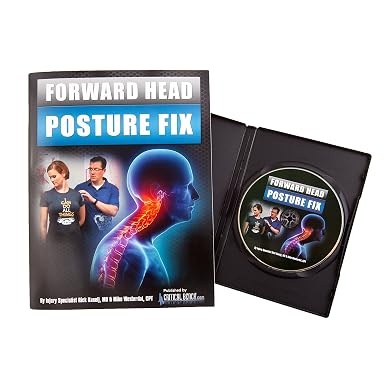 Visit on Amazon → Visit on Amazon →Forward Head Posture Fix Program |
Off bike mobility | Trigger point exercises for neck, shoulders, and range of motion | Check current Amazon price |
Should You Buy the Superun Exercise Bike?
Yes, if you want magnetic resistance with genuine range and you are building your first home setup. Thirty two levels means you can warm up easy and still have gears left for a standing climb, and the magnetic system means there are no pads to replace and no resistance drift as the bike ages.
What I would watch: the seat, like almost every bike at this price. Budget the cost of a replacement saddle into your decision and you will not be disappointed at mile 20. Set your seat height and reach properly in week one, and this is a bike that will carry you through a full winter of riding.
Should You Buy the 400LB Capacity Magnetic Bike?
Yes, if you are sharing the bike, if you are a heavier or taller rider, or if you want the quietest possible setup. The 400 pound capacity points to a heavier frame, the belt drive keeps it quiet, and the brake pad gives you a real stop on a spinning flywheel. The adjustable seat and bottle holders are the kind of details that make a 45 minute ride comfortable rather than tolerable.
It is the one I would recommend to a household where two people of different sizes are going to use the same bike, because seat adjustment is the whole game when you are sharing.
Should You Buy the Foam Roller and the Posture Program?
Yes, and sooner than you think. These two are the difference between a home spin bike setup that lasts a season and one that lasts years. The roller handles your legs after every ride, and the posture program handles your neck and upper back, which is where indoor cycling quietly does its damage.
Neither one is exciting to buy. Both are the reason you will still be on the bike in month six, and that is the only metric that matters.