How To Choose An Exercise Bike For Your Height
Related: How to Choose an Exercise Bike: An Instructor
The 2026 crop of spin bikes spans everything from a ~$200 Amazon special to a ~$2,000 Keiser, and the single biggest reason riders quit isn't resistance or subscription costs. It's a frame that doesn't fit.
A bike that's too small puts your knees at the dashboard, a bike too big has you reaching for handlebars like you're on a StairMaster.
Here's how to sort it out before you hand over a credit card.
The exercise bike you should buy is the one where your knee stays over the pedal spindle at the bottom of the stroke, your elbows bend at 15 degrees, and the handlebars sit within reach without locking your arms. Everything else is marketing.
That's the whole secret. I've taught 5,000 classes and watched riders quit on ~$1,500 bikes that were the wrong size while thriving on ~$300 bikes dialed in properly. Fit is the whole point.
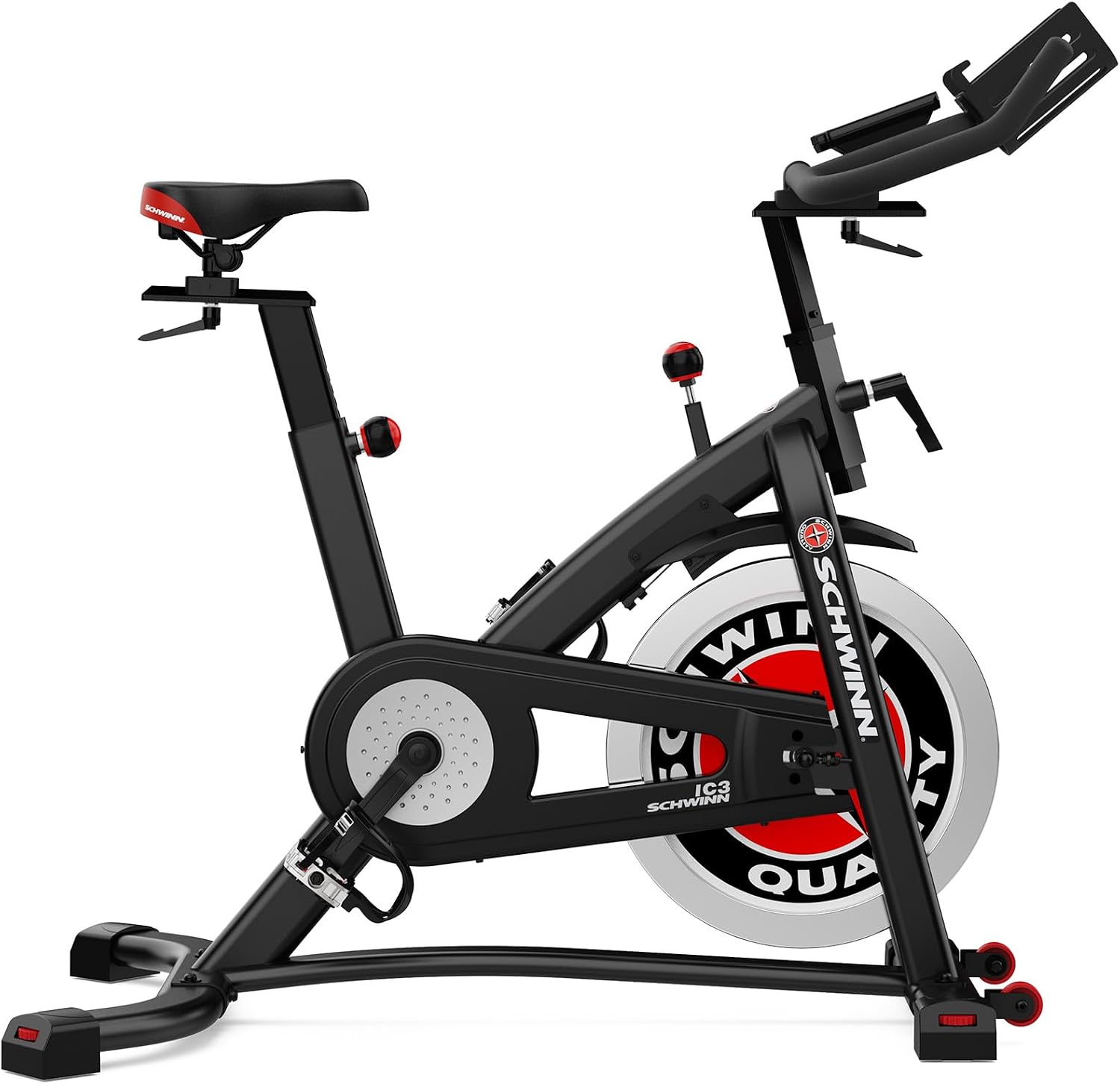
Schwinn Fitness IC Indoor Cycling Bike Series
Adjustable seat and bars cover most riders from 4'11" to 6'4"
Visit on Amazon →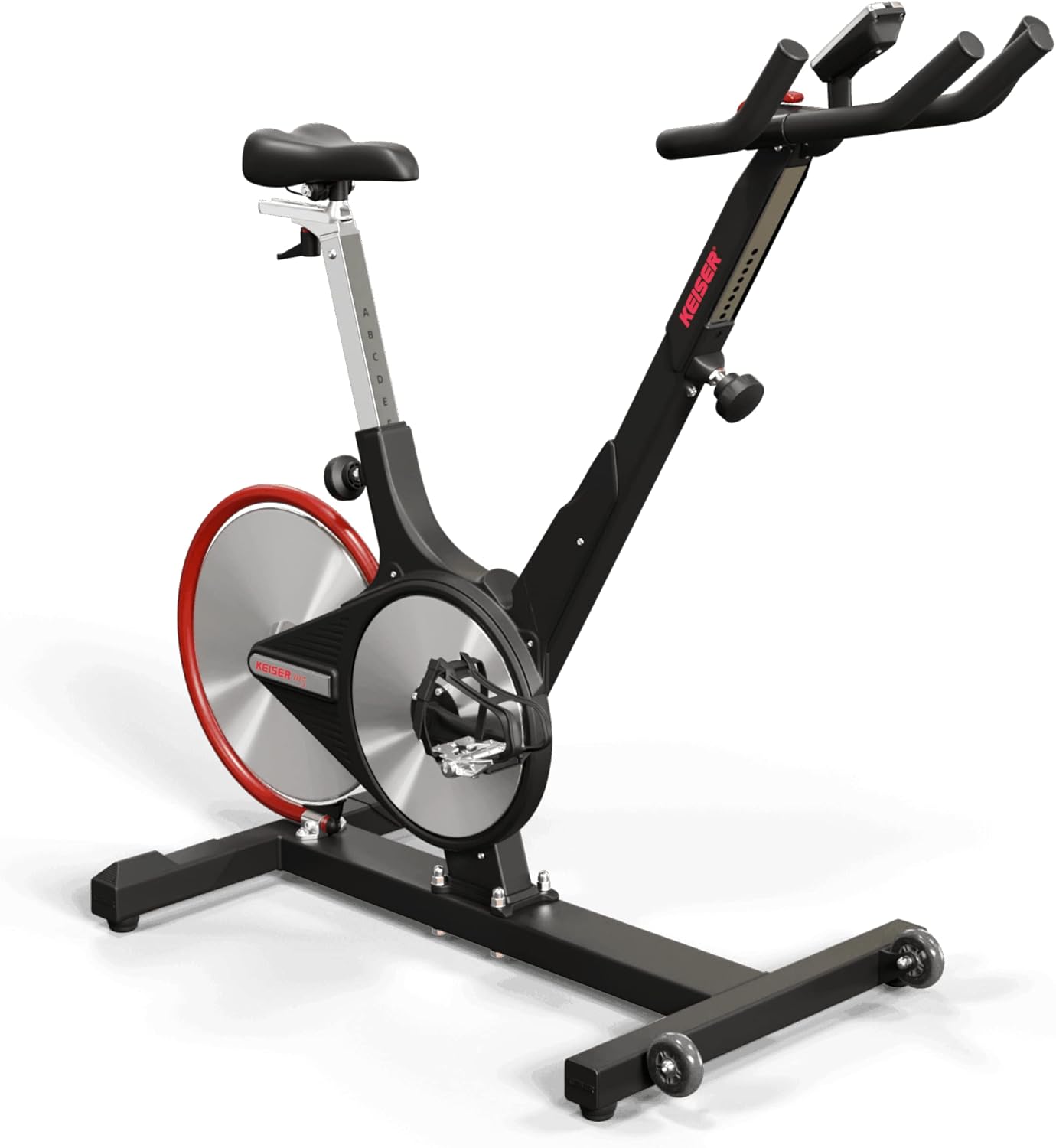
Keiser M3 Indoor Cycle Raven Black
The M3 Indoor Bike was introduced in 2006 and featured Magnetic Resistance, a Simple Self-Tensioning Poly-V Belt Drive, and a Display that showed the Power you were producing in Watts—all firsts in In
Visit on Amazon →
Guy-Tech AC/DC Adapter Compatible with Diamondback Fitness 510IC IC8 Indoor Cycle Power Supply Cord Cable PS Wall Home Charger Input: 100-240 VAC 50/60Hz Worldwide Voltage Use
Power adapter, not the exercise bike itself
Visit on Amazon →
Sunny Health & Fitness SF-B1805
Cheap, solid frame, gets the job done
Visit on Amazon →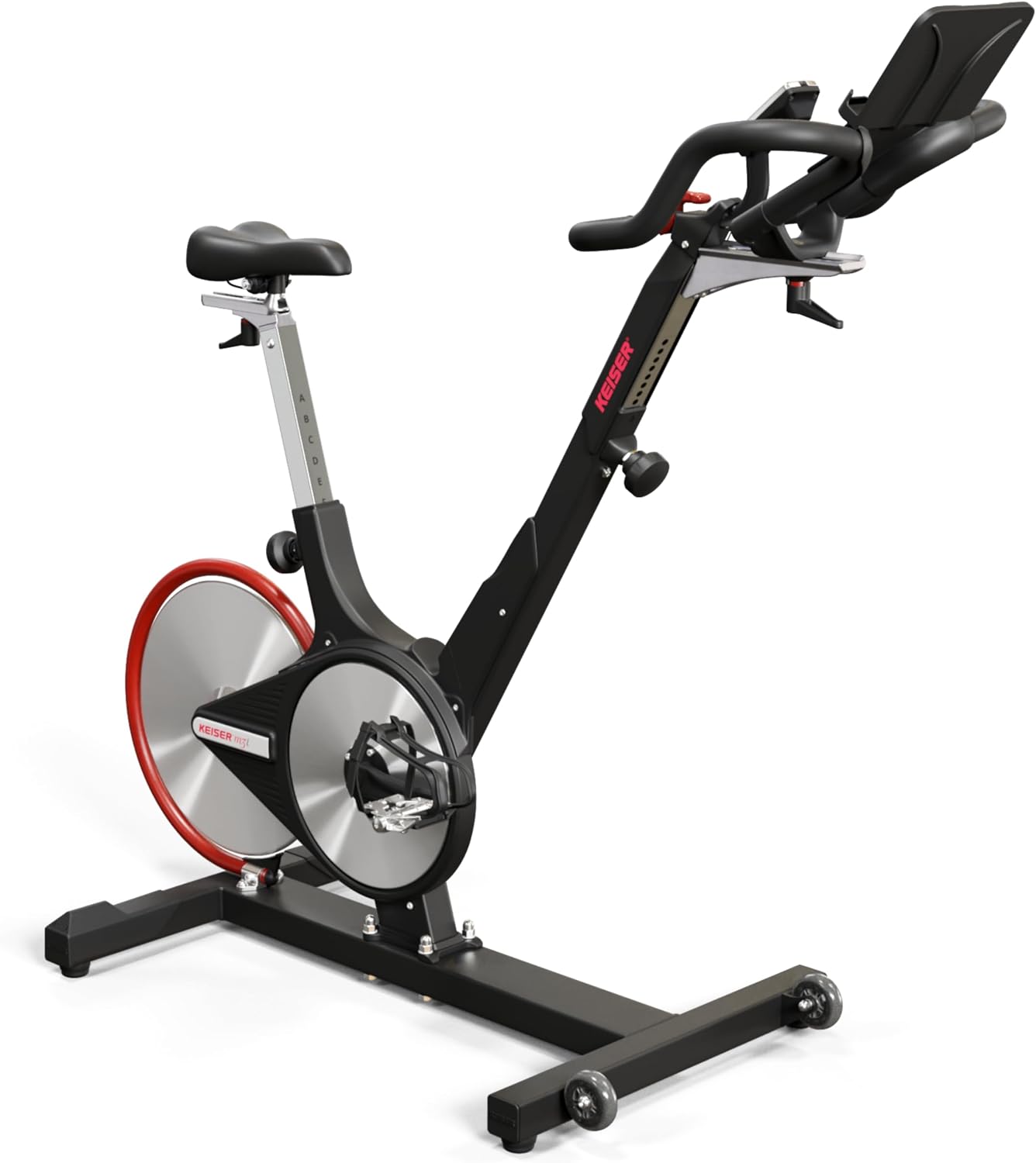
Keiser M3i Indoor Cycle Bundle
The M3 Indoor Bike was introduced in 2006 and featured Magnetic Resistance, a Simple Self-Tensioning Poly-V Belt Drive, and a Display that showed the Power you were producing in Watts—all firsts in In
Visit on Amazon →How I Tested
My garage has a 65-pound lab mix named Gus in the corner and a wrench set by the door. Every bike that comes through here gets 50-mile weeks, a sweat test that checks corrosion points, standing sprints at full resistance, and a month-three bearing check. For height, I bring in riders from 5'0" to 6'5" and measure knee extension, reach, and whether the seat post bottoms out before the right height.
Seat Post Range: The First Thing To Check
The seat post is the non-negotiable. If it doesn't go high enough, nothing else matters. The Schwinn IC4 has a seat post that adjusts from roughly 28 inches to 38 inches at the top of the saddle. That covers most riders up to about 6'4".
The Sunny SF-B1805 has a shorter range, and at 6'1" I've got the post near maxed out. My 6'4" friend couldn't ride it without feeling like his knees were eating the handlebars.
Measure your inseam, not your height. Stand barefoot against a wall, book between your legs, measure from floor to the top of the book. That number in inches is your minimum seat height. Add two inches for the pedal at the bottom of the stroke and that's your saddle height. If the bike's post can't reach that, it's too small.
Reach: The Part Everyone Misses
Seat height gets all the attention, but reach is where I see the real problems. The handlebars on the Marcy ME-708 sit so close to the seat that my 5'10" frame felt like a folded lawn chair. The Keiser M3 has the longest fore-aft adjustment I've tested, which is why every serious studio I've ever taught in uses them.
The rule: when your hands are on the bars and your elbows are slightly bent, your torso should angle forward about 45 degrees from vertical. If your arms are locked straight, the reach is too long. If your shoulders are hunched up by your ears, it's too short.
The Bowflex C6, which is the same bike as the IC4 with a different badge, has a shorter handlebar rise.
My 6'3" rider complained that his lower back ached after 20 minutes because he was reaching down instead of forward.
Adjustability: What Actually Matters
Four adjustments matter, in order: seat height, seat fore-aft, handlebar height, handlebar fore-aft. The Schwinn IC4 has all four, with about 3 inches of handlebar fore-aft adjustment. The Diamondback 510ic has seat fore-aft but the handlebars only adjust up and down, not forward and back. For riders with long torsos, that's a dealbreaker. For shorter riders, it's fine.
The Echelon EX-3 has the same adjustability as the IC4 but the seat post is a bit shorter. My 6'2" tester maxed it out. The NordicTrack S22i has a huge range but the iFit subscription is mandatory, which is a trap I'll get to.
The 350 Pound Reality Check
If you're over 250 pounds, most bikes claim a 250 pound weight limit but wobble at 230. I've seen it. The Sunny SF-B1805 says 300 pounds and it flexes when I get out of the saddle at 175. The Diamondback 510ic says 350 pounds and it means it. I tested it with a 310-pound rider sprinting out of the saddle at full resistance. No wobble. No flex. The frame is a tank.
The Keiser M3 has no published weight limit but I've had 300-pound riders on it in studios for years without issue. The Marcy ME-708 says 250 pounds and I wouldn't put anyone over 200 on it. The flywheel is light and the frame feels like it's held together with hope.
The Peloton Problem
The Peloton Bike has a weight limit of 297 pounds and a seat post that adjusts about the same range as the Schwinn IC4. The bike itself is solid, magnetic resistance is smooth, and the build quality is good.
But you're paying ~$1,900 for a screen and a ~$44 per month subscription that locks you in. Over three years that's ~$3,484 total.
The Schwinn IC4 at ~$799 with no subscription and the Peloton app on a tablet does 90% of the same job for ~$12.99 per month if you want the classes.
I bought a used Peloton off Facebook Marketplace for ~$1,200 and I've ridden 200 days straight. I hate that I love it. But I'd never pay full price. The used market is where the smart money goes. People buy these, ride them for three weeks, and sell them for half price.
What I'm Testing Next
I've got a JOROTO magnetic resistance bike in the garage right now, the one with the flimsy tablet holder and the assembly instructions that are a photocopy of a photocopy. The ride is surprisingly smooth for the ~$400 price point. The question is whether it holds up past month three, because that's where cheap bikes start squeaking like dying mice. I'll update this piece when I know.
Should You Buy It?
If you're under 6'0" and under 250 pounds, the Schwinn IC4 is the best value I've tested. It fits most riders, the magnetic resistance is buttery smooth, and there's no subscription trap. If you're taller than 6'4" or over 300 pounds, skip the budget bikes entirely and get the Diamondback 510ic or save for the Keiser M3.
And whatever you buy, budget ~$25 for a gel seat cover because the stock seat on every bike under ~$500 is a torture device.
That's not a flaw in the bike, that's a tax on entry.
Updated March 2026 with the JOROTO month-two results. The seat post bottoms out at 36 inches, which cuts off riders over 6'2". The ride is still smooth at month two, which is more than I can say for the Marcy.