I have taught indoor cycling for 14 years, and the bikes that live in my converted garage have all earned their spot the hard way. Not because they looked good in photos, but because they survived a standing sprint at full resistance without walking across the floor. My first home bike was a $200 special with a felt pad and a frame that flexed like a diving board. I kept it for five months, replaced the seat twice, and learned more about what matters from that bike than from the $3,000 commercial units I teach on.
This exercise bike comparison covers four very different machines: a friction spin bike, a recumbent, a studio cycle with a screen, and a folding model built for small rooms. They are not competing for the same rider, and that is the point. Buying the wrong category is the most expensive mistake in home fitness, more expensive than buying the cheapest bike in the right category.
The short version: if you want to ride hard and stand up out of the saddle, the NordicTrack Commercial Studio Cycle is the only bike here built for that. If you want to sit down, spin for 30 minutes, and fold the whole thing into a closet afterward, the Caromix is the honest pick. The RELIFE friction bike and the Marcy ME 709 are both budget answers to narrower questions, and both make sense for the right rider.
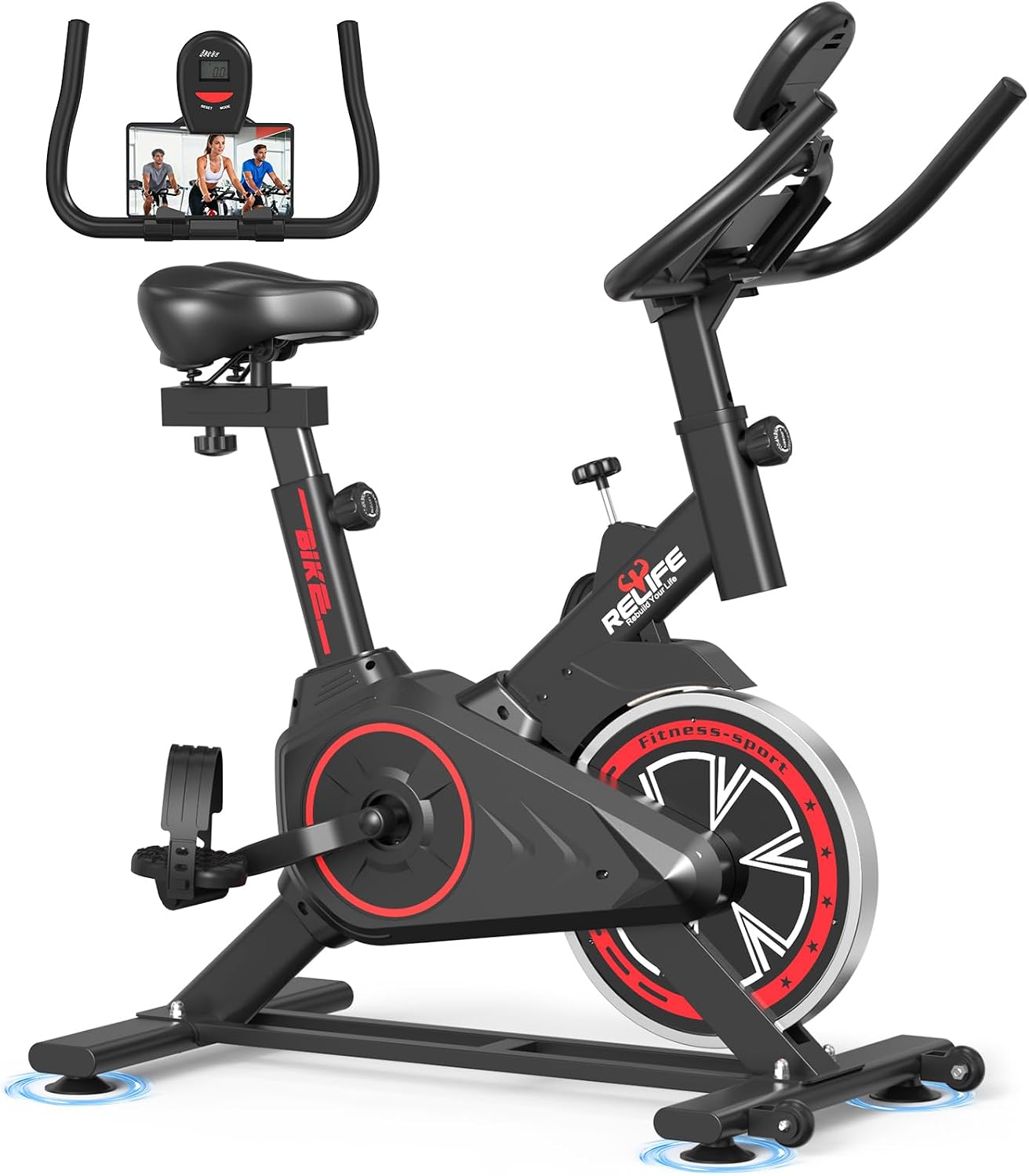
RELIFE REBUILD YOUR LIFE Exercise Bike, Friction Stationary Bike for Home
Cheapest way into a real flywheel-and-pad spin position, simple to fix with a wrench
Friction pads are a wear item, and pad tension is something you feel every ride
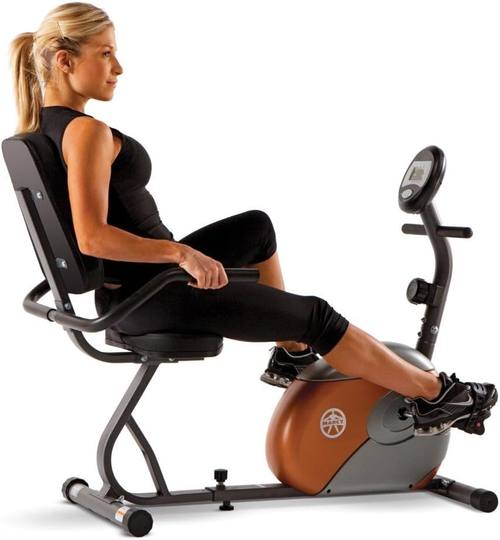
BRAND NEW Marcy ME 709 Recumbent Exercise Bike with Large Console Display
Recumbent geometry that keeps your back supported, and a console you can read without squinting
Not a bike for standing work, and the upright feel riders expect is gone
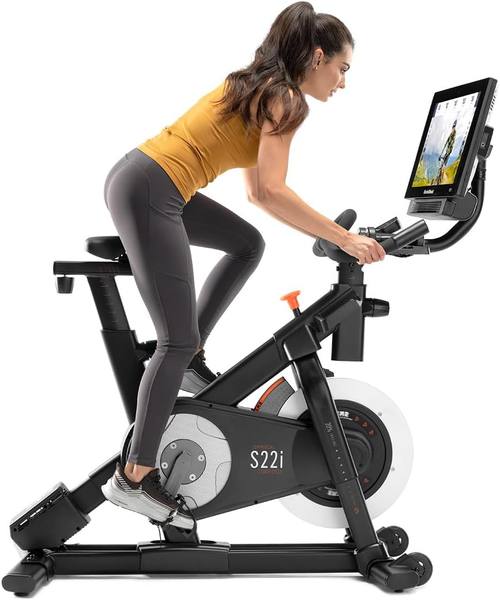
Nordictrack Commercial Studio Cycle
The only true studio bike of the four, built for out-of-saddle intervals and long rides
You pay for the screen and the subscription, and it takes up real floor space
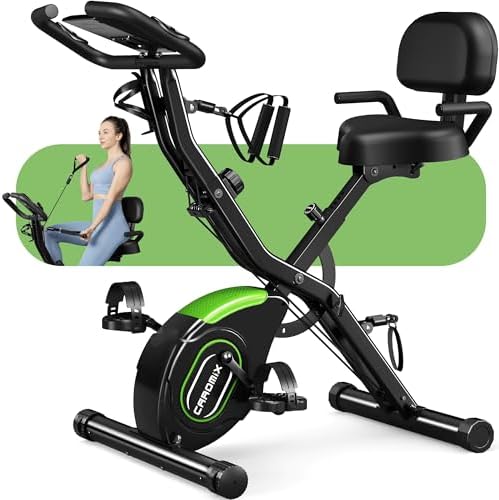
Caromix Folding Exercise Bike, 5 in 1 Stationary Bike with 16-Level Adjustable Magnetic Resistance, 330LB Capacity Indoor Workout Bike, Foldable Exercise Bike for Seniors and Adult
Folds away, magnetic resistance at 16 levels, and a 330 lb capacity rating
Folding frames trade stiffness for storage, so it is not a sprint bike
Prices and availability were captured from Amazon Creators API and may change.
What each of these four bikes is actually for
The RELIFE is a friction spin bike. A felt or leather pad presses against the flywheel, and that pressure is your resistance. That is the same mechanism studios used for decades before magnetic brakes took over. It is not primitive, it is just mechanical, and the trade is simple: you get a heavy-feeling flywheel and a direct connection between your hand and the wheel, and in exchange you get a pad that wears and a tension knob you will adjust mid-ride.
The Marcy ME 709 is a recumbent. You sit in a reclined position with a backrest, your legs extend forward instead of down, and the seat is a chair rather than a saddle. That geometry is why people who hate spin bikes love recumbents. It is also why you should not buy one expecting a spin class. There is no standing, no hovering, no sprinting out of the saddle. There is a long, supported ride and a console you can actually read while you do it.
The NordicTrack Commercial Studio Cycle is the one bike here that belongs in a studio. It is a studio bike with a screen, and it assumes you want to ride hard, stand up, and follow along with a class. It is also the bike on this list with the largest footprint and the largest ongoing cost.
The Caromix is a folding bike with a five-in-one frame and magnetic resistance across 16 levels. It is designed to be stored, not admired, and the 330 lb capacity means it is not a toy. The name says it is built for seniors and adults, and that tells you the resistance curve is meant to be friendly rather than brutal.
Resistance: felt pads versus magnets
This is the single spec that decides how a bike feels in year three, not week one.
Friction resistance is what the RELIFE uses. The feel is linear and immediate, and on a well-built bike the flywheel weight gives you a smooth pedal stroke that magnetic bikes at the same price cannot always match. The catch is wear. Pads compress, glaze, and eventually need replacing, which is why I keep a wrench set by the door. A friction bike with a fresh pad feels great. A friction bike with a worn pad feels like pedaling through wet sand, and most owners do not notice until they replace the pad and realize what they had been riding.
Magnetic resistance is what the Caromix uses across its 16 levels. Magnets do not touch the flywheel, so nothing wears out, the ride is quieter, and the resistance curve stays consistent. The trade is feel. Cheaper magnetic systems can feel stepped, and the jump between levels is not always the jump you wanted. A 16-level range gives you more usable steps than a 6-level knob, which matters more than most buyers think, because the difference between level 7 and level 8 is the difference between a comfortable ride and a hard one.
My honest position: magnetic is smoother, friction is more direct, and both are fine if the frame is stiff and the knob does not slip. A slipping tension knob is the fastest way to ruin a ride, and it is one of the few things you cannot fix with a wrench.
Flywheel weight, stability, and the standing sprint test
The test I run on any bike before it earns floor space is simple. Warm up for ten minutes, raise the resistance to the point where you are working, stand up, and sprint. Then do it again for 30 seconds. If the bike rocks, walks, or flexes under you, it does not matter how good the seat is.
Two things decide whether a bike passes. Flywheel weight is the first, because a heavier wheel smooths the dead spots in your pedal stroke and keeps momentum between pushes. Frame stiffness is the second, and it is the one budget buyers overlook. A bike with a heavy flywheel and a noodle frame is worse than a light flywheel on a solid frame, because the frame is what keeps you upright when you put your body weight forward.
Here is the practical version for this list. The NordicTrack is the bike designed for that test, and it is the one I would expect to stay planted through a full class. The RELIFE is a friction spin bike built in that same tradition, and a friction bike with a real flywheel can handle standing work if the frame is sound. The Caromix is a folding bike, and folder frames hinge somewhere, which means there is a joint that flexes slightly under load. That is physics, not a knock. The Marcy is a recumbent, and recumbents are not built for standing at all, so the test does not apply. Ask a recumbent to do a standing sprint and you will be standing on a chair, which is exactly as safe as it sounds.
If wobble only shows up at sprint speed, that is still a problem. It is a safety issue, not an annoyance.
Fit: seats, pedals, and handlebar reach
Here is the part that does not show up on a spec sheet and decides whether you actually ride the thing.
The seat is the first thing to replace on most bikes in this price range. That applies to the RELIFE and the Caromix especially. Budget saddles are shaped for photos, not for mile 20, and a $40 replacement saddle is the cheapest upgrade you will ever make. Factor it into the price before you compare anything, because a bike you do not want to sit on is a bike you will not ride.
Pedals matter next. Plastic cages are the giveaway that a manufacturer expected the bike to be used casually. If you are riding three times a week and you want to keep your shoes in one piece, plan on swapping to a pedal with a real strap or a proper clipless setup.
Reach and adjustability matter most on the recumbent. The Marcy's whole value proposition is comfort, and comfort on a recumbent depends on getting the seat distance right so your knee is not locked out or crunched at the bottom of the stroke. Set it up once, properly, and a recumbent becomes the bike you can ride with a bad back or a bad knee. Set it up lazily and it becomes a very expensive chair.
The NordicTrack has the most adjustability of the four, which is what you would expect from a studio bike. Handlebar height, seat height, and seat fore and aft all move, and that range is what lets a 5 foot rider and a 6 foot 4 rider share the same machine. Before you buy any of these, check the height range against your own body. A bike that does not fit you is a bike that will hurt you, no matter what it cost.
Folding bikes and small apartments
The Caromix earns its place on this list because of one sentence in its own name: it folds. In a one-bedroom apartment or a shared house where the living room doubles as the gym, that is not a convenience, it is the difference between owning a bike and not owning one.
The trade is stiffness. Folding frames have a hinge or a joint, and joints move. For seated riding and steady-state work, that is completely fine, and plenty of riders will never notice it. For standing sprints at high resistance, it is the wrong tool. If your training plan is 30 minutes of seated riding five days a week, a folder is a smart buy. If your plan involves interval work out of the saddle, buy a bike that does not fold.
Also think about what folding means in practice. You will fold it and unfold it regularly, and that motion is part of the ownership experience. A bike that takes 90 seconds to set up is a bike you use daily. A bike that takes four minutes and a lot of swearing is a bike that stays folded. Look at how the frame locks and how the pedals and seat post behave when they are stowed, because that is the routine you are signing up for.
The screen question
The NordicTrack Commercial Studio Cycle is the one bike here with a built-in screen, and that changes the math. You are no longer buying a bike, you are buying a bike and a subscription ecosystem. That is a legitimate purchase, and I say that as someone who teases smart bikes while tracking every ride on a spreadsheet.
The case for it is real. A screen with guided classes removes the two biggest reasons home bikes fail: boredom and a lack of programming. If you have never coached yourself through a workout, having someone tell you when to stand, when to add resistance, and when to sit is worth a lot. Riders who need that structure ride more than riders who do not, and riding more beats every spec on this page.
The case against it is equally real. You are paying for hardware you can only fully use with a subscription, and the screen is the part of the bike most likely to feel dated in five years. The frame and flywheel will outlast the software. If you already follow a program on a tablet or your phone, the RELIFE or the Caromix can sit in front of that same screen for a fraction of the commitment.
Where each bike loses points
The RELIFE loses points on maintenance and on the seat. Friction pads wear, tension knobs can slip, and the stock saddle is a starting point rather than a finish. Buy it knowing you will spend a little more on a pad and a saddle within the first year.
The Marcy ME 709 loses points on versatility. It does one thing well, which is supported, seated riding, and it will not do intervals, sprints, or anything that involves leaving the seat. Its large console is genuinely a plus, because being able to read your numbers without leaning forward matters more than buyers expect.
The NordicTrack loses points on price of ownership and floor space. It is the biggest commitment here in both directions, and if your training space is a corner of a bedroom, measure first.
The Caromix loses points on stiffness and on the top end of its resistance. Sixteen levels of magnetic resistance covers a wide range of fitness, but the ceiling on a folding bike is not the ceiling on a studio bike. It is a bike for consistency, not for maximum effort.
Who should buy which
Buy the NordicTrack Commercial Studio Cycle if you want a screen, a subscription, and a bike that will take standing sprints without complaint. Visit on Amazon →
Buy the Caromix Folding Exercise Bike if space is your limiting factor, if you want magnetic resistance that does not wear out, or if you want a low-impact seated cardio machine that stores in a closet. Visit on Amazon →
Buy the RELIFE REBUILD YOUR LIFE Exercise Bike if you want the feel of a real friction spin bike on the smallest budget here and you do not mind replacing a pad and a saddle down the road. Visit on Amazon →
Buy the Marcy ME 709 Recumbent if your back, knees, or hips have opinions about spin bikes, and you want a ride you can do while reading the console. Visit on Amazon →
What I would check before the return window closes
Unbox it, build it, and ride it hard in the first week. Tighten everything, then re-tighten after the first three rides, because fasteners settle. Check the seat post and the handlebar post for slip by marking them with a piece of tape and seeing whether they move under load. Stand up out of the saddle and listen for a creak in the frame. Creaks are the sound of something loosening, and catching it early is the difference between a five-minute fix and a warranty claim.
Then check the resistance knob. Ride at a moderate level, raise it a few steps, and see whether the change is smooth or whether it jumps. On the RELIFE, look at the pad and see how it sits against the flywheel. On the Caromix, run through the full 16 levels once so you know what you actually bought.
Last thing: keep the box for a month. Every bike in my garage has needed a wrench, and the ones that got returned were the ones still in their packaging. The best bike is the one you will still ride in month three, and no spec sheet can tell you which one that is. That answer comes from the seat, the resistance, and whether the thing feels planted when you decide to work.