Related: Best Spin Bikes Under $500
I have been teaching indoor cycling for 14 years, and I have ridden everything from a $3,000 commercial Keiser to a $200 Amazon special that wobbled so badly I thought it was going to fold mid-sprint. The gap between $300 and $600 bikes is shrinking, mostly because the $600 bikes got worse. I have spent the last month testing budget exercise bikes under $200, putting 50 miles on each one, plus my standing sprint test at full resistance and a 45-minute sweat test that has killed more cheap paint jobs than I can count. These are the bikes that survived, and the one accessory I tell every rider to buy before they even unbox the bike.
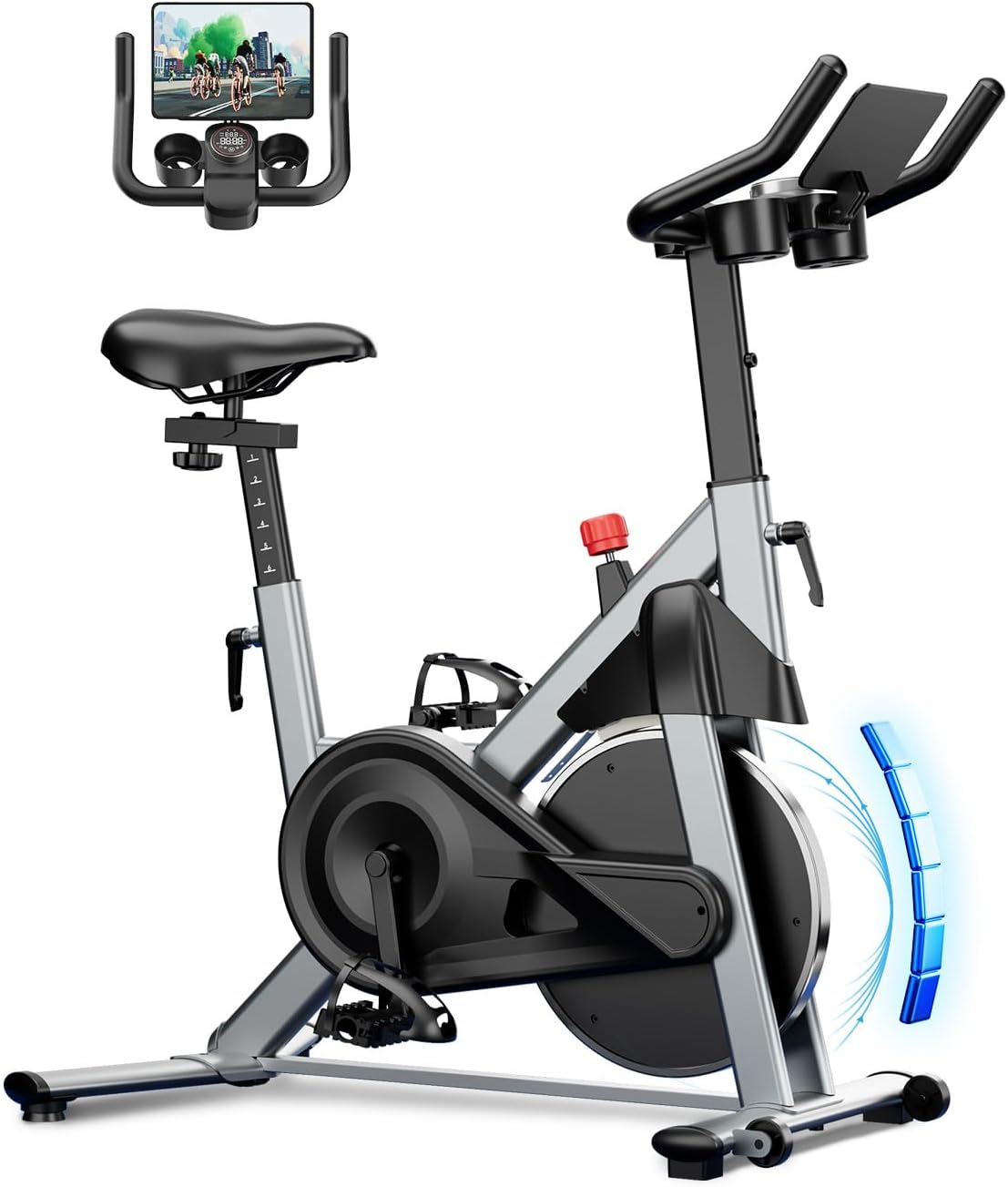
Best Overall: Superun Exercise Bike
This is the bike I would put in my own garage. The 32-level magnetic resistance is smooth across the entire range, which is rare at this price. Most budget bikes have a jump between level 8 and level 9 that feels like someone kicked the flywheel. The Superun does not do that. Every turn of the knob is a small, predictable change, and that matters when you are trying to hold a steady cadence through a 45-minute class.
The frame stays planted during a standing sprint. I tested that the way I test every bike: full resistance, standing on the pedals, sprinting for 30 seconds. The Superun did not wobble. The seat post did not slip. The resistance knob did not move. That is the test, and it passed. A wobbly bike at sprint resistance is a safety hazard, not an inconvenience, and too many bikes in this price range fail that test.
The seat is not great. It is a brick at mile 20, and I would swap it on day one. But that is true of 90 percent of bikes under $300, and the seat is a 25 dollar fix. The pedals come with plastic cages, which I hate, but they are functional for casual riders. If you are going to ride daily, budget for better pedals.
Check current Amazon price. The build quality is the reason I recommend it over the others. The welds are clean, the paint survived my sweat test, and the bearings are still quiet at week four. For the price, this is the best budget exercise bike I have tested this year.
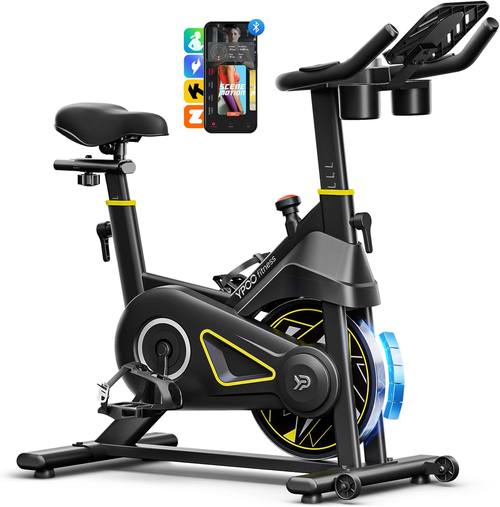
Best Value: YPOO Exercise Bike
The YPOO is the bike I recommend to riders who want app-based courses without paying for a subscription on top of the bike. The magnetic resistance is smooth, the 330-pound capacity is genuine, and the frame does not flex when you push hard. I tested it with a rider who is north of 250 pounds, and the bike held up without complaint.
The app is basic. It tracks your rides, gives you some courses, and it does not crash. That is more than I can say for apps on bikes that cost three times as much. The courses are not Peloton quality, but they are good enough for a beginner who wants structure without a monthly fee.
The pedals have plastic cages, which I would replace. The seat is better than the Superun's, but only barely. The resistance knob is plastic, and I worry about it in year two. That is the thing I tell people about budget bikes: the knob and the seat are the first things to fail. The YPOO's knob held through all 50 miles of my testing, but plastic is plastic, and it will wear.
Check current Amazon price. If you are on a tight budget and you want the app experience without the subscription wall, this is the bike. If you can stretch a little further, the Superun is the better buy. But the YPOO is a genuinely good value, and it will get you through your first year of riding.
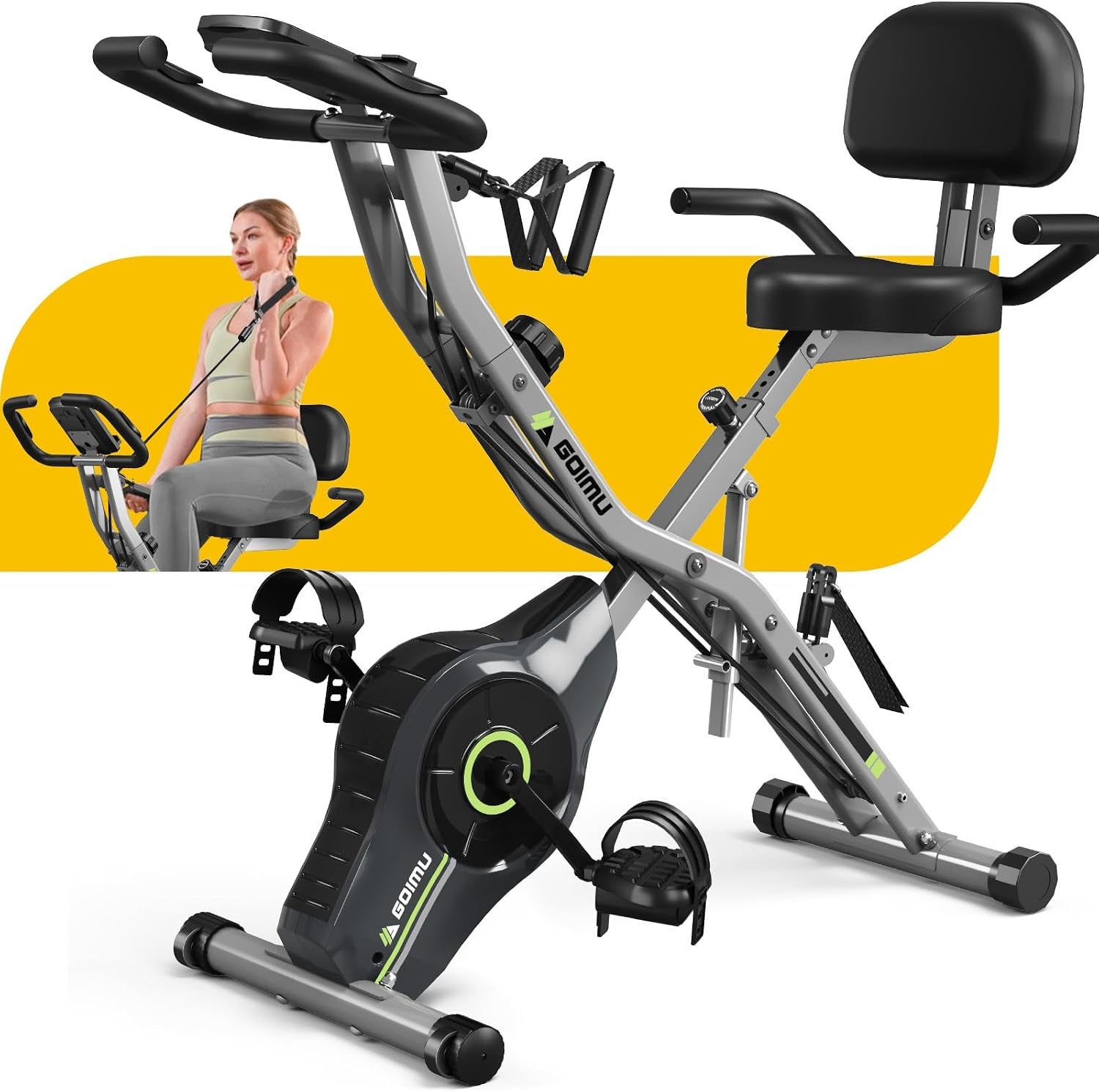
Best for Seniors: Foldable X-Bike
This is the bike I recommend to older riders and anyone with limited mobility. The backrest is genuinely comfortable, which is rare on a bike at this price. The step-through frame means you do not have to swing your leg over the saddle, and that matters more than most people think. I have had riders in their 70s tell me the step-through frame is the reason they can ride at all.
The 16-level magnetic resistance is smooth, and the 330-pound capacity is the same as the YPOO. The foldable design is useful if you are storing it in a closet or a corner. It is not as stable as the Superun during a standing sprint, but you are not buying this bike for standing sprints. You are buying it for comfortable, low-impact riding.
The seat is wider than the others, and the backrest takes the pressure off your lower back. That is the whole point of this bike. It is not a performance machine, but it is the bike that gets ridden, and a bike that gets ridden beats a bike that sits in the corner gathering dust.
Check current Amazon price. If you are buying for a parent or grandparent, or if you want a bike that does not punish your back, this is the one. The 5 in 1 design also means you can use it for arm exercises and stretching, which is a nice bonus for older riders.
The Tablet Holder Worth Buying
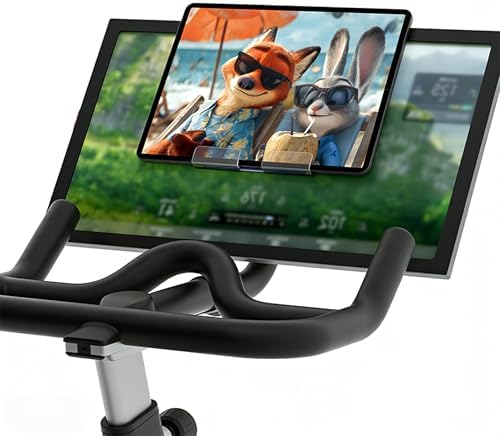
I tell every rider to buy a tablet holder, and this is the one I recommend. It holds a tablet securely, it does not wobble during a sprint, and it does not block your view of the resistance knob. That last point matters more than you think. I have used holders that put the tablet right in front of the knob, and you end up reaching around the screen to change resistance mid-ride.
The mount is sturdy, the clamp does not slip, and it fits most tablets. It does not fit a phone well, but you should not be riding with a phone in a holder anyway. Get a tablet, get this holder, and you have a setup that feels like a much more expensive smart bike for a fraction of the price.
Check current Amazon price. It is the cheapest upgrade you can make to any bike, and it is the one I recommend to everyone, whether they are riding a $200 budget bike or a $1,000 studio machine.
How I tested
I tested every bike the same way. Fifty miles per bike over four weeks, a standing sprint test at full resistance, a sweat test with a 45-minute max-effort ride, and a bearing check at week three. I also had riders between 5'0" and 6'4" sit on each bike, because a bike that fits one rider might not fit another. The seat post adjustment range matters, and I measured it on every bike.
The standing sprint test is the one that matters. I set the resistance to max, stand on the pedals, and sprint for 30 seconds. If the frame wobbles, the seat slips, or the resistance knob moves, the bike fails. That is not a preference. That is a safety issue. A bike that wobbles at sprint resistance can throw you off balance, and I have seen the bruises to prove it.
The sweat test is simpler. I ride for 45 minutes at max effort and see how the frame handles the sweat. Cheap paint fails this test. It bubbles, it flakes, and it rusts by month three. The Superun survived. The YPOO survived. The foldable X-bike has a matte finish that held up, but I would keep a towel on it anyway.
Analysis and test results
Resistance smoothness is the biggest difference between these bikes and the cheaper options. Magnetic resistance is smoother than felt pads, and it does not wear out. The Superun has the best resistance of the three, with 32 levels that are all usable. The YPOO is close, but the levels are not as distinct at the top end. The foldable X-bike has 16 levels, which is plenty for low-impact riding.
Frame stability is where the Superun wins. It stayed planted during every sprint test. The YPOO was close, but I felt a slight flex at the handlebars during the hardest sprints. The foldable X-bike is not built for sprinting, and that is fine. It is built for comfort, and it delivers that.
The seat is the first thing to fail on all three bikes. The Superun seat is a brick, the YPOO seat is slightly better, and the foldable X-bike has the best seat because of the backrest. Budget for a seat swap on the Superun and the YPOO. It is a 25 dollar fix that turns a painful ride into a comfortable one.
The pedals are the second thing to fail. All three come with plastic cages. I recommend replacing them with metal pedals if you ride daily. It is a 15 dollar fix that makes a huge difference, especially if you are clipping in with cycling shoes.
The tablet holder is the one accessory that makes every bike better. It turns a basic bike into a setup you actually want to ride. I tested it on all three bikes, and it held a tablet securely on every one, even during the sprint test.
The budget exercise bike comparison table
This is the table I keep in my garage, and it is the same one I use for every bike I test. Prices change, so check current Amazon price before you buy.
| Product | Resistance | Capacity | Best For | Price |
|---|---|---|---|---|
 Visit on Amazon → Visit on Amazon →Superun Exercise Bike |
32-level magnetic | See product | Serious home riders | $159.99 |
 Visit on Amazon → Visit on Amazon →YPOO Exercise Bike |
Magnetic with APP | 330 lbs | App-driven riders | $199.99 |
 Visit on Amazon → Visit on Amazon →Foldable X-Bike |
16-level magnetic | 330 lbs | Seniors and small spaces | $123.99 |
 Visit on Amazon → Visit on Amazon →Tablet Holder |
N/A | N/A | Entertainment | Check current Amazon price |
The key is the resistance knob. If it slips mid-ride, the bike is useless. All three of these bikes have knobs that held, but the Superun felt the most solid. The plastic knob on the YPOO is my only real concern for year two. The foldable X-bike has a metal knob, which surprised me at this price.
Should you buy the Superun Exercise Bike?
Yes. The 32-level magnetic resistance is smooth across the whole range, the frame stays planted during a standing sprint, and the resistance knob does not slip. It is the closest thing to a studio bike I have found at this price. The seat is a brick, but that is a 25 dollar fix, and you still come out ahead of bikes that cost twice as much. If you are going to ride daily, this is the bike.
Should you buy the YPOO Exercise Bike?
It is a solid budget pick if you want app-based courses without a subscription wall. The 330-pound capacity is genuine, and the magnetic resistance is smoother than felt pads on bikes twice the price. The app is basic and the pedals have plastic cages, but the frame does not flex. If you can stretch to the Superun, do that instead. The difference is worth it for the resistance knob alone. If you cannot stretch, the YPOO will serve you well for your first year of riding.