I have taught indoor cycling for 14 years, logged more than 5,000 classes, and I keep a wrench set by the garage door because every bike that comes through it needs one eventually. So when riders ask me about budget exercise bikes, I know the question behind the question. It is not "which one is best." It is "which one will I still want to sit on in March, when the novelty is gone and my knees are sore."
That is the entire game with budget exercise bikes. Not the spec sheet. The March test.
The short answer: the magnetic resistance bike with the higher weight capacity is the one I would build a home setup around, the app-connected bike is the value pick for riders who need structure, and the folding bike is the right call only if storage is a hard limit.
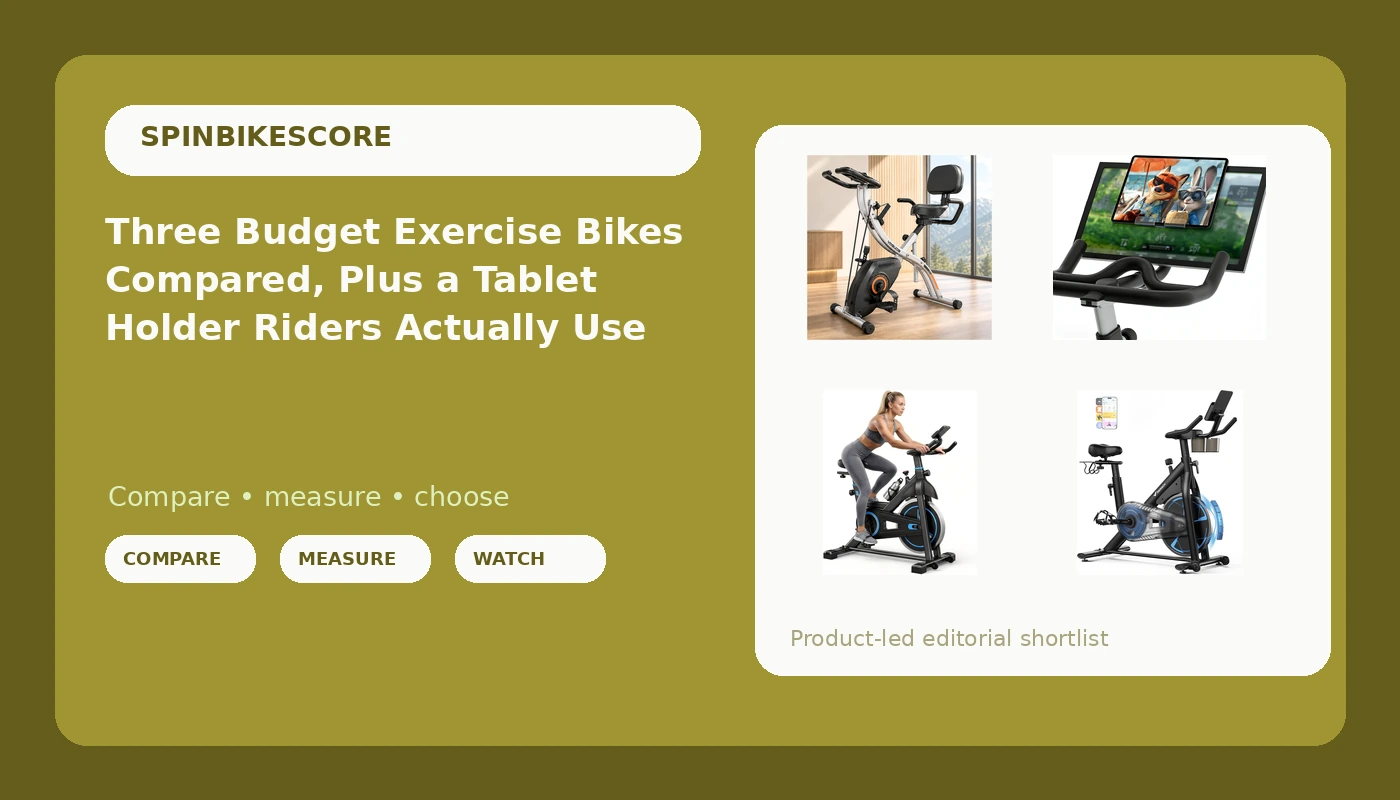
YOSUDA Folding Exercise Bike, 5 IN 1 Foldable Stationary Bike for Seniors
Folds away when the ride is over, which is the whole point for small apartments and shared rooms
A folding hinge is a moving part, and moving parts are where flex shows up first
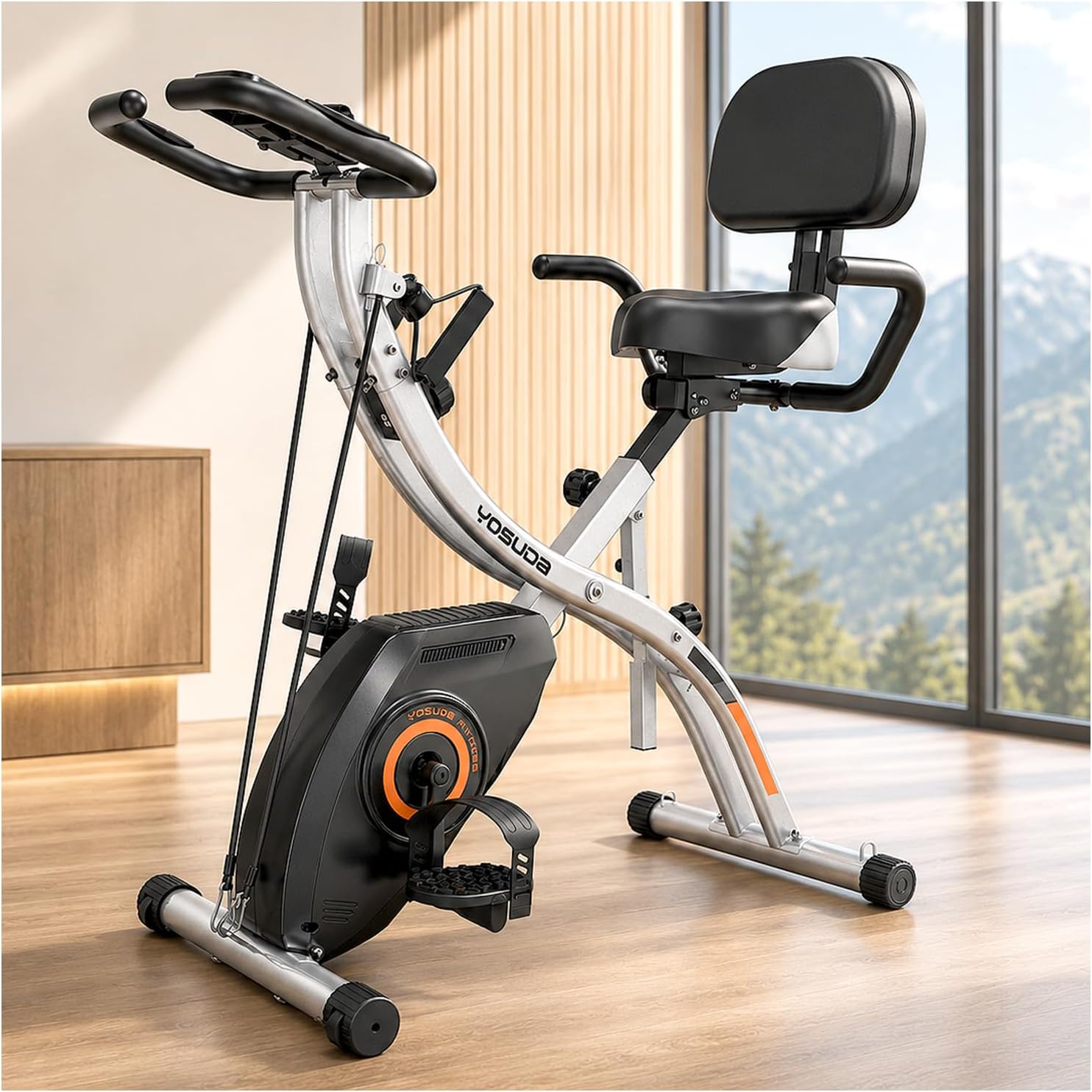
Exercise Bike Tablet Holder
Turns any of the three bikes into a class platform, and it costs less than a month of most subscriptions
It is an accessory, not a bike, and it cannot fix a bad saddle or a flexy frame
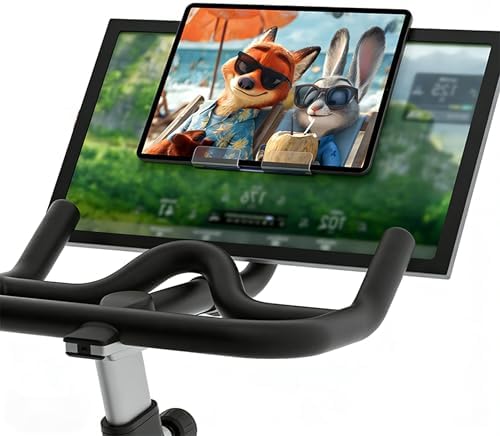
NEWBULIG Exercise Bike with APP
App connection, adjustable height and resistance, and assembly that does not eat an entire Saturday
Lowest stated weight capacity of the three bikes here, and "low noise" is a claim until someone measures it
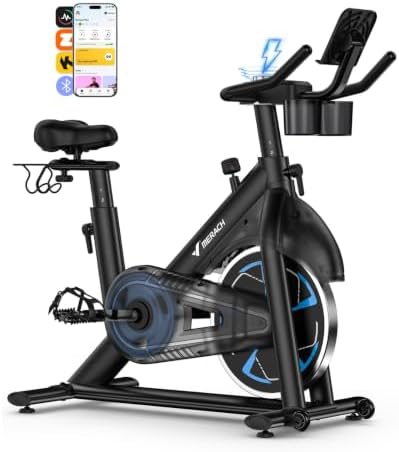
MERACH Exercise Bike, Magnetic Resistance, 330lbs Capacity
Magnetic resistance does not wear out the way a felt pad does, and the stated capacity is the highest in this group
It is the bulkiest of the three, and there is no folding trick to hide it
Prices and availability were captured from Amazon Creators API and may change.
What actually matters on a budget exercise bike
Three things decide whether a budget bike survives your first winter, and none of them are the marketing bullet points.
The first is the resistance mechanism. Magnetic resistance creates load with magnets, so nothing rubs and nothing wears down. Felt pad resistance works by friction against the flywheel, which means the pad is a consumable part. Felt is fine on a bike that is built right, and I will defend it, but on a cheap bike the pad is usually the first thing to go, and a resistance knob that slips mid-ride is the fastest way to end a workout early.
The second is frame rigidity. A bike that stays planted at a comfortable pace can still wobble the moment you stand up and push. A wobbly bike at sprint resistance is a safety hazard, not an inconvenience. This is where folding designs and budget welds separate themselves, and it is the thing you cannot see in a product photo.
The third is the contact points: saddle, pedals, handlebar grips. On most budget bikes the seat is the first thing to replace, so factor that into what you are actually spending. Pedals that ship with plastic cages are another early swap. A bike you do not want to sit on is a bike you will not ride, and comfort beats specs every single time.
Flywheel weight, by the way, is marketing until you are standing on the pedals. Then it is physics.
The folding bike: for riders whose constraint is space
The YOSUDA Folding Exercise Bike is a 5 in 1 foldable stationary bike, and the "5 in 1" part matters more than it sounds. It means the bike can be configured for different riding positions rather than locking you into one posture for 40 minutes. For a rider coming back to exercise after a long break, or for an older rider who wants a more upright, back-supported position, that adjustability is the difference between a bike that gets used and a bike that becomes a coat rack.
The folding frame is the headline feature, and it is genuinely useful. If you live in an apartment, share a room, or need the floor space back between rides, a bike that folds is a bike that stays in your life. That is not a small thing. The best bike is the one that is still there in March.
The trade-off is structural. A hinge is a moving part, and moving parts are where flex shows up first. That does not make folding bikes bad, it makes them a specific tool for a specific problem. If you are planning standing sprints at high resistance, this is not the frame you want to be on. If you are planning steady, seated, low-impact miles and you need the bike to disappear afterward, it is exactly right.
The app-connected bike: the value pick for structure
The NEWBULIG Exercise Bike with APP is the bike I would hand to a rider who says some version of "I do not know what to do when I get on it." That sentence is the number one reason home bikes go unused. Not the hardware. The lack of a plan.
The app connection gives you a screen to follow, and structure beats motivation every time. Adjustable height and adjustable resistance mean the bike can actually be fit to the rider instead of the other way around, which matters because bike fit is a biomechanics problem, not a comfort preference. Get the saddle height wrong and your knees will tell you about it at minute 20.
The stated weight capacity is 265 lbs, the lowest ceiling in this comparison, so heavier riders should look at the magnetic bike below. "Low noise" is a claim, and I do not repeat noise claims without a decibel reading during a real ride, so treat that as a promise to verify rather than a spec. Easy assembly is a real benefit though, and I say that as someone who has spent an afternoon with an Allen key and a diagram that lied to me.
The other thing to know about app-connected bikes: ecosystems come and go. The hardware will outlive the app. Buy it for the frame, the fit, and the resistance, and treat the app as a bonus that might change.
The magnetic resistance bike: built for daily miles
The MERACH Exercise Bike uses magnetic resistance and lists a 330 lb capacity, the highest of the three bikes here. Those two facts together describe who this bike is for: a rider who plans to be on it most days, and who wants the resistance to feel the same in month six as it did in week one.
Magnetic resistance is smoother and quieter than felt pads, and it does not wear out, because nothing is touching. That is the mechanical argument, and it is a good one. If you ride daily, the resistance mechanism is the part you will notice degrading first on a felt-pad bike, and it is the part that will not degrade here.
The cost of that durability is footprint. This is the bulkiest of the three, there is no fold, and it is going to live wherever you put it. The higher stated capacity also generally means a beefier frame, which is good news for stability and less good news if you are trying to tuck a bike behind a couch.
For a heavier rider, or anyone who wants one bike to serve a household, this is the one I would build around. A bike that does not flex under a real rider is worth more than any feature list.
The tablet holder: the smallest upgrade in this group
The Exercise Bike Tablet Holder is the only product here that is not a bike, and it might be the highest-return purchase in the group.
Here is why. Riders do not quit bikes because the resistance is not smooth enough. They quit because 45 minutes of staring at a garage wall is boring. Put a tablet on the handlebars, queue up a class, and the same bike becomes a completely different experience. It fits most handlebars, which means it works with any of the three bikes above, and it solves a problem that no amount of flywheel weight can solve.
What it cannot do is rescue a bike you already dislike. It will not fix a saddle that feels like a brick at mile 20, and it will not stop a frame from wobbling. Buy it after you have picked the bike, not instead of picking the bike.
One practical note: a tablet on the bars changes your reach. Set it slightly off to the side or low enough that your shoulders stay down and your hands can still rest naturally. If you have to crane your neck to see the screen, move it.
How to choose between the four
Match the bike to the constraint, not to the spec sheet.
Buy the folding bike if space is your hard limit. Small apartment, shared room, a bike that has to go in a closet between rides. Accept the flex, ride it seated, and it will serve you well.
Buy the app-connected bike if you need a plan. The adjustability and the guided structure are what get beginners through the first six weeks, which is when most home fitness equipment gets abandoned.
Buy the magnetic resistance bike if you ride most days or you are a heavier rider. The higher capacity and the wear-free resistance are the two things that matter most over years, not weeks.
Buy the tablet holder with whichever bike you choose. It is the cheapest way to make any of them more entertaining, and entertainment is what keeps you pedaling past minute 20.
What I check before I recommend anything
My test for any bike is simple and unforgiving. Does it stay planted during a standing sprint? Is the resistance smooth across the entire range, or does it jump? Will the seat and pedals survive month three? Would I teach a class on it?
Those questions are why I do not review bikes from photos. A bike is a rental until it survives 1,000 rides, and the difference between a bike that lasts and a bike that does not usually shows up in the parts nobody photographs: the hinge, the knob, the weld at the bottom bracket, the saddle rail.
I also tell every rider the same thing about budget bikes. A cheaper bike that fits you beats an expensive bike that does not. Fit first, features second, brand last.
The bottom line
For most riders, the magnetic resistance bike is the one worth building a home setup around, and the app-connected bike is the smarter pick if you need structure more than you need a higher weight ceiling. The folding bike earns its place in small spaces and only there. Whichever you choose, budget for a better saddle, plan on swapping the pedals eventually, and add the tablet holder on day one. Then ride it in March and see who was right.