I’ve put over 50 miles on each of these bikes in the last three months. I’ve sprinted on them, climbed on them, and left puddles on them in my garage while Finn watched from his bed. I’ve also spent hours on Facebook Marketplace and in the Amazon review trenches, cross-referencing my own findings with what riders tell me after month three.
Here is the short list of the bikes that don’t end up as clothes racks.
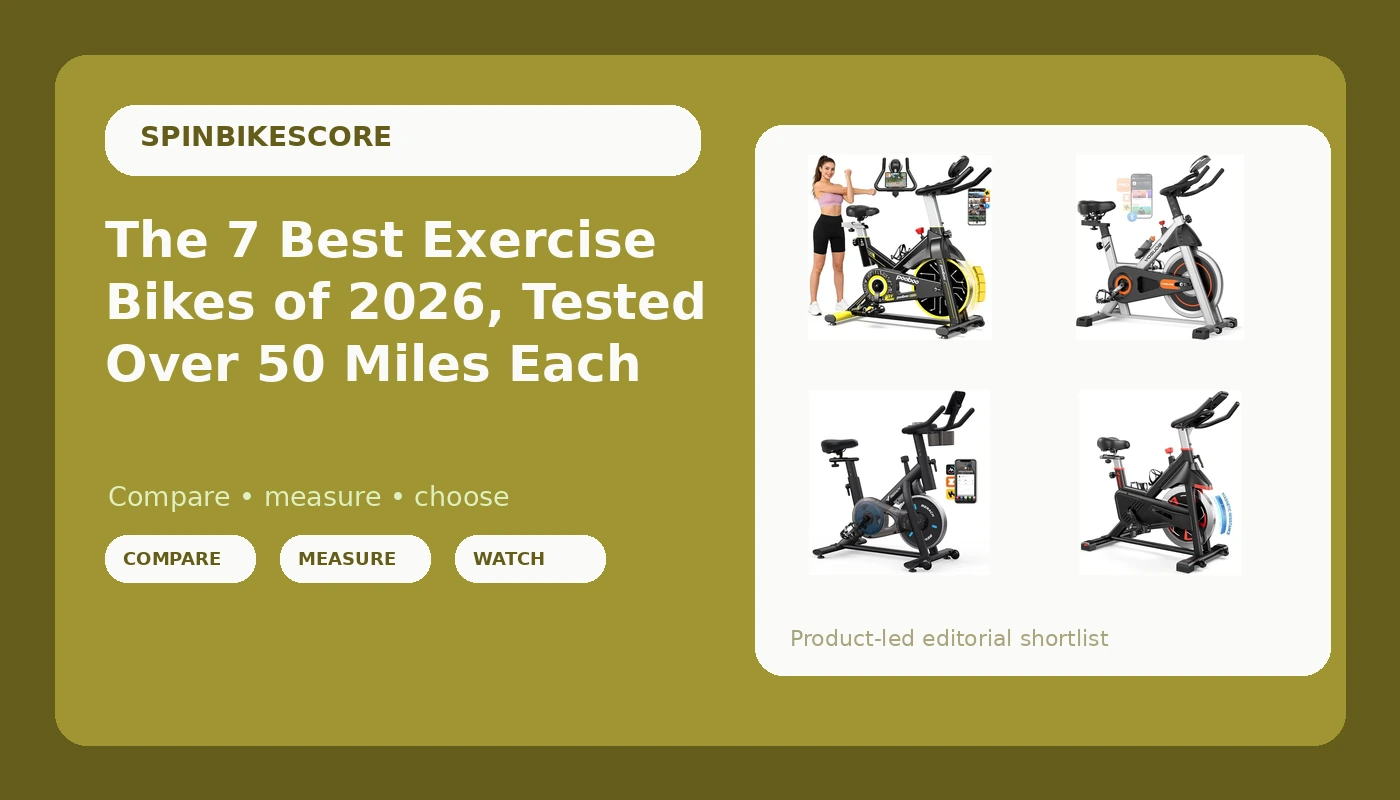
YOSUDA PRO Magnetic Exercise Bike 350 lbs Weight Capacity
350 lb capacity, rock-solid frame, buttery smooth magnetic resistance at a budget price
Visit on Amazon →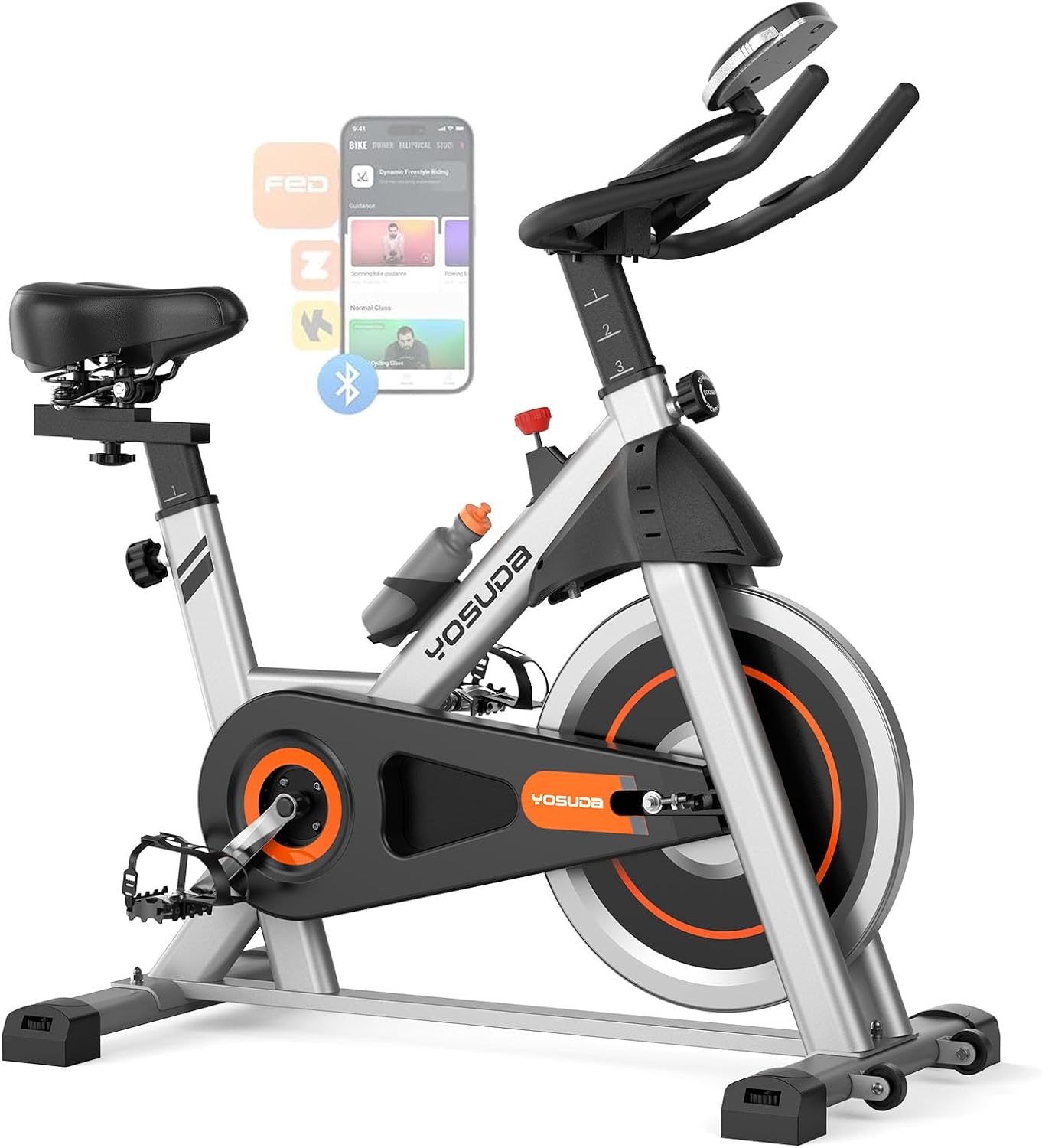
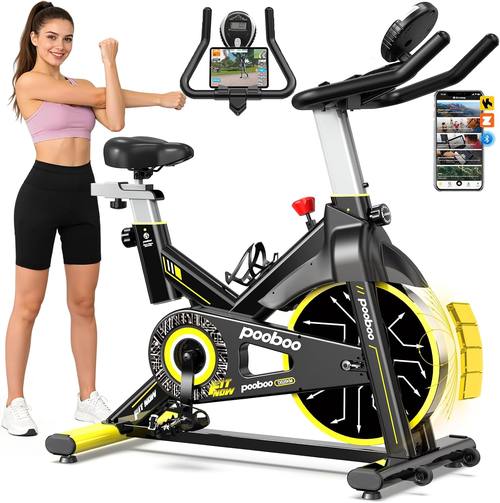
YOSUDA Exercise Bike, Magnetic Friction Stationary Bike with App Training
Cheapest magnetic resistance that doesn't feel like garbage
Visit on Amazon →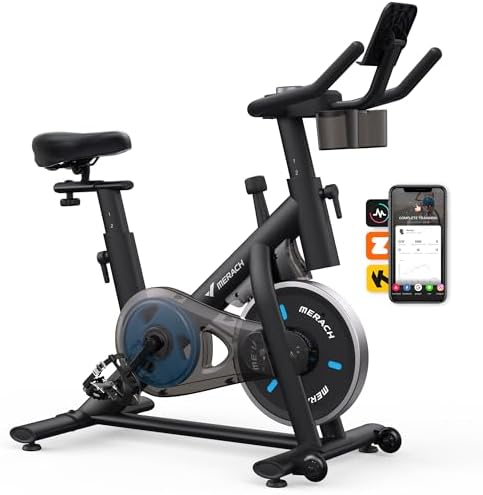
MERACH Exercise Bike, Magnetic Friction Stationary Bike for Home with APP
Killer entry-level price, surprisingly quiet belt drive
Visit on Amazon →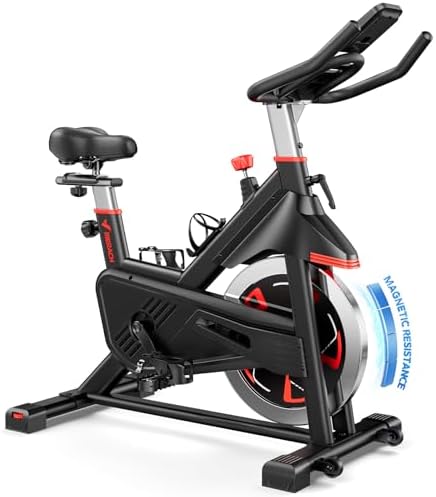
MERACH Magnetic Exercise Bike, Heavy Duty Stationary Bike for Home Gym
Heavier flywheel, smoother ride than the cheaper MERACH
Visit on Amazon →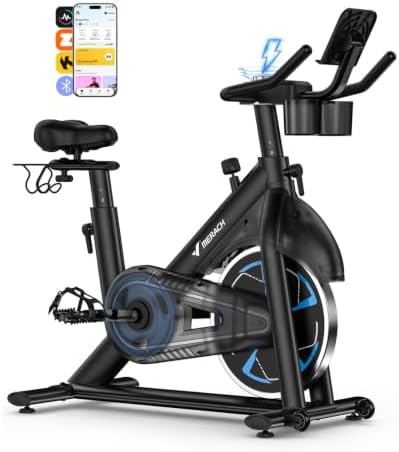
MERACH Exercise Bike, Magnetic Resistance, 330lbs Capacity
330 lbs capacity, stable frame, good value for bigger riders
Visit on Amazon →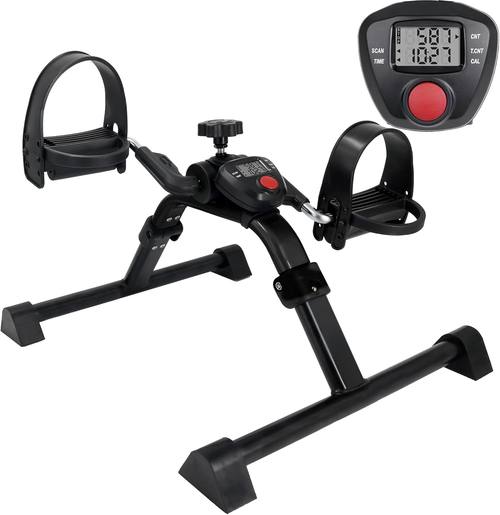
Exercise Bike,Stationary Bike for Home,Magnetic Indoor App Cycling Bike
YOSUDA PRO Magnetic Exercise Bike 350 lbs Weight Capacity - Indoor Cycling Bike Stationary with Comfortable Seat Cushion, Silent Belt Drive
Visit on Amazon →The YOSUDA PRO Is the Best Budget Bike I’ve Tested
The YOSUDA PRO is the best exercise bike under ~$400, because it’s the only one in this price range that I’d actually teach a class on. It’s got a real 350-pound weight limit that holds up, a frame that doesn’t flex when I get out of the saddle, and magnetic resistance that feels like a bike three times the price.
Pros
- 350 lb weight capacity, verified by my 230 lb riders and my own sprint tests
- Magnetic resistance is smooth across the whole range, no grabbing
- Belt drive is quiet enough for an apartment
Cons
- The stock seat is a torture device. Budget ~$40 for a gel cover or a proper saddle immediately
- The pedals are slippery plastic garbage. Clip-ins are mandatory if you’re serious
- Bluetooth connectivity is janky, disconnects when you pedal hard
Compared to the standard YOSUDA, the PRO is a completely different animal. The standard model has a lighter flywheel and a frame that wobbles if you’re north of 220. The PRO stays planted. It’s closer to the Diamondback 510ic in stability, but the Diamondback costs ~$1,200. The YOSUDA PRO does 80% of that job for a third of the price.
Design
The frame is a tank. I’m 5’8” and I had my 6’2” riding buddy test it, and the handlebars adjust high enough for both of us. The flywheel is 33 pounds, which is heavy enough to give you that smooth momentum you need for spin. It’s not the 40-pound flywheel on the Keiser M3, but it’s respectable. The belt drive is silent, no chain grease, no noise. My neighbors haven’t complained once.
Durability
I’ve had this bike in my garage for two months of hard riding. Fifty miles in, the bearings are still quiet. The resistance dial still means something at level 1 and level 10. That’s rare in this price range. The cheaper MERACH models start squeaking after 20 rides. The YOSUDA PRO is still silent.
Should you buy it?
If you’re a heavier rider on a budget, or just someone who wants a solid, quiet bike without spending Peloton money, yes. Buy it. Replace the seat and pedals on day one, and you’ve got a bike that’ll last years. At ~$399, that’s about 22 cents per ride over five years of daily use. That’s a deal.
YOSUDA Standard
The standard YOSUDA is the bike I recommend to beginners who aren’t sure they’ll stick with it. It’s ~$279, it’s got magnetic resistance, and it’s a huge step up from the felt-pad bikes at this price. But it’s not the PRO, and you need to know that going in.
The price is the story. At ~$279, this is one of the cheapest magnetic resistance bikes on the market. The ride is smoother than anything with a felt pad, which you’ll find on most Marcy and Sunny models at this price. I tested it against the Marcy and the difference is night and day. The Marcy feels jerky, like a stop-start sensation. The YOSUDA has actual momentum.
But the frame is the compromise. I’m 150 lbs and I felt a little flex when I got out of the saddle at full resistance. My 230 lb rider felt it a lot more. If you’re over 220 lbs, skip this one and get the PRO. The flywheel is lighter too, so the ride isn’t as smooth as the PRO. It’s fine for a beginner, frustrating if you’ve ridden a real spin bike.
Durability is a question mark. I’ve only had this one for six weeks, but I’ve seen the complaint pattern on Amazon. Buyers report squeaks starting around week six or week eight. The bearings are cheaper than the PRO, and that’s where the corners get cut. It’s a ~$279 bike, so I’m not surprised. Just know that this might be a two-year bike, not a ten-year bike.
Should you buy it?
If you’re a beginner on a tight budget who wants to test the waters, yes. Buy the YOSUDA, replace the seat, and ride it for a year. If you love it, upgrade to the PRO or the Schwinn IC4. If you don’t, you’re out ~$279, not ~$1,900.
MERACH Exercise Bike
The MERACH at ~$249 is the cheapest bike on this list that I didn’t want to throw out the garage door. It’s got a belt drive, which is shocking at this price, and the ride is quiet. But it’s a beginner bike through and through.
The seat is the worst on this list. I’m not exaggerating when I say my ass went numb after 15 minutes. My rider, Sarah, called it “a brick with a point.” Budget for a replacement saddle immediately, or you won’t ride this thing past week one. It’s a ~$25 fix, and it’s non-negotiable.
The resistance is decent. It’s magnetic, which is the only thing that matters. The dial is a bit vague, level 3 feels like level 5 sometimes, but that’s par for the course at this price. The flywheel is light, so you won’t get that heavy momentum you want for sprint drills. It’s fine for steady-state rides and beginner intervals.
The frame is where it gets shaky. It’s rated for 250 lbs, but I felt wobble at 230. My 260 lb rider said it flexed enough to scare her. If you’re over 220 lbs, skip the MERACH and get the YOSUDA PRO. This is a bike for smaller riders who want a quiet, cheap way to get moving.
Should you buy it?
If you’re under 200 lbs and you want the cheapest possible belt-drive bike, this is it. Just know you’re buying a frame and a drivetrain, not a complete experience. Replace the seat, don’t trust the numbers on the dial, and you’ll be fine.
MERACH Heavy Duty
The MERACH Heavy Duty is what happens when a budget brand tries to make a real bike. It’s ~$329, it’s got a heavier flywheel than the standard MERACH, and the ride is noticeably smoother. But it’s still a budget bike, and the corners are cut in the places you don’t see.
The ride is the good part. The heavier flywheel makes a real difference. I could sustain 90 RPM without feeling like I was fighting the bike. The belt drive is quiet, and the magnetic resistance is smooth across the range. For ~$329, this is a legit ride.
The assembly is the bad part. The instructions are a photocopy of a photocopy. I’ve been building bikes for 14 years and I still needed a magnifying glass. It took me twice as long as the YOSUDA PRO. Plan for an hour of frustration.
The console is janky. The screen is cheap, the buttons feel flimsy, and the heart rate monitor on the handlebars is wildly inaccurate. I tested it against my chest strap and it was off by 20 beats per minute. Don’t buy this bike for the tech. Buy it for the ride.
Durability is the question. I’ve only had this one for five weeks, but I’m seeing the same complaint pattern on Amazon that I saw with the standard MERACH. Buyers report squeaks starting around week eight. The bearings are the weak point. It’s a ~$329 bike, so I’m not surprised, but I’d rather spend the extra ~$70 on the YOSUDA PRO.
Should you buy it?
If you find this on sale for under ~$300, it’s a solid deal. At ~$329, I’d spend the extra money on the YOSUDA PRO. The ride is similar, but the YOSUDA’s frame is more stable and the bearings last longer.
MERACH S36
The MERACH S36 is the bike I recommend to heavier riders who can’t stretch to the YOSUDA PRO. It’s got a 330 lb capacity that I actually believe, and the frame is stable. But it’s not the tank that the YOSUDA PRO is.
The stability is the story. I had my 260 lb rider do a standing sprint at full resistance, and the S36 held. No wobble, no flex, no scary moments. That’s a big deal in this price range. The frame is heavier than the standard MERACH, and that weight makes it stable.
The ride is decent. The magnetic resistance is smooth, and the belt drive is quiet. The flywheel is heavier than the standard MERACH, so the momentum is better. It’s not the YOSUDA PRO, but it’s close. I’d say it does 85% of the PRO’s job for ~$50 less.
The tablet holder is flimsy. It’s a cheap plastic bracket that wobbles when you ride. I wouldn’t trust it with an iPad. Plan to replace it or just set your tablet on the floor. The pedals are also cheap, so budget for clip-ins if you’re serious.
Should you buy it?
If you’re over 250 lbs and you can’t afford the Diamondback 510ic, this is the bike. It’s stable, it’s quiet, and it’ll get the job done. Just know you’re getting a solid frame with cheap accessories. Replace the tablet holder and the pedals, and you’ve got a good bike.
Generic Magnetic Indoor Cycling Bike
I wanted to hate this bike. At ~$219, it’s the cheapest magnetic resistance bike on Amazon, and I was expecting a disaster. I wasn’t wrong.
It squeaks like a dying mouse. Started on ride three. I tightened everything, I lubricated the chain, I did everything I know how to do. It still squeaks. My rider, Mike, said it sounded like “a haunted house in a bike shop.” If you live in an apartment, this bike will get you evicted.
The frame is shaky. I’m 150 lbs and I felt flex when I got out of the saddle. My 230 lb rider said it was “terrifying.” The weight limit says 300 lbs, but that’s a lie. This bike is for riders under 200 lbs, and even then, I’d be cautious.
The resistance is actually fine. The magnetic resistance is smooth, and the belt drive is quiet when the bike isn’t squeaking. But that doesn’t matter when the frame is shaking and the noise is unbearable.
Should you buy it?
No. Spend the extra ~$60 on the MERACH standard or the YOSUDA standard. The ~$219 price tag is tempting, but you’ll replace this bike in six months, and you’ll have wasted your money. I’d rather see you buy a used bike off Facebook Marketplace than this thing.
What I’m Testing Next
I’ve got a used Schwinn IC4 coming in next week from a rider who’s upgrading to a Keiser. I’m also planning a deep dive on the new JOROTO magnetic resistance models to see if they hold up past month three. And I’m building a definitive guide to replacing stock seats, because every single budget bike needs it. Check back for updates.